
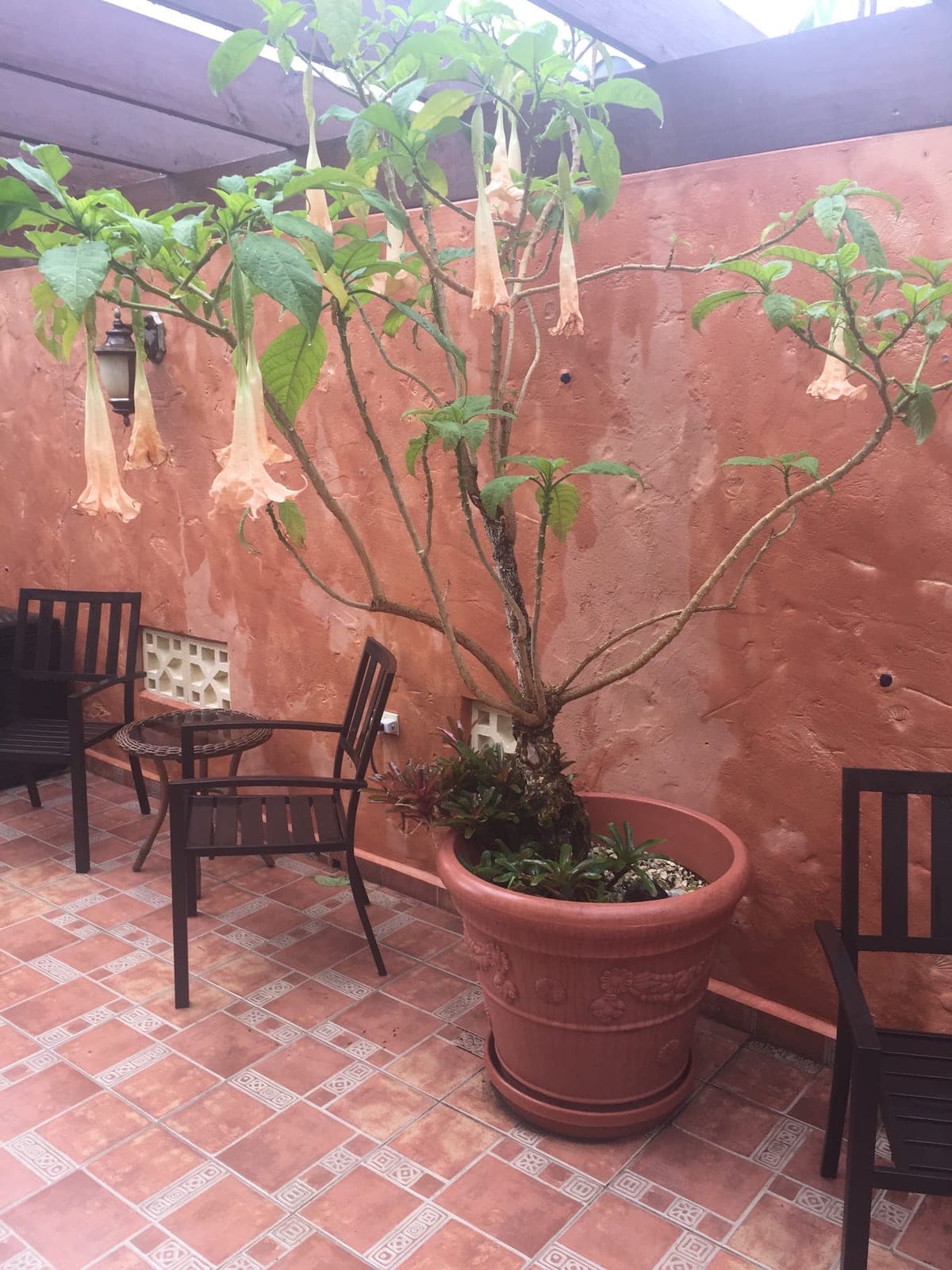
Angel's trumpet is one of the most theatrical plants in the summer garden - a fast-growing woody shrub that can reach 10 feet in a single season and covers itself with enormous pendulous trumpets up to 12 inches long, often powerfully fragrant in the evening. In South American cloud forests it grows as a small tree, but in temperate gardens it is typically grown as a container plant or treated as a tender annual, cut to the ground or dug before frost.
All parts of the plant are toxic and should be kept out of reach of children and pets - this is not a plant for casual contact. Grow it in the sunniest spot available, water generously, and feed regularly with a balanced fertilizer; the plant is a heavy feeder and will stall without nutrients. Take tip cuttings in late summer and root them in water or moist compost to carry through winter on a bright windowsill, then pot up and move back outside after last frost.
Powdery mildew
White or grey powdery coating on leaves - usually starting on older growth in humid conditions or when nights cool.
Improve air circulation by thinning plants. Apply neem oil or potassium bicarbonate spray at first sign. Avoid overhead watering.
Botrytis (grey mould)
Grey fuzzy mould on petals and stems, worst in cool wet conditions.
Remove affected parts immediately. Improve air circulation. Avoid overhead watering. Apply copper fungicide if severe.