
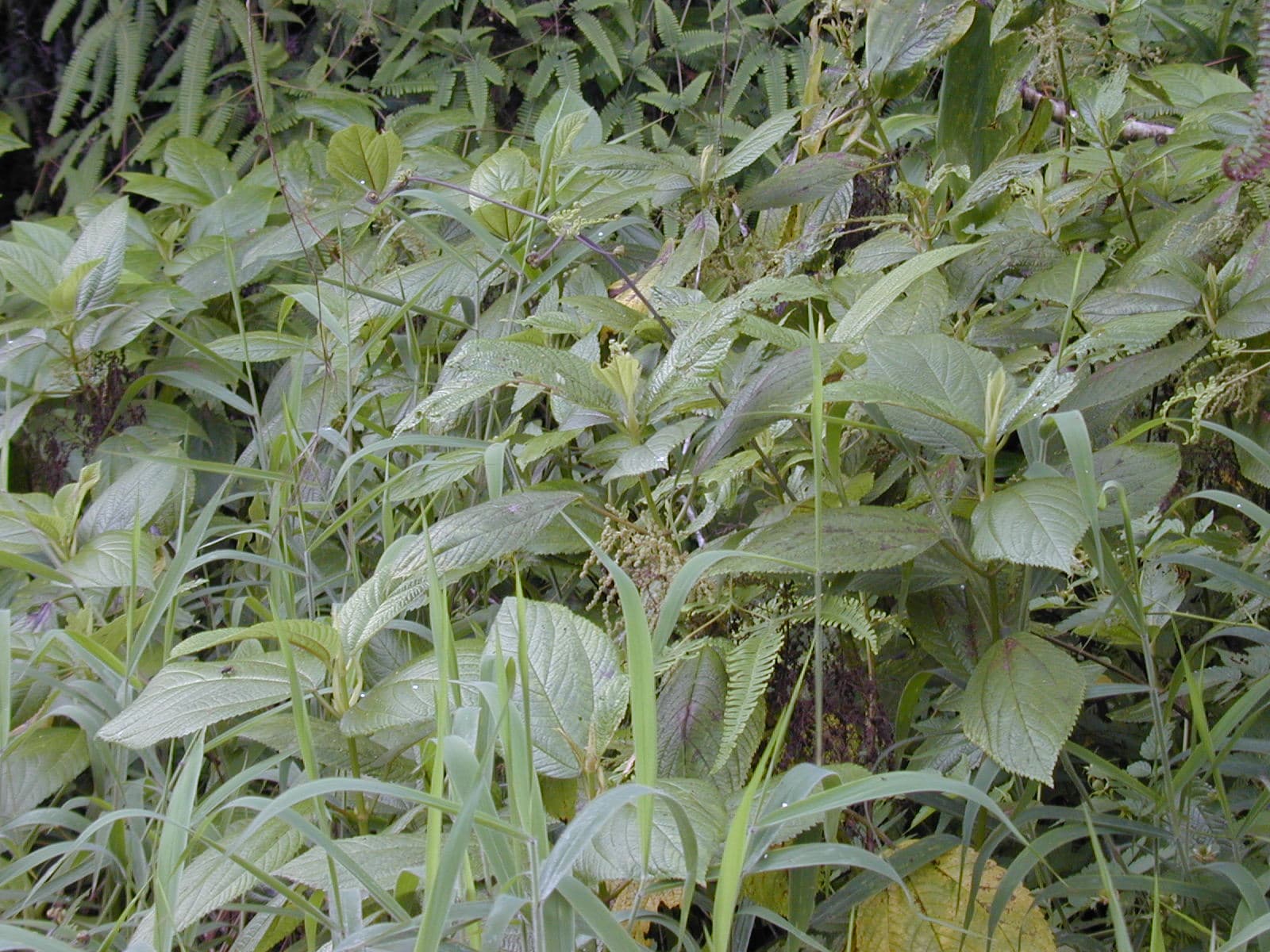
Boehmeria platanifolia is a large-leaved deciduous false nettle native to moist woodlands of Japan. It belongs to the nettle family (Urticaceae) but carries no stinging hairs. Gardeners grow it primarily for its bold, deeply lobed foliage, which closely resembles plane tree leaves and creates strong textural contrast in shaded and woodland beds.
It thrives in humus-rich, consistently moist soil under a canopy or in part shade, forming slowly expanding clumps over time. A thick layer of organic mulch helps retain soil moisture and keeps the root zone cool through summer. In the colder end of its range it dies back fully each winter; in zones 8–9 it may retain some stem structure year-round. Soil pH in the mildly acidic to neutral range suits it best.
The genus Boehmeria is economically important for ramie fiber, derived primarily from B. nivea. B. platanifolia produces similarly strong bast fibers in its stems, though the species is cultivated almost exclusively as an ornamental rather than a fiber crop.
Fungal leaf spot
Brown or purplish spots on the leaves, often ringed with a yellow halo, that spread and merge in warm, humid, or wet weather; heavily spotted leaves yellow and drop early.
Pick off spotted leaves and clear fallen debris to remove overwintering spores. Improve air circulation by thinning, and water at the base so foliage dries quickly. If it persists, apply a copper- or sulfur-based fungicide at the first sign.
Powdery mildew
White or grey powdery coating on leaves - usually starting on older growth in humid conditions or when nights cool.
Improve air circulation by thinning plants. Apply neem oil or potassium bicarbonate spray at first sign. Avoid overhead watering.
Root rot
Plants wilt, yellow, and stunt even in moist soil; lower stems and roots turn brown, soft, and mushy and the plant may collapse. Most common in heavy, wet, or poorly drained ground.
Improve drainage and stop overwatering, and never plant too deep. Lift and destroy badly affected plants along with the soil around the roots. Grow in raised or free-draining beds to prevent it returning.