
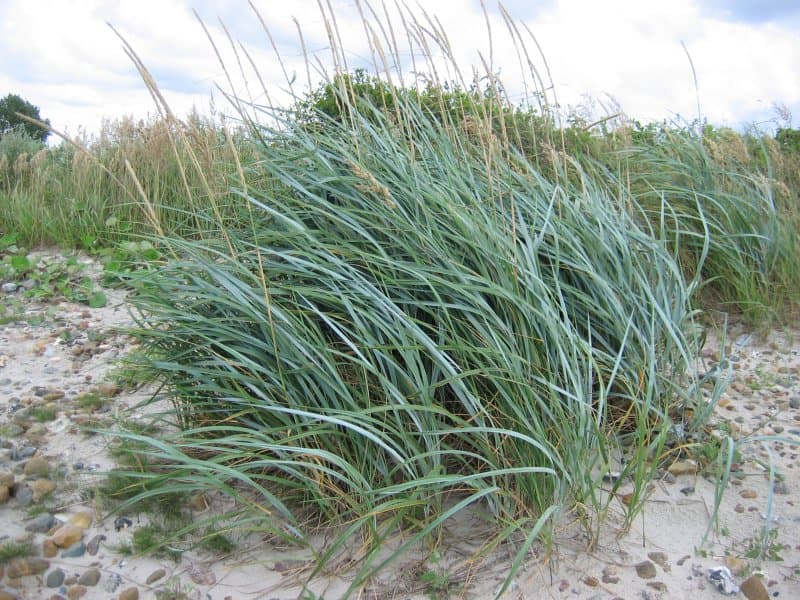
Blue lyme grass (Leymus arenarius) is a coastal grass native to the sandy shores of Atlantic and northern Europe, grown chiefly for its strongly blue-gray foliage - among the most intense blue coloring found in any cold-hardy ornamental grass. It spreads by vigorous rhizomes and will form wide colonies if unrestricted, so it demands a deliberate placement strategy.
It is built for lean conditions: poor, sandy, dry soil and exposure to salt spray and wind. It declines in heavy or persistently wet soils. Gardeners can limit its spread by planting inside buried root barriers, or by cutting runners with a spade each season. pH tolerance is broad and fertilizing is unnecessary; excess fertility encourages even more aggressive spread.
In naturalistic or functional plantings, blue lyme grass is a proven stabilizer for eroding sand dunes, coastal slopes, and sandy road cuts where little else will hold soil. The steel-blue foliage pairs well with warm-toned grasses and drought-tolerant perennials in mixed plantings, provided spread is managed.
Rust
Orange to brown raised pustules on the undersides of leaves, with yellow spotting on the upper surface. Heavy infections cause leaves to yellow and drop.
Remove and destroy infected leaves. Avoid overhead watering and improve air circulation. Apply a sulfur or copper-based fungicide if it spreads. Clear plant debris in fall.
Fungal leaf spot
Brown or purplish spots on the leaves, often ringed with a yellow halo, that spread and merge in warm, humid, or wet weather; heavily spotted leaves yellow and drop early.
Pick off spotted leaves and clear fallen debris to remove overwintering spores. Improve air circulation by thinning, and water at the base so foliage dries quickly. If it persists, apply a copper- or sulfur-based fungicide at the first sign.
Root rot
Plants wilt, yellow, and stunt even in moist soil; lower stems and roots turn brown, soft, and mushy and the plant may collapse. Most common in heavy, wet, or poorly drained ground.
Improve drainage and stop overwatering, and never plant too deep. Lift and destroy badly affected plants along with the soil around the roots. Grow in raised or free-draining beds to prevent it returning.