
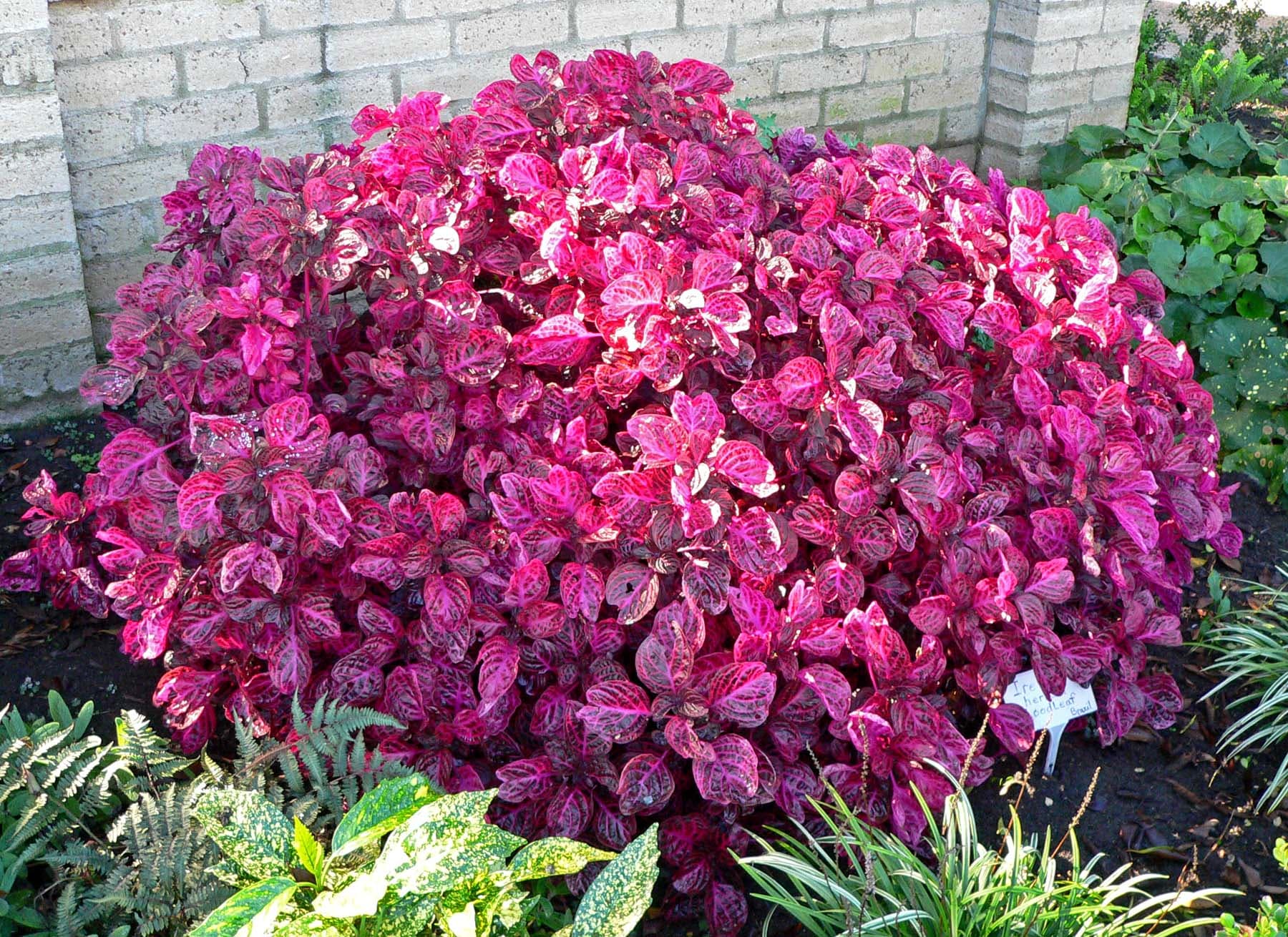
Iresine herbstii 'Blazin Rose' is a tender tropical perennial in the Amaranthaceae family, grown for its vivid rose-pink and chartreuse variegated foliage. Native to South America, it delivers consistent, heat-tolerant color in borders, containers, and tropical-style plantings where many other plants fade in midsummer.
In zones 10–11 it persists as a perennial; in cooler climates it is treated as a warm-season annual or carried over winter indoors from cuttings. Full sun intensifies leaf color; shade produces larger but less saturated foliage. Regular pinching keeps plants dense and compact. It tolerates high heat and humidity but collapses at the first frost. Fertile, consistently moist but well-drained soil gives best results; mulching conserves moisture during peak heat.
Within the broader Iresine genus, several species are documented as additives to ayahuasca preparations in Amazonian traditional practice. Ethnobotanical records also note use of Iresine herbstii in Brazilian folk medicine as a febrifuge and headache remedy.
Root rot
Plants wilt, yellow, and stunt even in moist soil; lower stems and roots turn brown, soft, and mushy and the plant may collapse. Most common in heavy, wet, or poorly drained ground.
Improve drainage and stop overwatering, and never plant too deep. Lift and destroy badly affected plants along with the soil around the roots. Grow in raised or free-draining beds to prevent it returning.
Fungal leaf spot
Brown or purplish spots on the leaves, often ringed with a yellow halo, that spread and merge in warm, humid, or wet weather; heavily spotted leaves yellow and drop early.
Pick off spotted leaves and clear fallen debris to remove overwintering spores. Improve air circulation by thinning, and water at the base so foliage dries quickly. If it persists, apply a copper- or sulfur-based fungicide at the first sign.
Powdery mildew
White or grey powdery coating on leaves - usually starting on older growth in humid conditions or when nights cool.
Improve air circulation by thinning plants. Apply neem oil or potassium bicarbonate spray at first sign. Avoid overhead watering.