
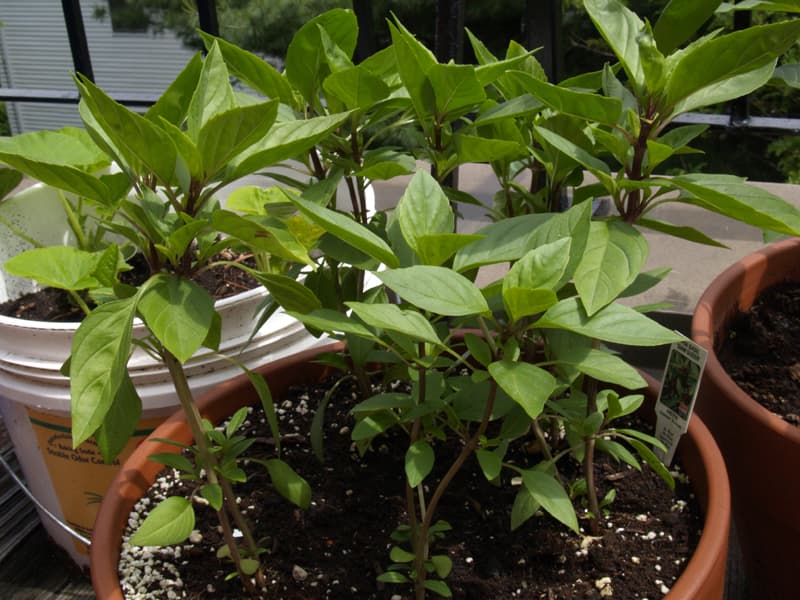
Thai basil has a spicier, anise-forward flavour quite different from Genovese basil, and it holds up to heat in cooking, which makes it the basil for stir-fries, curries and pho. The purple stems and flower spikes are ornamental, and unlike sweet basil the flowers are worth leaving on for both decoration and flavour. It grows 18 to 24 inches.
Start seed indoors six weeks before last frost, or sow directly once the soil has warmed, and set plants 12 to 18 inches apart in full sun and rich, moist soil that drains. It is more heat-tolerant than Italian basil and keeps producing through summer with less bolting. Harvest from the tips to keep it branching, and pinch the flower spikes on the plants you want for leaf; let the rest flower for the bees, which are thick on the purple spikes.
It blackens at the first touch of frost, so cut whole stems before that and dry or freeze them. Downy mildew shows as yellowing leaves with grey fuzz beneath in humid summers; water at the base and give plants air. Deer leave basil alone. It is native to Southeast Asia.
Downy mildew
Yellowing on top of leaves with grey-purple fuzz underneath. Spreads rapidly in humid conditions.
Remove affected leaves. Improve air circulation. Avoid overhead watering. Copper spray as preventive.