
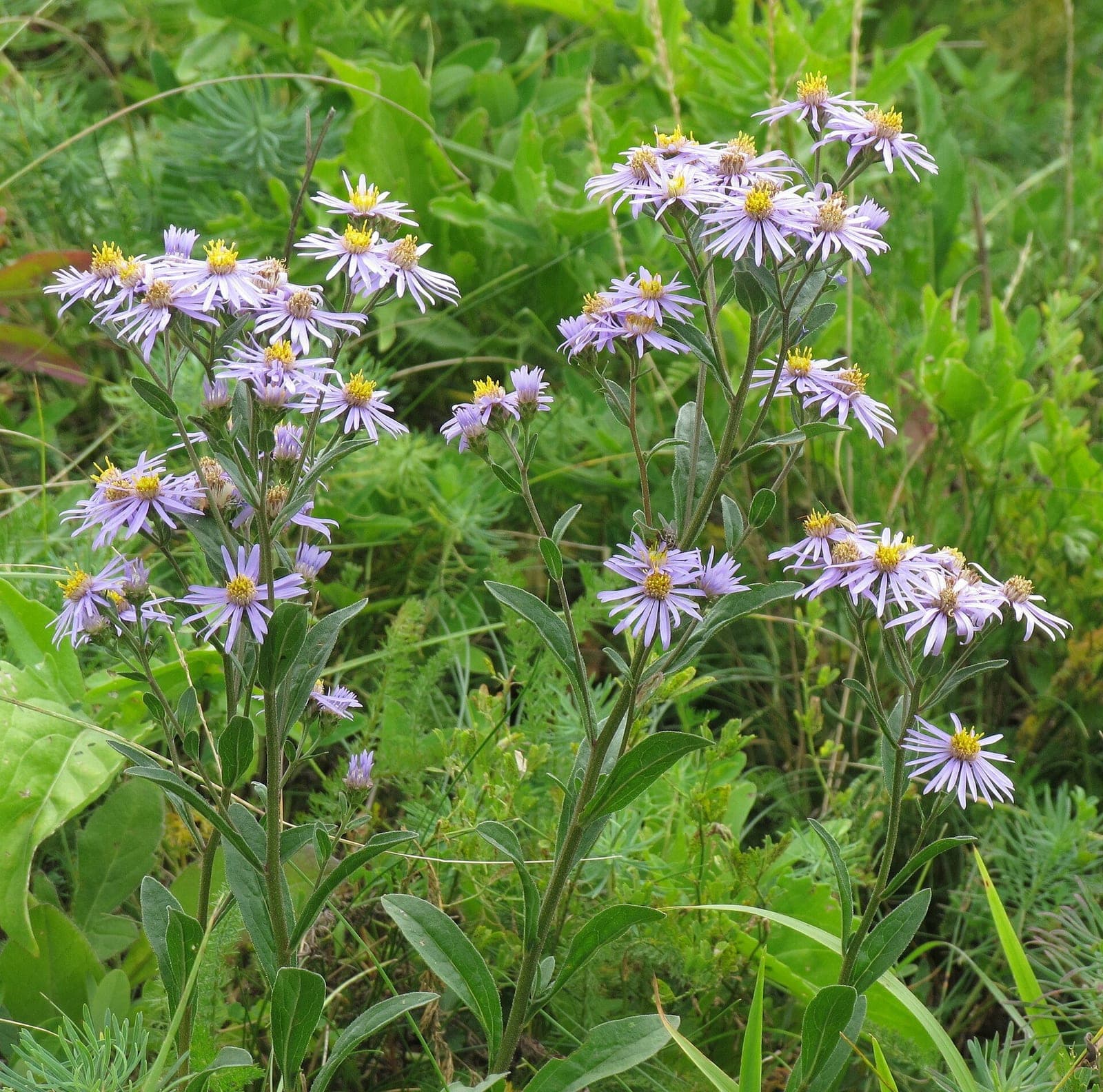
Aster amellus is a clump-forming perennial and the type species of both the genus Aster and the family Asteraceae - the taxonomic anchor against which all other asters are measured. Native to dry, calcareous grasslands and rocky slopes across central and southern Europe, it produces lilac-purple ray florets around golden-yellow disc centers from August into October, filling a gap in the border when few other perennials are at peak.
Unlike many North American asters, A. amellus is adapted to lean, alkaline to neutral, well-drained soils and tolerates considerable drought once established. It seldom flops and rarely needs staking. Soil pH of 7.0–8.0 suits it best; heavy, acid, or waterlogged soils cause rapid decline. Cold hardiness to zone 5 depends primarily on good winter drainage - prolonged wet freezes are more damaging than cold air alone. Dividing clumps every 3–4 years maintains vigor and prevents the center from dying out.
Virgil named this plant in his Georgics (c. 29 BCE) as a prime honeybee forage source - one of the earliest specific plant references in Western literature. That reputation holds: A. amellus is among the highest-value late-season nectar plants for honeybees, bumblebees, hoverflies, and butterflies, blooming when most other sources have finished for the year.
Aster Yellows
Deformed, greenish flowers, stunted growth, and yellowed foliage. Flower centers may produce tufts of leafy growth instead of normal petals.
No cure. Remove and destroy infected plants immediately to stop spread. Control leafhoppers, which transmit the disease, and remove nearby weed hosts.
Powdery mildew
White or grey powdery coating on leaves - usually starting on older growth in humid conditions or when nights cool.
Improve air circulation by thinning plants. Apply neem oil or potassium bicarbonate spray at first sign. Avoid overhead watering.
Fungal leaf spot
Brown or purplish spots on the leaves, often ringed with a yellow halo, that spread and merge in warm, humid, or wet weather; heavily spotted leaves yellow and drop early.
Pick off spotted leaves and clear fallen debris to remove overwintering spores. Improve air circulation by thinning, and water at the base so foliage dries quickly. If it persists, apply a copper- or sulfur-based fungicide at the first sign.
Rust
Orange to brown raised pustules on the undersides of leaves, with yellow spotting on the upper surface. Heavy infections cause leaves to yellow and drop.
Remove and destroy infected leaves. Avoid overhead watering and improve air circulation. Apply a sulfur or copper-based fungicide if it spreads. Clear plant debris in fall.