
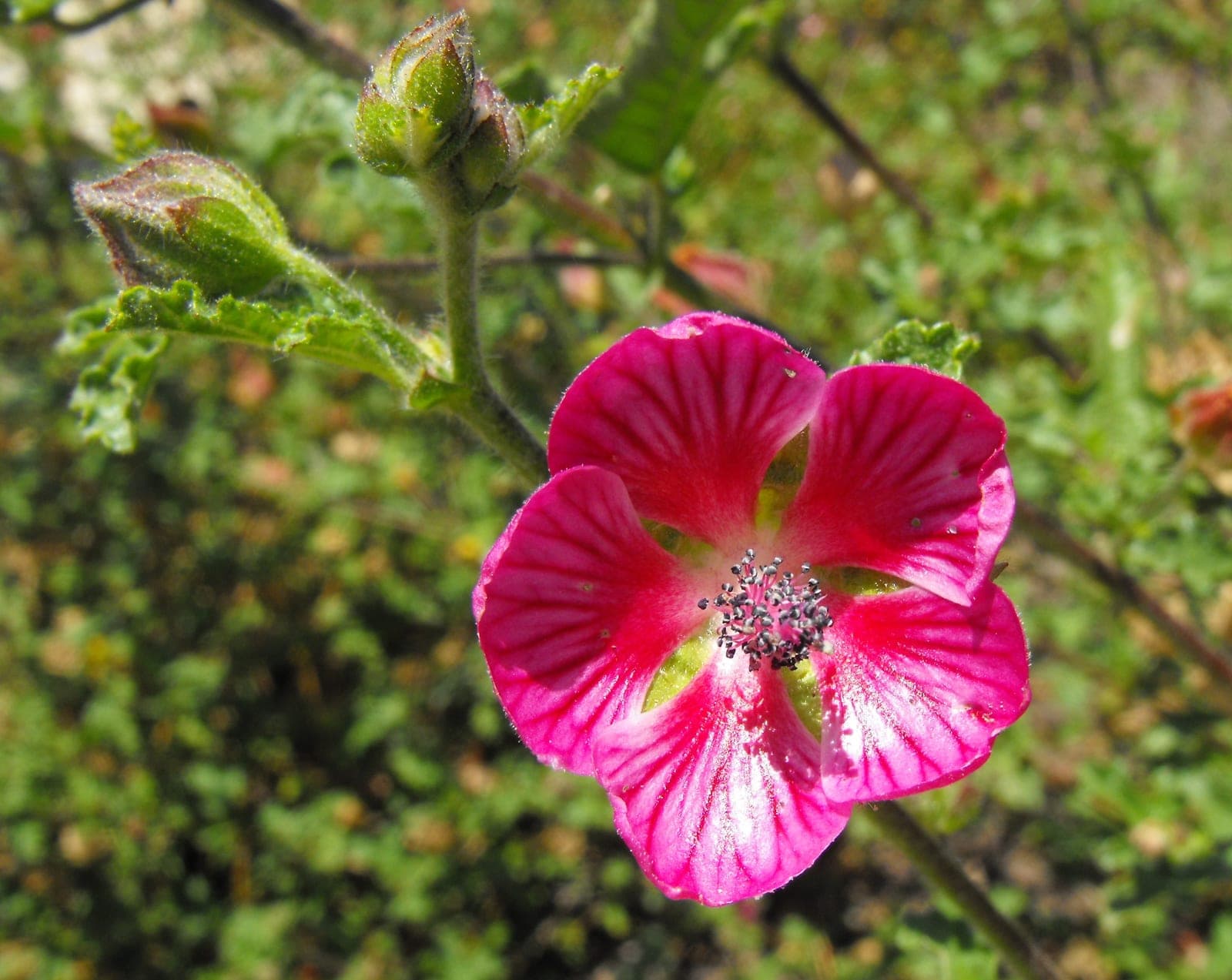
PL. —Anisodontea capensis 'Tara's Pink'Botanical illustration — drop image
Anisodontea capensis 'Tara's Pink'

'Tara's Pink' African Mallow

SummerFall
9a11bHardiness zone
Peak bloom windowZone 6b · frost-offset weeks
Winter
Not in bloom
Spring
Peak bloom
Summer
Peak bloom
Fall
Peak bloom
Peak bloom
In bloom
Background

Anisodontea capensis 'Tara's Pink' is a compact South African shrub in the mallow family (Malvaceae). It produces a long season of small, five-petaled pink flowers with darker veining radiating from the center, running from early spring through late fall and nearly year-round in frost-free climates. In mild-winter zones it functions as a permanent landscape shrub; in colder regions it is commonly grown in containers and overwintered indoors.

Fast-growing and free-branching, 'Tara's Pink' becomes leggy without regular cutting back. It tolerates drought once established, though moderate irrigation improves foliage density and flowering consistency. The plant handles coastal exposure and reflected heat well. In zones below 9, stems root easily from semi-hardwood cuttings, making it straightforward to propagate replacements or build a stock of plants to overwinter in a frost-free space.

Flowers draw bees and butterflies reliably across a long season, which makes the shrub a useful component in warm-climate pollinator plantings.

Care guide
SunFull sun to part shade
WaterModerate
SoilWell-drained
Spacing24–36 in
Height24–48 in
Zone9a – 11b
Seasonal tasks
spring
watchCheck foliage for powdery mildew during warm, humid spells. Improve air circulation and avoid overhead watering if detected.
cutCut plants back by one-third in late winter or early spring before new growth flushes to encourage dense, bushy form.
sowMove container-grown plants outdoors after the last frost. Site in full sun with good air circulation.
summer
watchInspect new shoot tips for aphid colonies. Knock off with a strong stream of water or apply insecticidal soap if populations build.
cutTrim back any leggy stems by one-quarter in midsummer to maintain compact form and encourage a fresh flush of growth.
cutTake semi-hardwood stem cuttings in late summer to propagate replacements or build up stock for overwintering.
fall
sowBring container plants indoors before the first frost. Overwinter in a bright, frost-free location with reduced watering.