
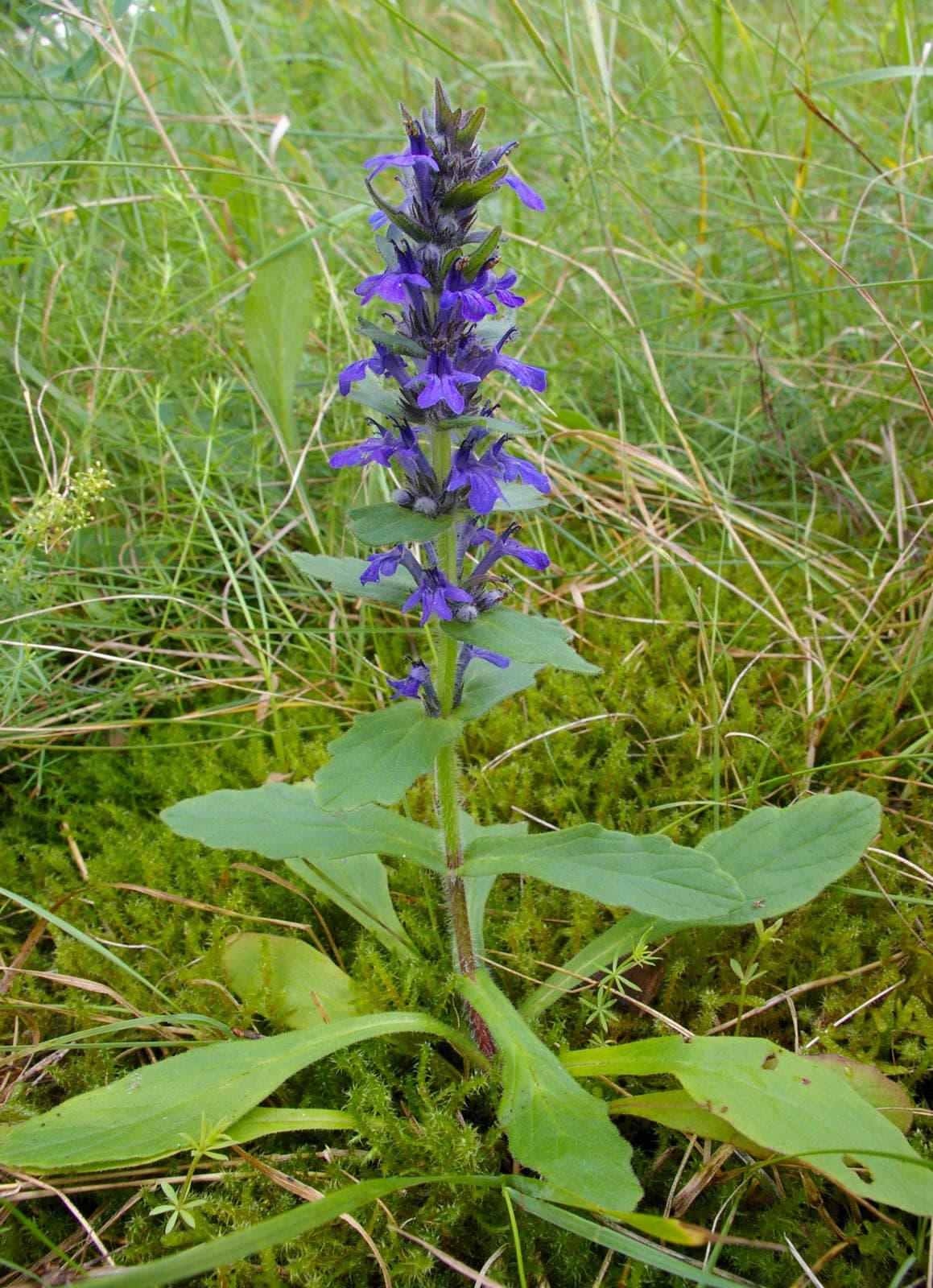
PL. —Ajuga genevensisBotanical illustration — drop image
Ajuga genevensis

Blue Bugle

Spring
4a8bHardiness zone
Peak bloom windowZone 6b · frost-offset weeks
Winter
Not in bloom
Spring
Peak bloom
Summer
Not in bloom
Fall
Not in bloom
Peak bloom
In bloom
Background

Ajuga genevensis, known as Blue Bugle or Geneva Bugle, is a clump-forming herbaceous perennial native to dry grasslands and rocky slopes across Europe. Unlike its more common relative Ajuga reptans, it produces no stolons and stays in a contained rosette, making it far easier to site without concern about spread. Upright, dense clusters of vivid blue flowers appear in late spring above coarse, hairy foliage.

Because it forms tidy clumps rather than running mats, A. genevensis suits rock gardens, dry borders, and pathway edges where a spreading plant would be unwanted. It tolerates drought and lean, stony soils better than A. reptans and performs well in full sun given adequate moisture during establishment. Divide clumps every two to three years to maintain vigor. Sharp drainage is essential; prolonged wet or waterlogged conditions invite crown rot.

Care guide
SunFull sun to part shade
WaterLow
SoilWell-drained, lean, dry to moderate
Spacing8–12 in
Height6–12 in
Zone4a – 8b
Frost hardy
Seasonal tasks
spring
watchMonitor drainage around crowns after heavy spring rains; standing water promotes crown rot.
sowDivide established clumps in early spring as new growth emerges; replant divisions at original depth in well-drained soil.
summer
sowDivide and replant overcrowded clumps in early fall to allow roots to establish before the ground freezes.
watchCheck leaf margins for notching, a sign of vine weevil adults feeding at night; apply nematode drench to soil if confirmed.
watchInspect foliage during humid periods for fungal leaf spot; remove and discard affected leaves and improve air circulation.
cutTrim spent flower stems after blooming finishes to tidy the plant and reduce self-seeding.