
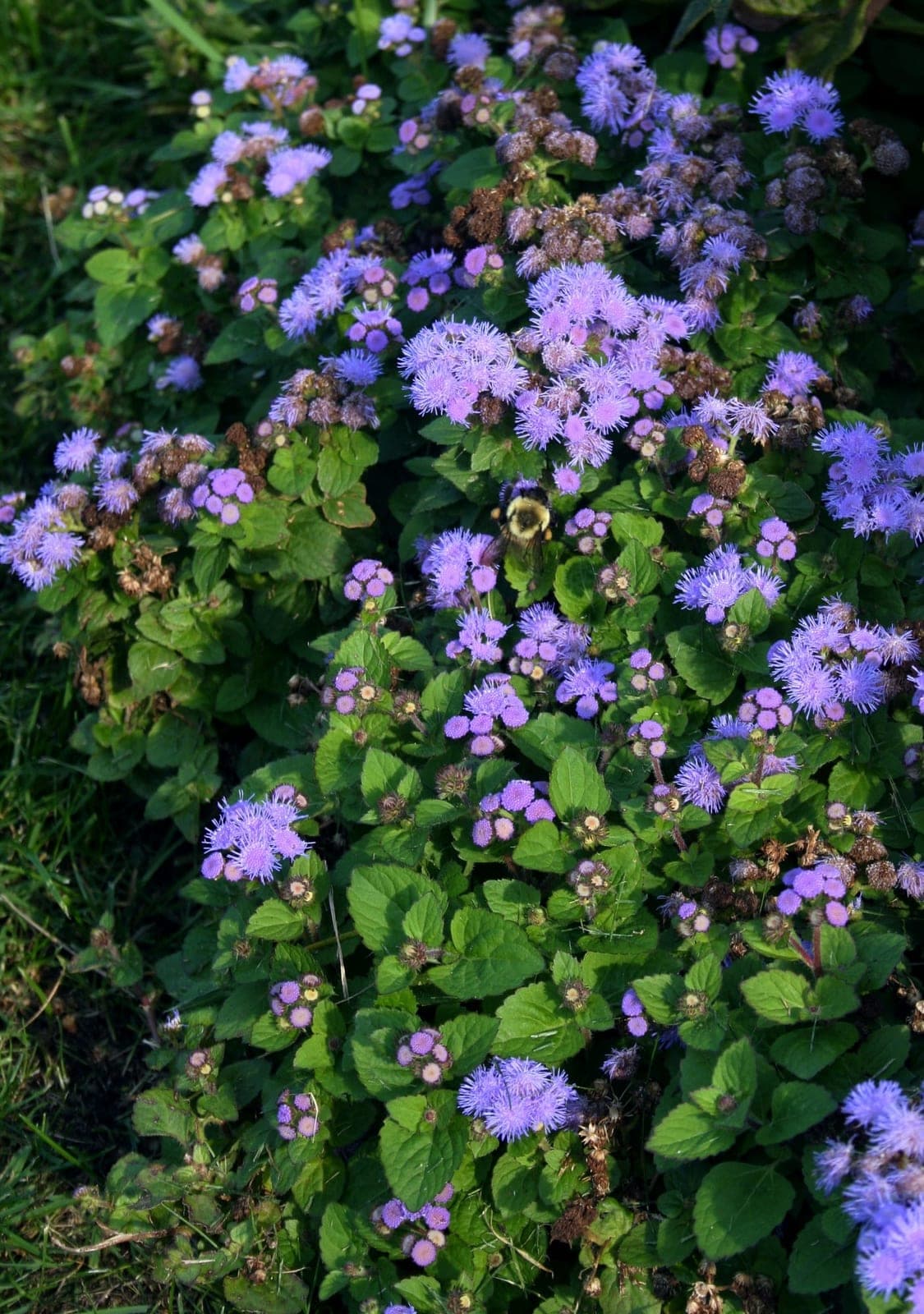
Ageratum houstonianum is a tender annual from Central America grown worldwide as a bedding and edging plant. It produces dense, fluffy clusters in blue, lavender, pink, or white from late spring until the first hard frost. True blue is rare among warm-season annuals, and ageratum remains one of the most dependable sources of it.
Compact cultivars suit edging and containers; taller types reach 18–24 in and fill mid-border gaps. Plants prefer consistently moist, fertile, well-drained soil and perform best in full sun, though light afternoon shade in hot climates helps sustain production through peak heat. Set transplants out only after frost danger has passed. The clusters attract butterflies and small native bees reliably through the season.
The foliage contains precocene compounds, juvenile hormone analogs studied for potential insecticidal applications. Mexican folk medicine has used the plant to treat fever and rheumatism. Internal use is not advisable due to pyrrolizidine alkaloid content in the plant tissue.
Powdery mildew
White or grey powdery coating on leaves - usually starting on older growth in humid conditions or when nights cool.
Improve air circulation by thinning plants. Apply neem oil or potassium bicarbonate spray at first sign. Avoid overhead watering.
Damping Off
Seedlings collapse at the soil line with thin, water-soaked stems; seeds may fail to emerge or rot before sprouting.
Sow in well-draining mix, avoid overwatering, and ensure good airflow. Remove affected seedlings and let the surface dry between waterings.
Root rot
Plants wilt, yellow, and stunt even in moist soil; lower stems and roots turn brown, soft, and mushy and the plant may collapse. Most common in heavy, wet, or poorly drained ground.
Improve drainage and stop overwatering, and never plant too deep. Lift and destroy badly affected plants along with the soil around the roots. Grow in raised or free-draining beds to prevent it returning.
Botrytis (grey mould)
Grey fuzzy mould on petals and stems, worst in cool wet conditions.
Remove affected parts immediately. Improve air circulation. Avoid overhead watering. Apply copper fungicide if severe.
Aster Yellows
Deformed, greenish flowers, stunted growth, and yellowed foliage. Flower centers may produce tufts of leafy growth instead of normal petals.
No cure. Remove and destroy infected plants immediately to stop spread. Control leafhoppers, which transmit the disease, and remove nearby weed hosts.