
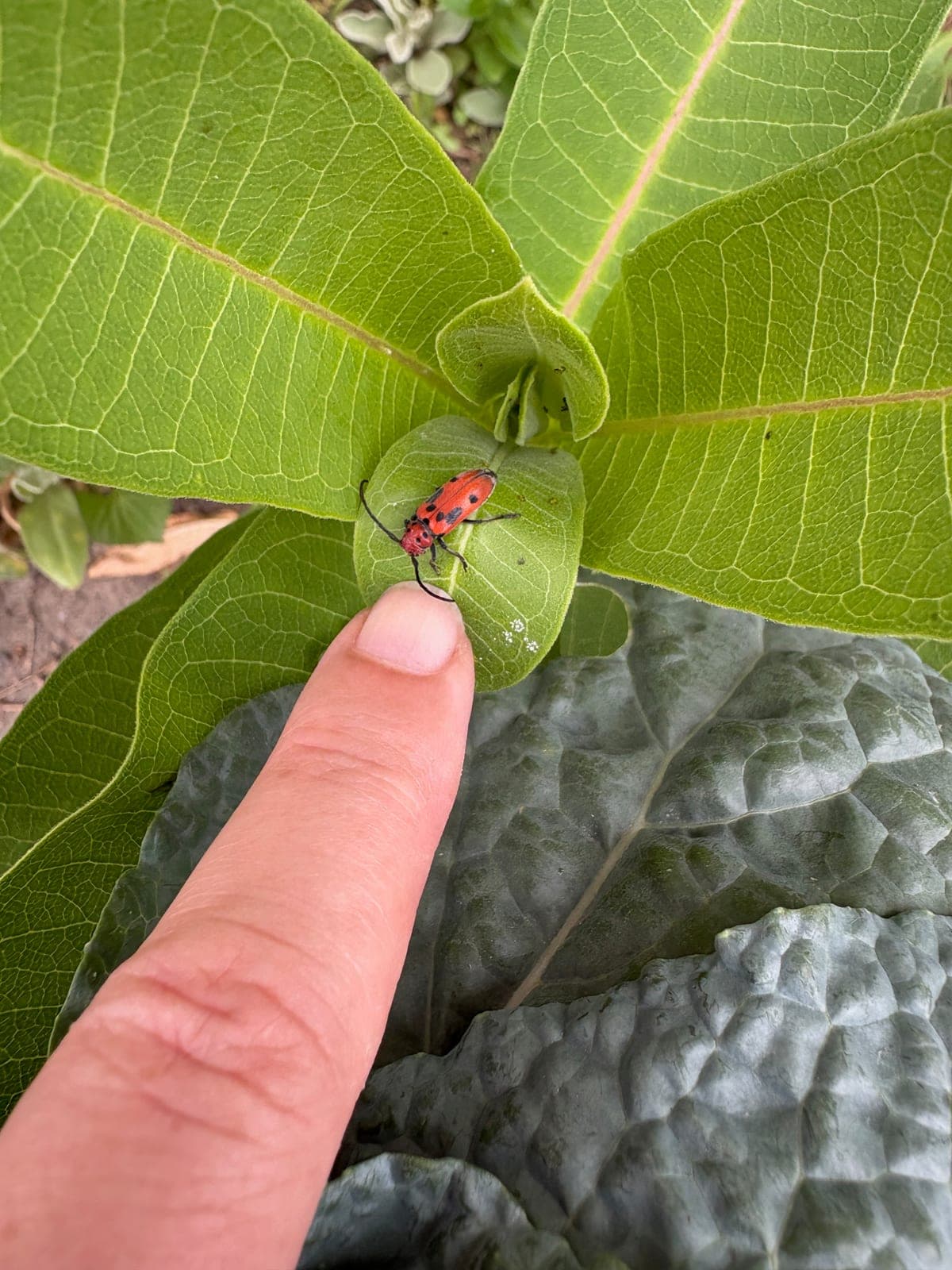
Large Milkweed Bug
Oncopeltus fasciatus, the Large Milkweed Bug, is a true bug in the seed-bug family Lygaeidae - not a pest you fight but a harmless native you invite in by growing milkweed well. Its bold orange-and-black pattern is aposematic: a warning, not decoration. By feeding almost exclusively on the seeds of milkweed (Asclepias spp.), it sequesters the plant's toxic cardenolides into its own tissues, which makes it distasteful to most birds and predators. The coloring is honest advertising of that chemistry, and it is shared, through convergence, with the monarch butterfly and the smaller milkweed bug (Lygaeus kalmii) that often works the same seed pods.
Like all true bugs it has piercing-sucking mouthparts and incomplete metamorphosis - there is no caterpillar-and-cocoon stage. Eggs hatch into nymphs that look like miniature wingless adults, brilliant red-orange, and they cluster densely on stems and seed pods through the summer, molting five times and developing their wing pads and final markings as they go. They feed by injecting saliva into a ripening seed, liquefying the contents, and drawing them back out. Because they concentrate on seeds rather than foliage, they do almost nothing to harm the milkweed plant or anything else in the bed.
For the gardener the bug is best read as a bioindicator: a healthy population simply means your milkweed is setting seed well. The most common mistake is deadheading the pods too early - leave them on the plant through summer and into fall and the bugs will find them. Avoid systemic insecticides anywhere near a milkweed planting, which is the shared larder for monarchs, milkweed beetles, and aphid predators alike. Adults overwinter in leaf litter and garden debris near the milkweed stand, so leaving some mulch undisturbed at the base through winter shelters them and seeds the following season's population.
Harmless native seed-feeder on milkweed - a bioindicator of milkweed patch health, not a threat to garden plants.