
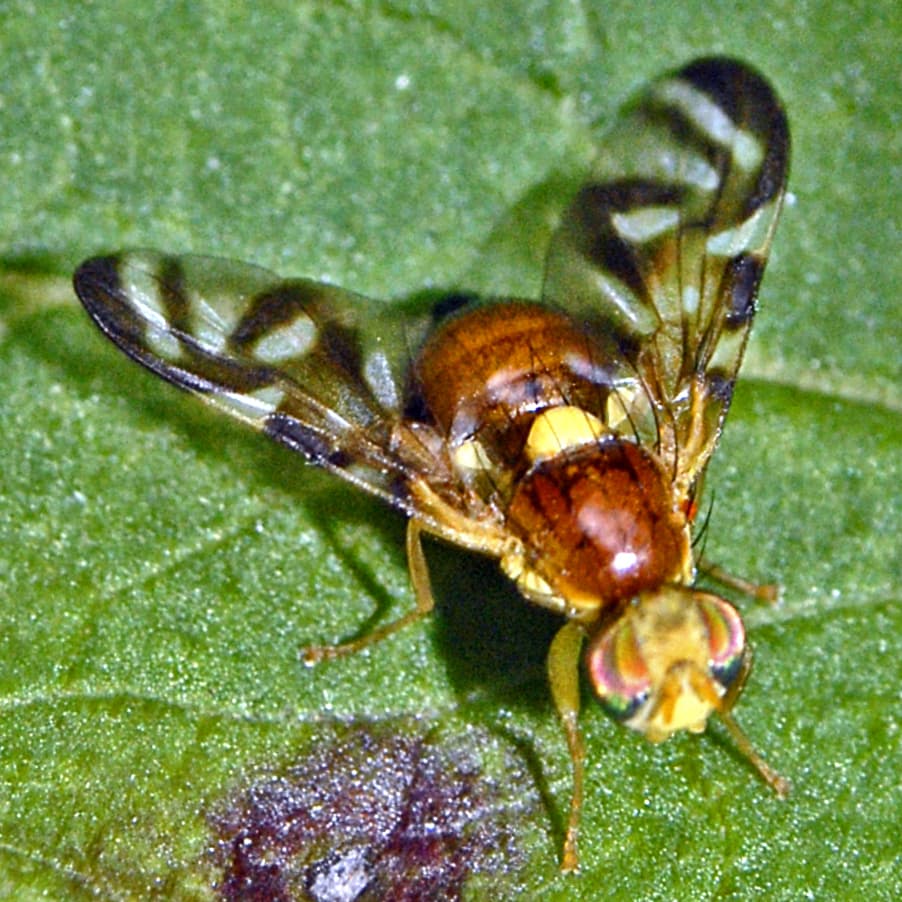
Celery Leaf Miner
Euleia heraclei is a small tephritid fly — part of the same family as fruit flies and picture-wing flies — whose larvae are the primary problem for gardeners. The larvae tunnel through the leaf tissue of plants in the carrot family, particularly celery, parsnip, parsley, and lovage, leaving blotchy, irregular mines that collapse and rot. A heavy infestation can reduce photosynthetic capacity significantly and stunt crop development.
Adult flies have distinctly patterned wings, which is characteristic of the Tephritidae family. Females lay eggs on the undersides of host plant leaves, and larvae begin mining immediately after hatching, feeding between the upper and lower leaf surfaces. The mines start pale and become brown as the tissue dies. There are typically two to three generations per season in temperate regions. The insect overwinters as a pupa in the soil, so the cycle restarts each spring from the ground up.
Euleia heraclei also colonizes wild hosts including hogweed and wild parsnip, which can serve as reservoirs near garden edges. Gardeners in areas with abundant roadside Apiaceae may see higher adult pressure than those in more isolated plots.
Pest whose larvae mine the foliage of Apiaceae plants, damaging leaf tissue and reducing plant vigor and yield.
Irregular, winding tunnels or pale blotchy patches visible through the upper leaf surface. Affected tissue turns translucent or papery. Heavy infestations cause widespread leaf dieback and reduce stalk development.
Remove and destroy mined leaves immediately. Install fine mesh row cover before transplanting to exclude adult flies. Avoid overhead irrigation that stresses plants and attracts egg-laying females. Apply spinosad as a targeted spray in severe cases, following label directions closely.