
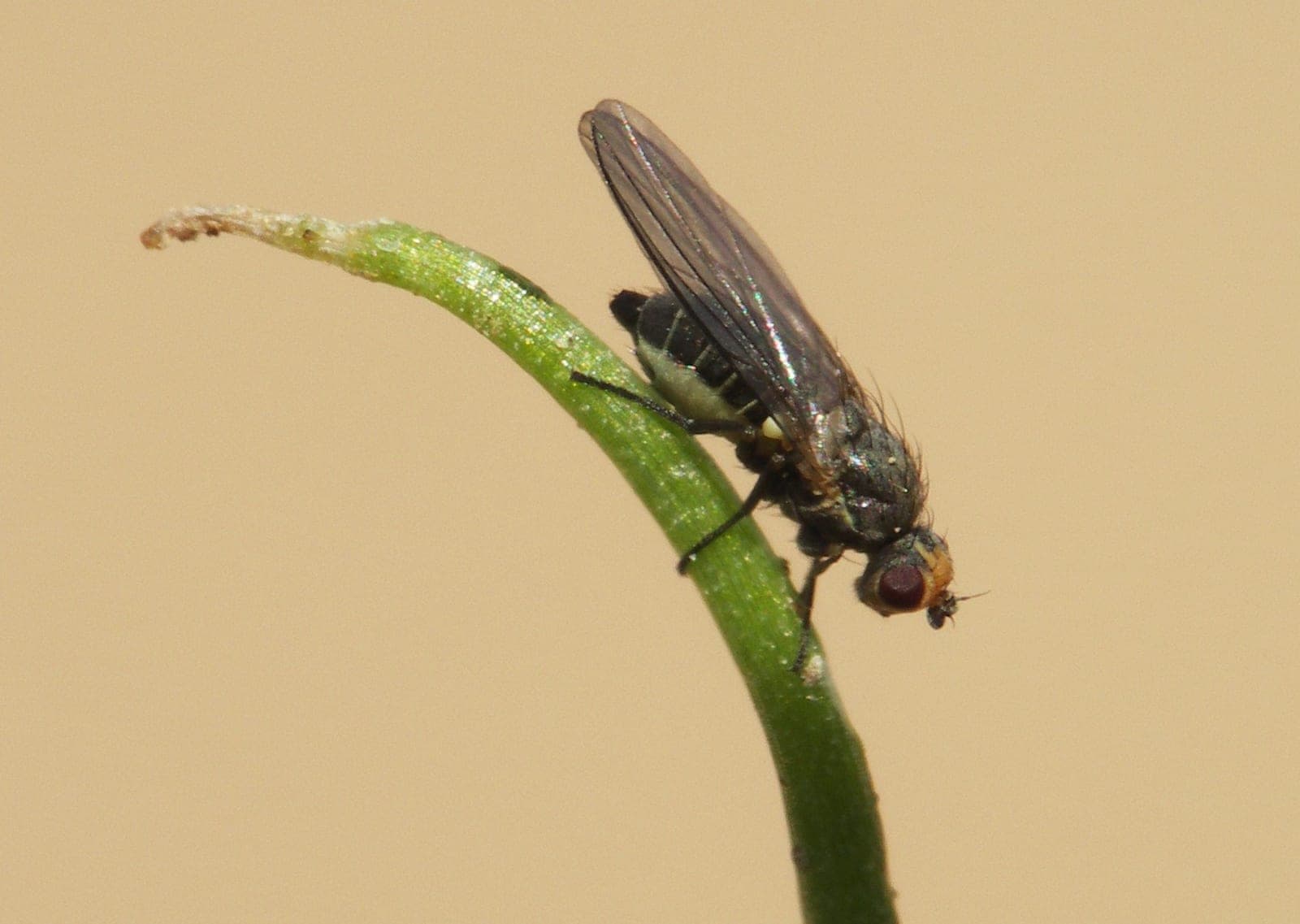
Allium Leaf Miner
Allium leaf miner is a small fly native to mainland Europe that reached North America in 2015, first confirmed in Pennsylvania. It has since spread across the Northeast, including upstate New York, and poses a serious threat to home and market gardens growing onions, leeks, garlic, chives, and shallots. Damage is often well underway before it becomes visible on the surface.
The fly completes two generations per year. Spring adults emerge from March through May and use their mouthparts to puncture allium leaves, both to feed on sap and to lay eggs. Larvae hatch and mine downward through leaf tissue into the stem or bulb, where they pupate. A second flight occurs in October and November, and the overwintering pupae survive in plant debris or soil. Because larvae are hidden inside plant tissue through most of their development, they are largely protected from contact sprays once eggs have hatched.
Row covers placed over allium beds before the first spring adult emergence are the most reliable defense. Moving alliums to a new bed each season reduces the population of overwintering pupae in soil where alliums grew the previous year.
A direct pest of cultivated alliums whose larvae mine and destroy leaf and bulb tissue, reducing yield and making bulbs unmarketable.
Rows of small white feeding punctures run along leaf surfaces, followed by pale winding mines inside leaf tissue. Infested shafts may contain small white maggots and show rotting or distortion at the base; plants can be killed outright in heavy infestations.
Cover plants with fine-mesh insect netting before adult flies emerge in early spring and again in early fall. Remove and destroy all infested plant material. No chemical treatment is effective once larvae are inside the tissue. Rotate alliums to a new bed each year to disrupt the overwintering population.