
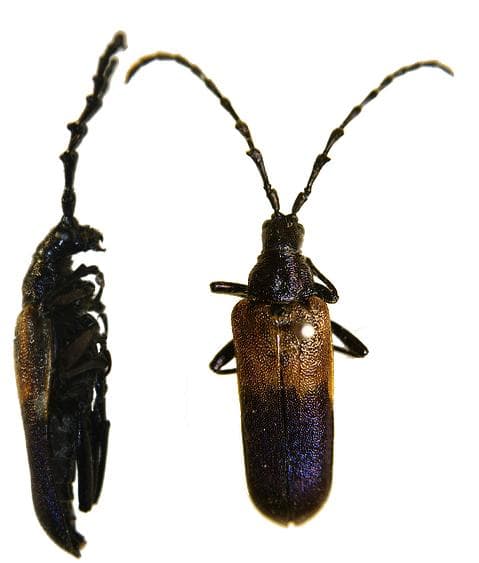
Elderberry Borer
Desmocerus palliatus, the eastern elderberry borer, is a longhorn beetle in the family Cerambycidae and the primary boring pest of elderberry in eastern North America. Gardeners growing Sambucus for fruit, wildlife value, or ornamental use should know this beetle, because larval damage inside the root crown can kill individual canes or entire shrubs across one to two seasons.
Adults emerge in late spring and remain active into midsummer, often found feeding on pollen and nectar in elderberry flower clusters. After mating, females lay eggs at the base of stems near or just below the soil surface. Larvae bore down into the pith and root crown and feed there for up to two years before pupating. The first visible sign of trouble is usually a cane that wilts and collapses mid-season. Frass and bore holes at or below the crown are the most reliable diagnostic signs. Because larvae spend nearly their entire lives inside plant tissue, they are difficult to reach once established.
Desmocerus palliatus is an elderberry specialist and cannot complete its life cycle on any plant genus other than Sambucus. In cultivated elderberry plantings, adults can disperse from surrounding wild shrubs and increase pressure over successive seasons, so the broader landscape context matters when assessing risk.
A root and stem borer whose larvae tunnel into the crown of elderberry shrubs, weakening or killing canes over one to two growing seasons.
Cane tips wilt and collapse in early summer. Oval exit holes appear on cane surfaces accompanied by sawdust-like frass at the stem base. Larvae tunnel through the pith, causing individual canes to die back completely while the rest of the plant may remain healthy.
Cut all infested canes to ground level immediately and destroy them; do not compost. No effective chemical control exists once larvae are established inside canes. Monitor in late spring for adult beetles (Desmocerus palliatus — metallic blue-green with yellow spots) and remove dead or weakened wood during dormant pruning to reduce overwintering habitat. Vigorous plants maintained through annual renewal pruning are less susceptible.