
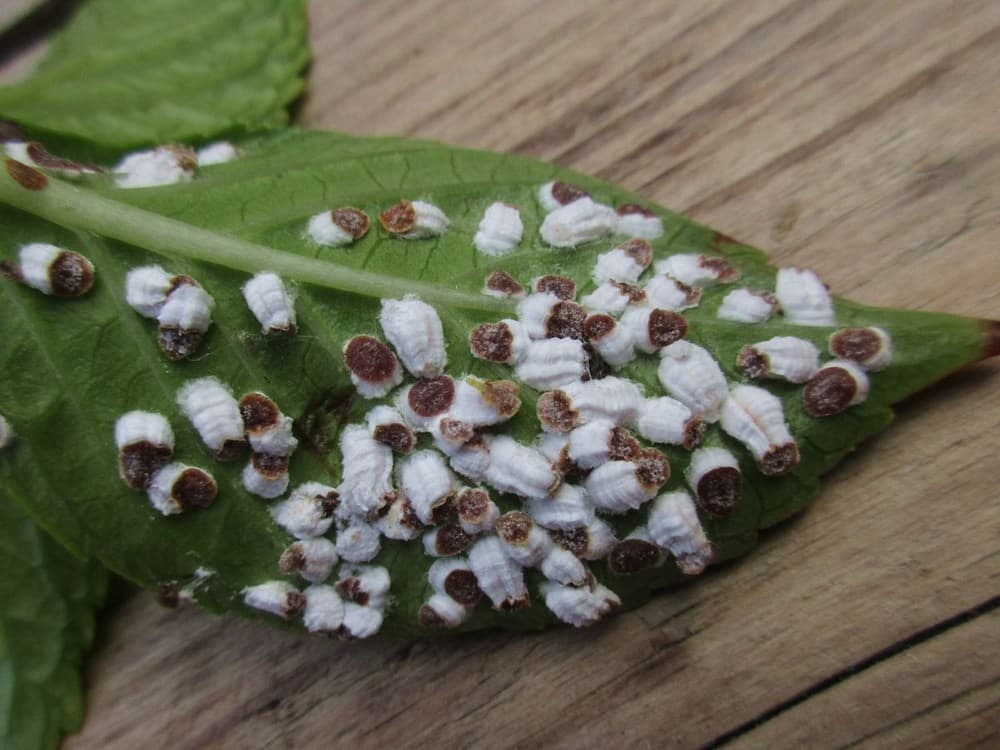
Hydrangea Scale
Hydrangea scale (Pulvinaria hydrangeae) is a soft scale insect in the family Coccidae. It feeds on hydrangeas most commonly but will also colonize maples, dogwoods, euonymus, and other woody ornamentals. Gardeners usually notice it first by the distinctive white, cottony egg masses females produce along stems and branches in late spring, sometimes mistaken for mealybug or a fungal growth.
The insect overwinters as a mated female on the bark of host plants. In late spring she produces a waxy ovisac packed with hundreds of eggs. Crawlers hatch and disperse across the plant, settling on bark and leaf undersides to feed. There is one generation per year. As the scales feed they excrete honeydew, which coats foliage and supports sooty mold growth. Heavily infested plants show yellowing leaves, reduced vigor, and in severe cases branch dieback.
Hydrangea scale has natural enemies including parasitic wasps and predatory beetles, but these rarely provide adequate control once a population is established on a garden plant. Preventive monitoring matters more than reactive spraying.
Sap-sucking pest of woody ornamentals, primarily hydrangeas, causing direct feeding damage and indirect damage through honeydew and sooty mold.
Tan to brown oval scale insects cluster on bark and older stems, appearing as raised waxy bumps. Affected stems show yellowing foliage, reduced vigor, and dieback. Sticky honeydew excretion promotes secondary sooty mold on leaves below.
Apply dormant horticultural oil to bare stems in late fall or early spring before bud break to smother overwintering scales. During the growing season, target newly hatched crawlers in late spring with summer-weight horticultural oil or insecticidal soap. Remove and destroy heavily infested canes. Avoid excess nitrogen fertilization, which produces the soft growth most attractive to scale.