
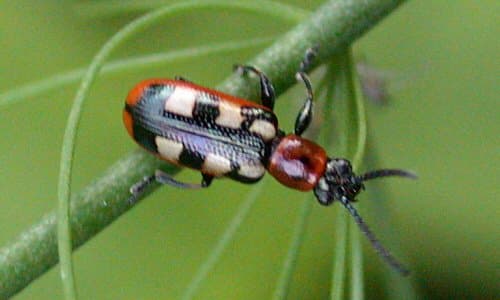
Asparagus Beetle
The asparagus beetle is a small, striking beetle that feeds exclusively on asparagus and is considered one of the most significant pests of that crop in both Europe and North America. Because asparagus is a long-lived perennial that takes two to three years to reach harvestable maturity, repeated beetle pressure can weaken crowns and reduce yields for years.
Adults overwinter in garden debris and soil near asparagus beds, then emerge in spring just as spears push through the soil. Females lay dark, oblong eggs directly on spears and fern foliage. There are typically two generations per season. First-generation adults scar and discolor emerging spears, reducing their quality for harvest. Both adults and the fat gray larvae then feed heavily on the fern stage through summer, stripping foliage and weakening the plant's ability to store energy in its roots for the following year.
Monophagous pest that feeds on asparagus at both the adult and larval stage, damaging spears during harvest and weakening plants by defoliating summer fern growth.
Blue-black or spotted beetles feed on spears, leaving brown scarring and bent tips. Dark eggs stand upright on spears and ferns; larvae defoliate the fronds.
Handpick adults and larvae and crush eggs. Keep the bed clean of debris where beetles overwinter. Harvest spears promptly and use spinosad or neem if populations are heavy.