
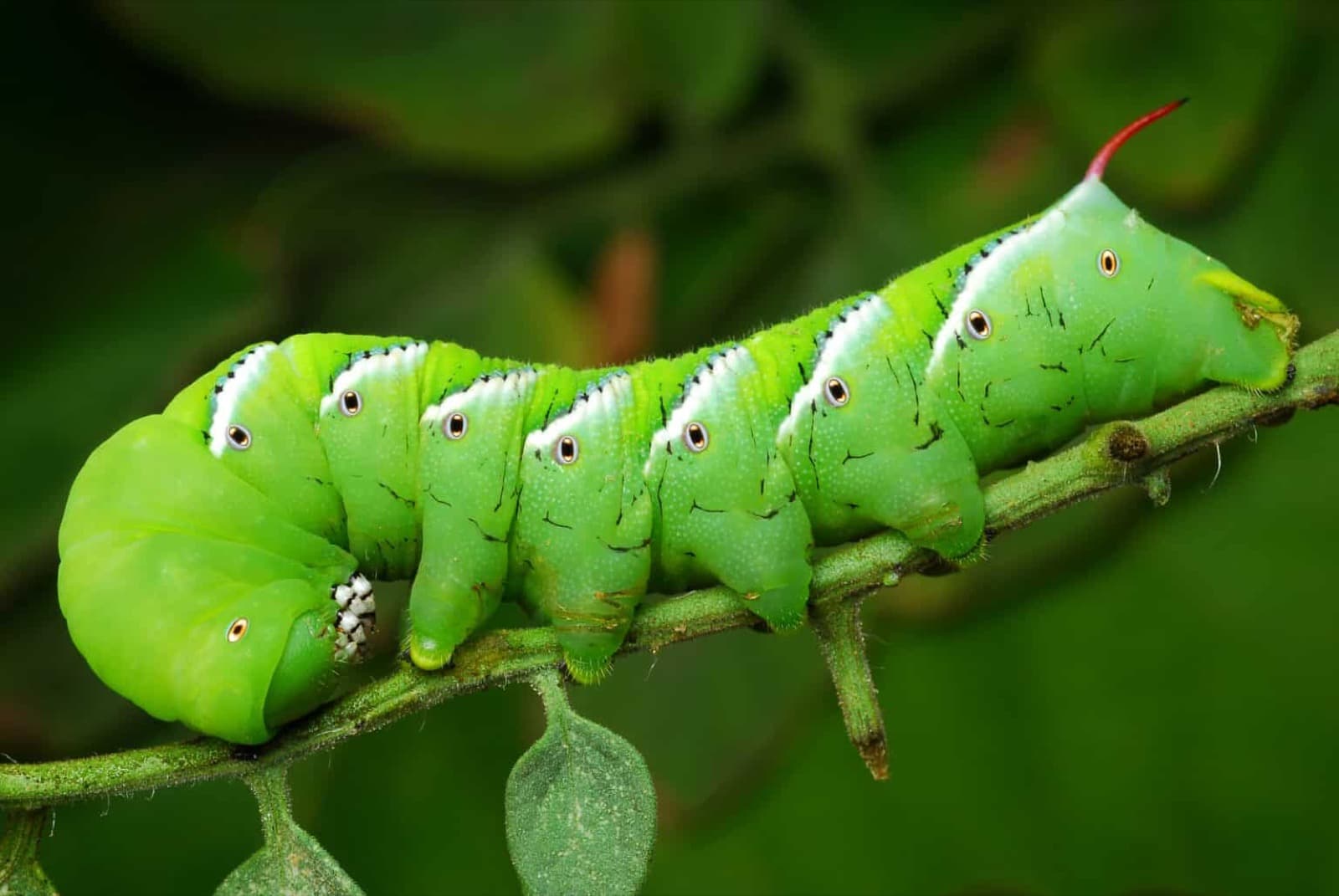
Tomato Hornworm
The tomato hornworm is the larval stage of the five-spotted hawkmoth, a large sphinx moth native to North America. Despite the name, the caterpillar feeds on multiple plants in the nightshade family, including tomatoes, peppers, eggplant, and potatoes. A single larva can remove most of the foliage from a plant in a matter of days, making it one of the more destructive caterpillar pests in the vegetable garden.
Larvae are bright green with white diagonal stripes along the sides and a dark horn at the tail end. They feed primarily at night or in low light, which is why infestations often go unnoticed until damage is already advanced. Look for dark frass on leaves and the soil below as an early sign. The adult moth does not damage plants. A useful marker of natural control is the presence of small white cocoons attached to a hornworm's back — these belong to braconid parasitic wasps that have already doomed that larva. Caterpillars carrying these cocoons should be left alone; the emerging wasps will go on to parasitize more hornworms in the same garden.
Manduca quinquemaculata is closely related to the tobacco hornworm (Manduca sexta), and the two are frequently confused. Both species feed on solanaceous plants and look nearly identical as larvae. The plant they are found on is not a reliable way to tell them apart.
A leaf-feeding pest that can rapidly defoliate tomatoes, peppers, and other solanaceous vegetables during its larval stage.
Large green caterpillars with a rear horn that strip leaves and chew into fruit. Dark droppings appear on foliage below.
Handpick and destroy caterpillars. Apply Bt (Bacillus thuringiensis) if heavy. Leave any with white wasp cocoons to host parasites.