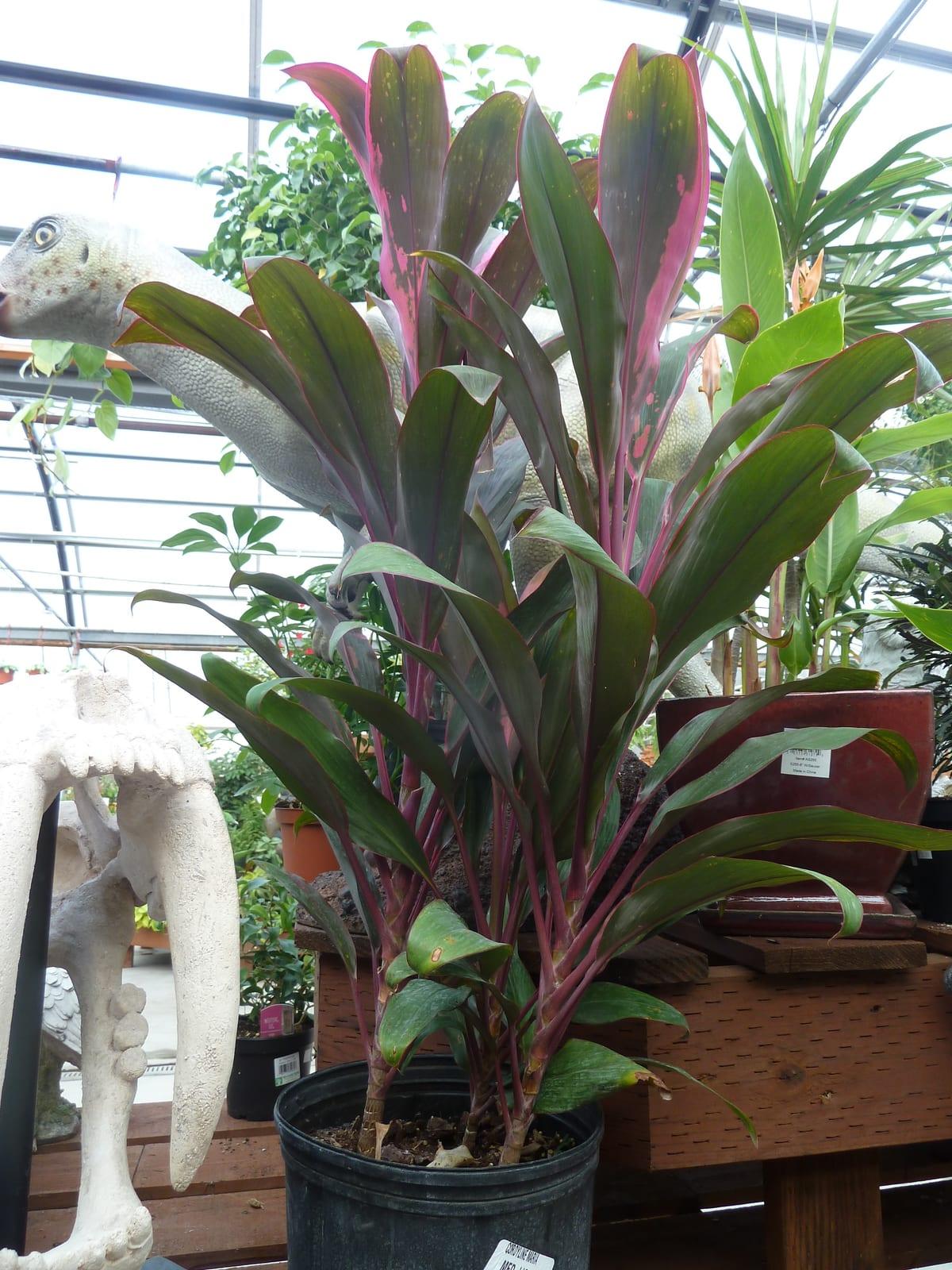
Ti plant (Cordyline fruticosa) is a bold, upright foliage plant native to Southeast Asia and the Pacific, where it has been cultivated for centuries across many cultures. Indoors it is grown almost entirely for its dramatic, lance-shaped leaves, which come in deep burgundy, bright red, pink, cream, green, and combinations of all of these depending on the cultivar. That range of color makes it one of the more visually striking plants available for interior spaces, and named varieties remain popular in houseplant collections for exactly that reason.
Ti plant does best in bright, indirect light, which is what preserves the intensity of its leaf colors; lower light causes colorful foliage to revert toward plain green and overall growth slows. It wants consistently moist soil without sitting in water, and it genuinely needs high humidity - dry indoor air is the most common reason leaves develop brown, crispy tips that are often wrongly attributed to underwatering. The second most common problem is watering with fluoride-rich tap water. Ti plant is unusually sensitive to fluoride and chlorine, and chronic exposure produces brown leaf tips that look nearly identical to humidity or drought stress. Using distilled or collected rainwater sidesteps the issue entirely.
As the plant matures it drops its lower leaves and develops a bare cane, eventually resembling a small palm in silhouette. If a plant becomes too leggy or outgrows its space, the cane can be cut back hard and new growth will emerge from the base or from nodes along the stem. Those cut sections can themselves be rooted, which is a practical way to start new plants.
Bright, indirect light - a few feet back from a south or west window, or in front of a well-lit east window - keeps leaf colors vivid and growth steady. Direct sun scorches the leaves, while deep shade causes colorful cultivars to fade toward green and makes the plant noticeably more prone to root rot from slow soil drying.
Water when the top inch of soil is dry; never let it sit in water
Feed with a diluted balanced houseplant fertiliser
Repot when roots crowd the pot
Problems & troubleshooting
Watch for
Raise the humidity with a pebble tray or humidifier, or group plants together
Check leaf undersides for spider mites and mealybugs
Water with filtered or rainwater if the leaf tips brown: it is sensitive to fluoride