
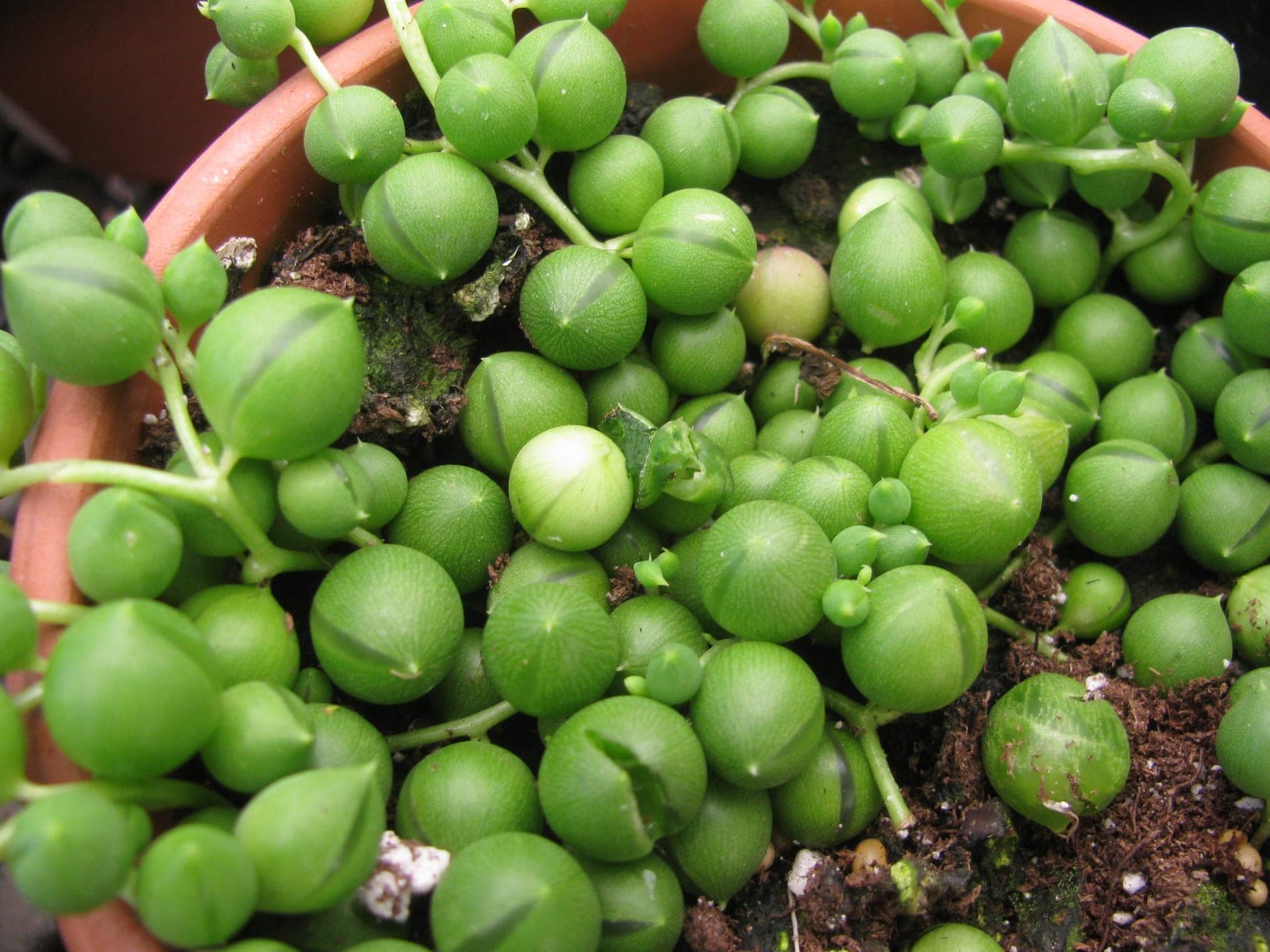
String of pearls is the trailing succulent everyone wants and plenty struggle with — cascading strands of round, pea-like leaves spilling over the pot. Each 'pearl' is a water-storing leaf with a translucent window that lets light in, which is the plant's clever way of coping with strong sun in a compact form.
The two failures are always the same: not enough light, so the strands go leggy and the pearls shrivel; or too much water, which rots the shallow roots overnight. Give it your brightest indirect spot, a gritty succulent mix, and a thorough soak only once the soil is bone dry. Grown well, it is easy to propagate — lay a strand across fresh soil and it roots itself.
Wants very bright indirect light with a little direct morning sun; too dim and the strands stretch and the pearls space out and shrivel.
Water the soil thoroughly, then let it dry completely — the pearls store water, so overwatering and rot are the main killers
Tolerant — forgives a missed watering and prefers to dry out.
Mildly toxic — the sap and beads can irritate the mouth, stomach, and skin if chewed or handled. Keep away from pets and children.
Water only once the soil is fully dry, then soak thoroughly
Feed lightly with a dilute succulent fertiliser
Trim leggy strands and lay them on soil to root and fill out the pot
Shrivelled pearls mean too little water or light; mushy ones mean rot
Repot only when needed — it likes a snug pot