
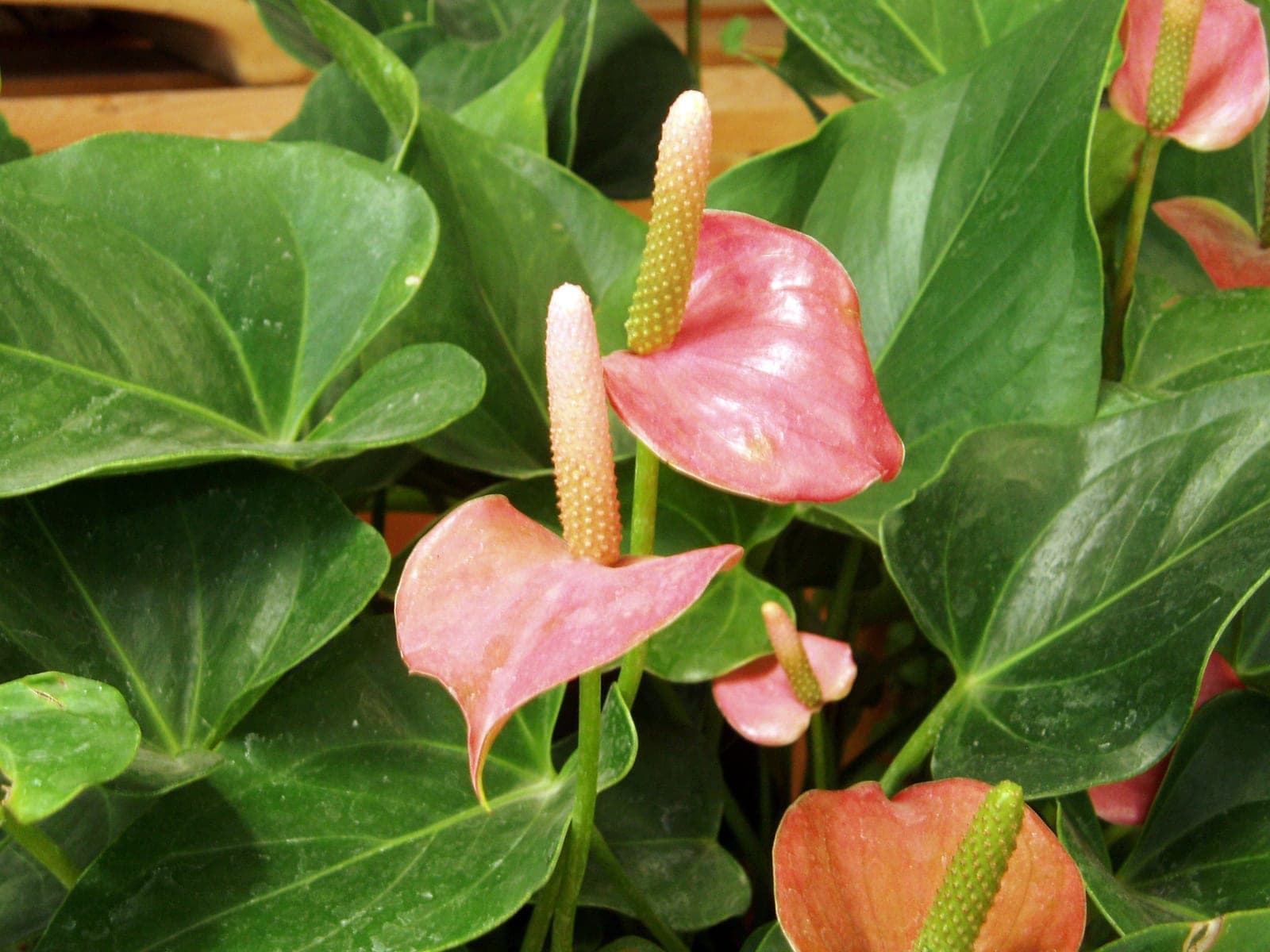
Anthurium
The anthurium is grown for its glossy, heart-shaped 'flowers' — really lacquered-looking spathes in red, pink, white, or coral, each wrapped around a stubby spike — and a healthy plant carries them almost year-round. It is a tropical epiphyte at heart, so it wants the same things an orchid does: a chunky, airy root run and warmth.
Give it bright indirect light, high humidity, and a coarse mix that drains fast, and it flowers freely. The usual disappointments — no blooms, yellowing leaves — trace back to too little light or roots left sitting in water. Keep it warm and humid, let the top inch dry between drinks, and wipe the leaves to keep that signature shine.
Bright indirect light for the most flowers; it survives medium light but blooms less. No direct midday sun, which scorches the leaves and spathes.
Water thoroughly and drain — it likes a coarse, airy mix and hates sitting wet
Low — keep to a consistent rhythm and don't let it dry out hard.
Contains insoluble calcium oxalates — mouth and throat irritation if chewed. Keep away from pets and children.
Water when the top inch is dry, then drain fully
Feed with a dilute high-phosphorus fertiliser to push blooms
Wipe the leaves and spathes to keep them glossy
No flowers usually means too little light; yellow leaves mean soggy roots
Repot into fresh airy mix when it crowds the pot