
The little lantern flowers come in bright light, ideally a window with some direct sun.
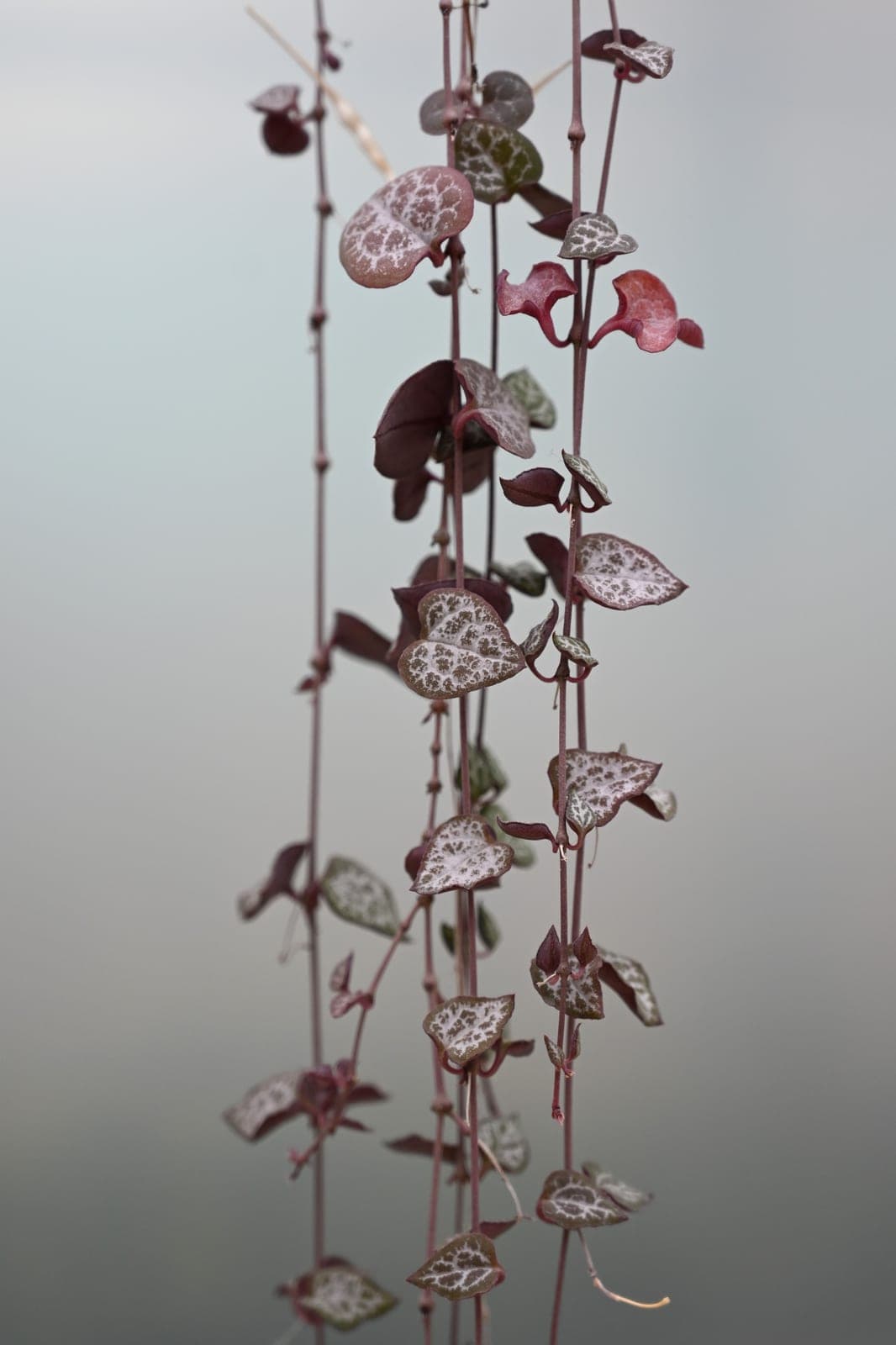
Ceropegia woodii is a trailing vine native to South Africa, Eswatini, and Zimbabwe. It produces pairs of small, heart-shaped leaves along long, wiry stems - each leaf marbled silver on the upper surface and flushed deep purple underneath. People grow it indoors for the visual effect of those cascading stems, which suit a hanging basket or a high shelf equally well. The compact leaf size means even a long vine takes up very little horizontal space.
The plant stores water in its semi-succulent leaves and in a large underground tuber, which means overwatering is the most reliable way to kill it. The soil should be allowed to dry out almost completely between waterings, and frequency should drop significantly in winter when growth slows. Bright indirect light keeps the silver variegation vivid and the internodal spacing tight; lower light causes leaves to fade and spread far apart on the stem. Low humidity is not a problem - this plant is native to dry habitats and handles typical indoor air without any supplemental misting or trays.
Along its stems, String of Hearts produces small aerial tubers that look like pale beads. These can be detached and pressed into damp soil to start new plants, making propagation straightforward once the parent plant matures. Given time and consistent care, the stems can trail several feet.
Place it within two to three feet of a bright window - south or east-facing works well - where it receives strong ambient light but not sustained direct midday sun. Too little light causes the leaves to lose their silver marbling and spread far apart on the stem; too much harsh direct sun scorches the thin foliage.
Soak thoroughly, then wait until the soil is completely dry
Feed with a diluted cactus and succulent fertiliser
Water far less in winter; soggy soil rots the roots
Check for mealybugs in the leaf joints
Repot into gritty mix when it outgrows the pot