
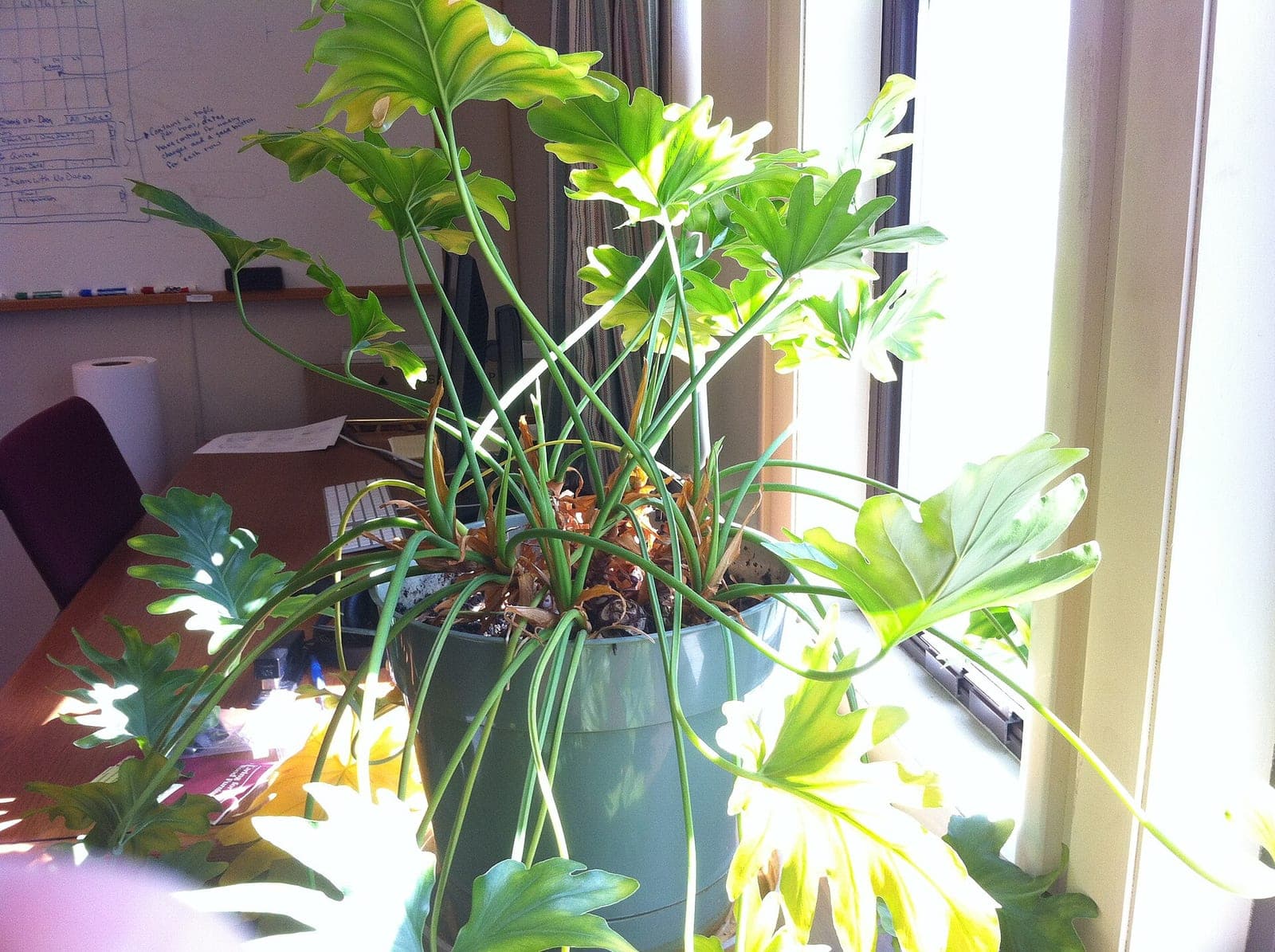
Split-Leaf Philodendron
Thaumatophyllum bipinnatifidum, commonly called Split-Leaf Philodendron, is a large-leaved aroid native to South America, with wild populations found in Brazil, Bolivia, Argentina, and Paraguay. It is grown indoors for its dramatic, deeply lobed foliage - leaves can reach two feet or more across on mature plants - and its relatively forgiving temperament. Despite the common name, it is not a true philodendron and is frequently confused with Monstera deliciosa, which shares the split-leaf nickname but belongs to an entirely different genus.
Indoors, this plant thrives in bright indirect light near a large east- or west-facing window, or set back a few feet from a bright south-facing one. It tolerates average household humidity and handles temperatures between roughly 60 and 85°F without complaint. The most common mistake is overwatering: the thick petioles store moisture, and chronically wet soil leads quickly to root rot. Let the top inch or two of the potting mix dry out before watering again, and always use a pot with drainage.
This species grows outward from a central point rather than climbing, eventually forming a short, stout trunk as older leaf scars accumulate on the stem. A well-grown indoor specimen can reach five to six feet in both height and width over several years, so it needs room to expand. Mature plants frequently produce offshoots at the base, called pups, which are the simplest and most reliable way to propagate the plant at home.
Bright indirect light means within a few feet of a large window but shielded from direct rays; too little light produces smaller, less deeply lobed leaves and lax stems, while prolonged direct afternoon sun will scorch the foliage.
Water once the top inch of soil is dry
Feed with a balanced houseplant fertiliser
Wipe the leaves to remove dust and check them over
Check leaf undersides for spider mites and mealybugs
Repot when roots crowd the pot
Give it room: leaves can reach 2 feet across on a mature plant