
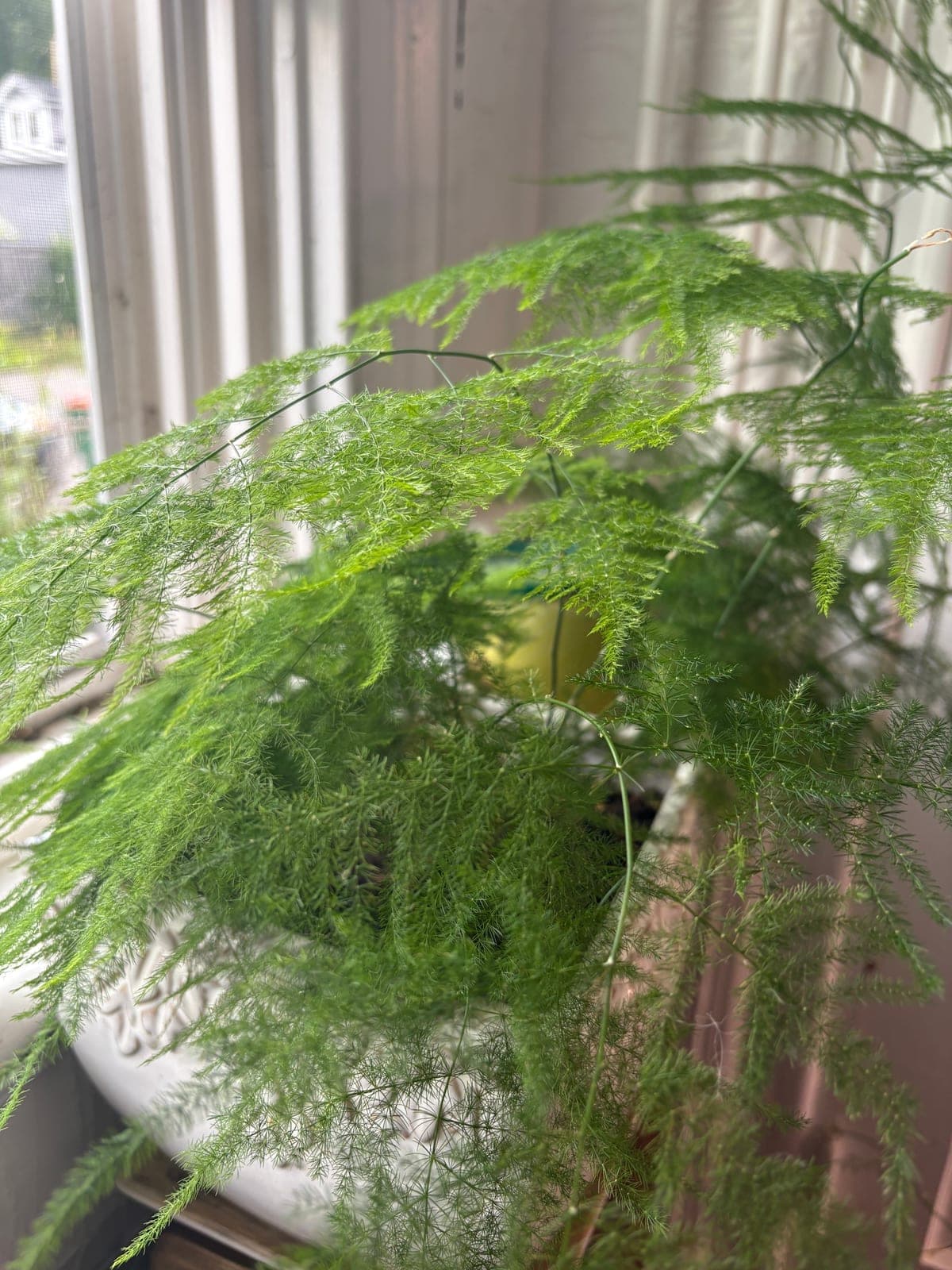
Plumosa Fern
Despite its name and delicate appearance, the plumosa fern is not a true fern - it's a member of the asparagus family, with flattened branchlets so finely divided they look like feathery fronds. The effect is almost ethereal: cascading layers of soft, bright green that trail beautifully from a shelf or hanging basket.
It wants consistent moisture and humidity more than most succulents but less rigidity than a true fern - which makes it slightly forgiving of an occasional dry spell, as long as you don't let it go crispy. The long, arching stems can become vining and scrambling with age; trim them back to keep it full and bushy, or let them run along a support for a wilder look. Like all asparagus relatives it can eventually produce tiny white flowers and small berries - ornamental, but worth removing if pets are around.
Bright indirect light keeps the fronds fine and feathery; direct sun scorches the delicate foliage, and deep shade makes it sparse and leggy.
Keep lightly and evenly moist; water before the top dries fully
Feed with a balanced liquid fertiliser
Maintain high humidity with a pebble tray or grouping; mist occasionally
Trim long vining stems to keep it full and bushy
Yellowing and needle drop means too dry, too little light, or too much direct sun
Divide and repot when the tuberous roots fill the pot