
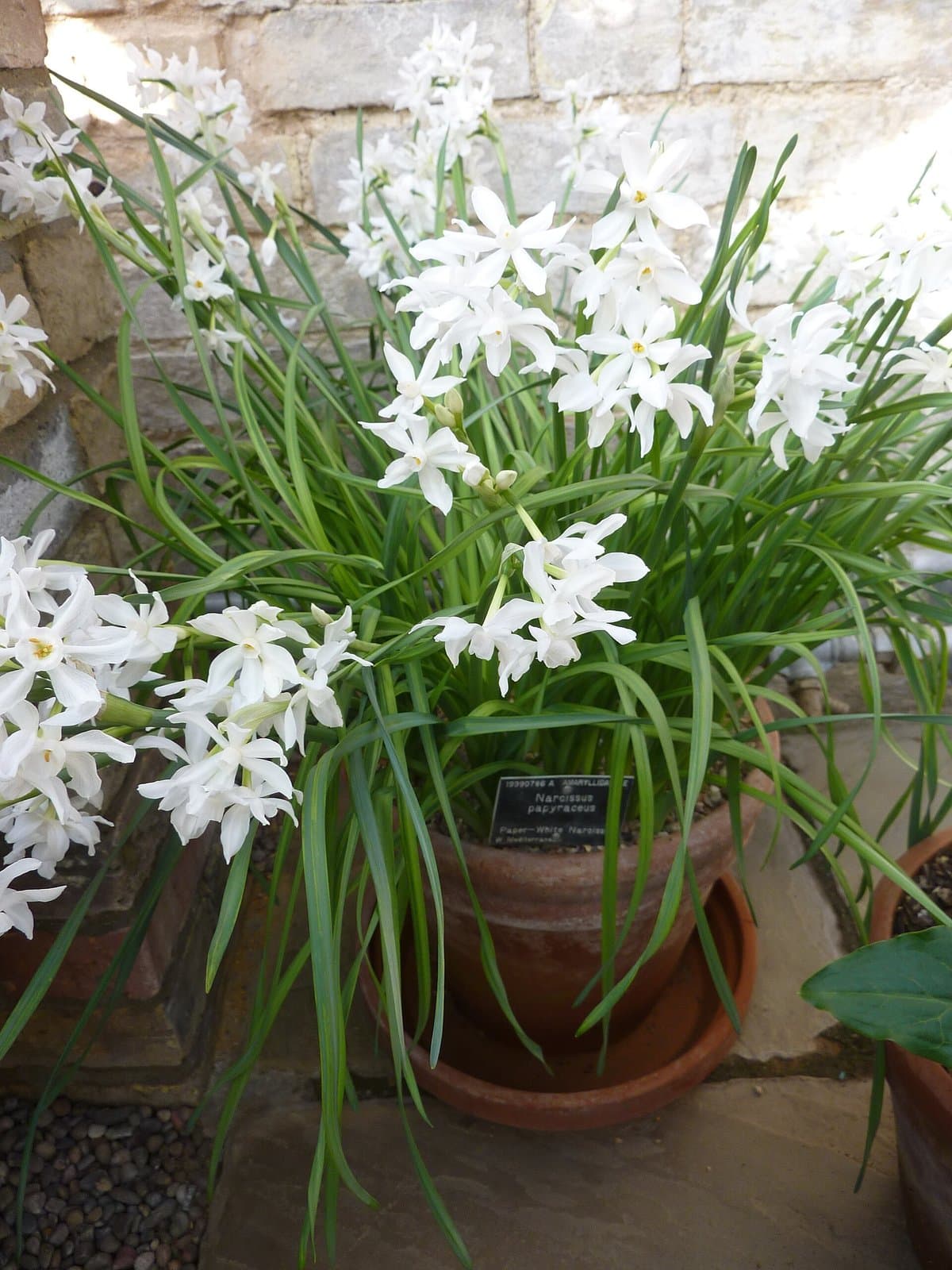
Paperwhite Narcissus
To encourage bloom: Pot the bulbs 4 to 6 weeks before you want flowers; no chilling needed, so a batch started every couple of weeks from late October gives flowers right through winter.
Keep them cool and bright once the shoots are up, or the stems flop; a dilute alcohol drink (one part 40 percent spirit to seven parts water) once the shoots are 1 to 2 inches tall keeps them short.
Paperwhites are the easiest flowering bulb to grow indoors: a tender Mediterranean narcissus that needs no cold period at all, so you simply set the bulbs in a dish of pebbles and water, put them somewhere bright, and have clusters of small, intensely fragrant white flowers four to six weeks later. Start a dish every two or three weeks from late October and there are flowers on the table from Thanksgiving to February.
The one problem is height. Grown warm and dim, the stems shoot up and topple just as the flowers open. Two things fix it: keep the dish cool (a 50 to 65°F room, a bright porch or an unheated spare room is ideal) and, once the shoots are an inch or two tall, replace the plain water with a weak alcohol solution of about one part 40 percent spirit (vodka or gin) to seven parts water. The mild drought stress stunts the stems by a third or more without touching the flowers. Rubbing alcohol works too at one part to ten or eleven; never use beer or wine, whose sugars rot the roots.
The scent is strong and musky and divides a room; some people love it, some find it too much, so it is worth growing one dish before committing to a dozen. After flowering the bulbs are spent. Forced in water they rarely recover enough to flower again, so compost them and buy fresh, firm bulbs each autumn.
Bright light from the moment the shoots appear; a cool, sunny windowsill gives the shortest, sturdiest stems. In a warm, dim room the stems stretch and fall over before the flowers open.
Keep the water just below the base of the bulbs; top up as the roots drink it down
Once shoots are 1–2 inches tall, switch to a 1:7 spirit-and-water mix to keep the stems short
Turn the dish every couple of days so the stems grow straight toward the light
Compost the bulbs after flowering; forced paperwhites do not rebloom