
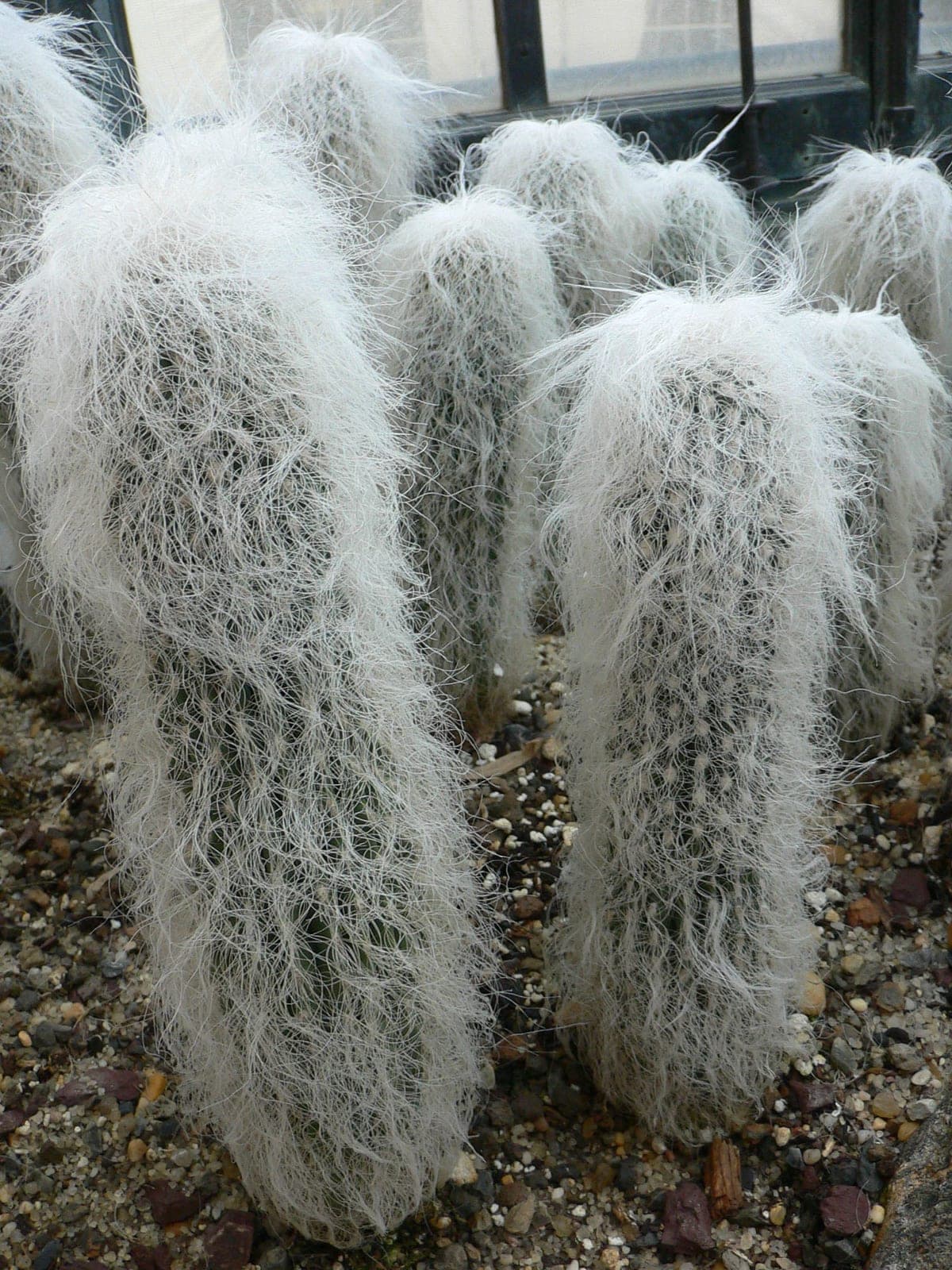
Old Man Cactus is a columnar cactus native to the dry, rocky slopes of Hidalgo and Veracruz in central Mexico. Its defining feature is a thick covering of long white hairs, which are modified spines that help insulate the stem against extreme heat and temperature swings in its natural habitat. Although the species is threatened in the wild, widespread cultivation has reduced pressure on wild populations, and it remains one of the most recognizable novelty cacti available to indoor growers.
Indoors, success depends on two things: as much direct sun as possible and strict restraint with water. A south or southwest-facing window that delivers several hours of direct sunlight each day is the right placement. The most common mistake is overwatering. The thick stem stores water efficiently, and roots sitting in damp soil will rot quickly. Water thoroughly in spring and summer only after the soil has dried out completely, then cut back to once a month or less in winter when growth slows. Low humidity and normal warm indoor temperatures suit it well; keep it away from cold drafts and air conditioning vents.
This plant is a genuinely slow grower, adding only a few inches per year under good conditions. The white hair becomes denser and more pronounced as the plant matures, so young specimens look quite sparse compared to older ones. Propagation is almost always done from seed, which is how commercial growers produce it at scale; offsets are rarely generated by plants grown indoors.
Direct sun for at least three to four hours a day is essential, making a south or southwest-facing window the right indoor spot. In too little light the stem will stretch and lean, losing its tight columnar form permanently.
Water only once the soil is completely dry
Feed with a dilute cactus fertiliser
Check the woolly hair for hidden mealybugs
Repot into fresh gritty mix when it outgrows its pot