The cushion that keeps itself warm
The fourth of the alpines looks like a tuffet of moss until early summer, when it does something no moss can.
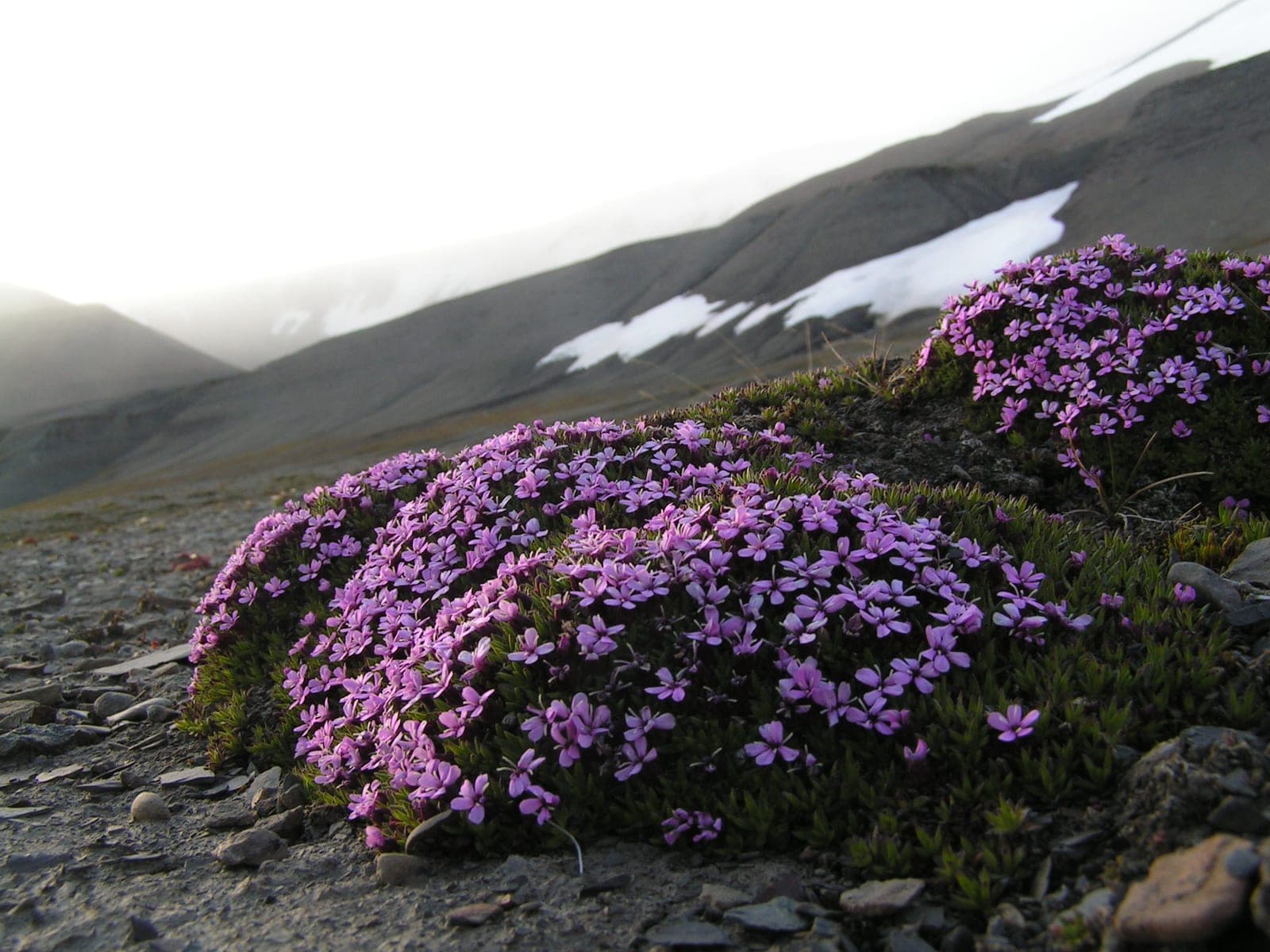
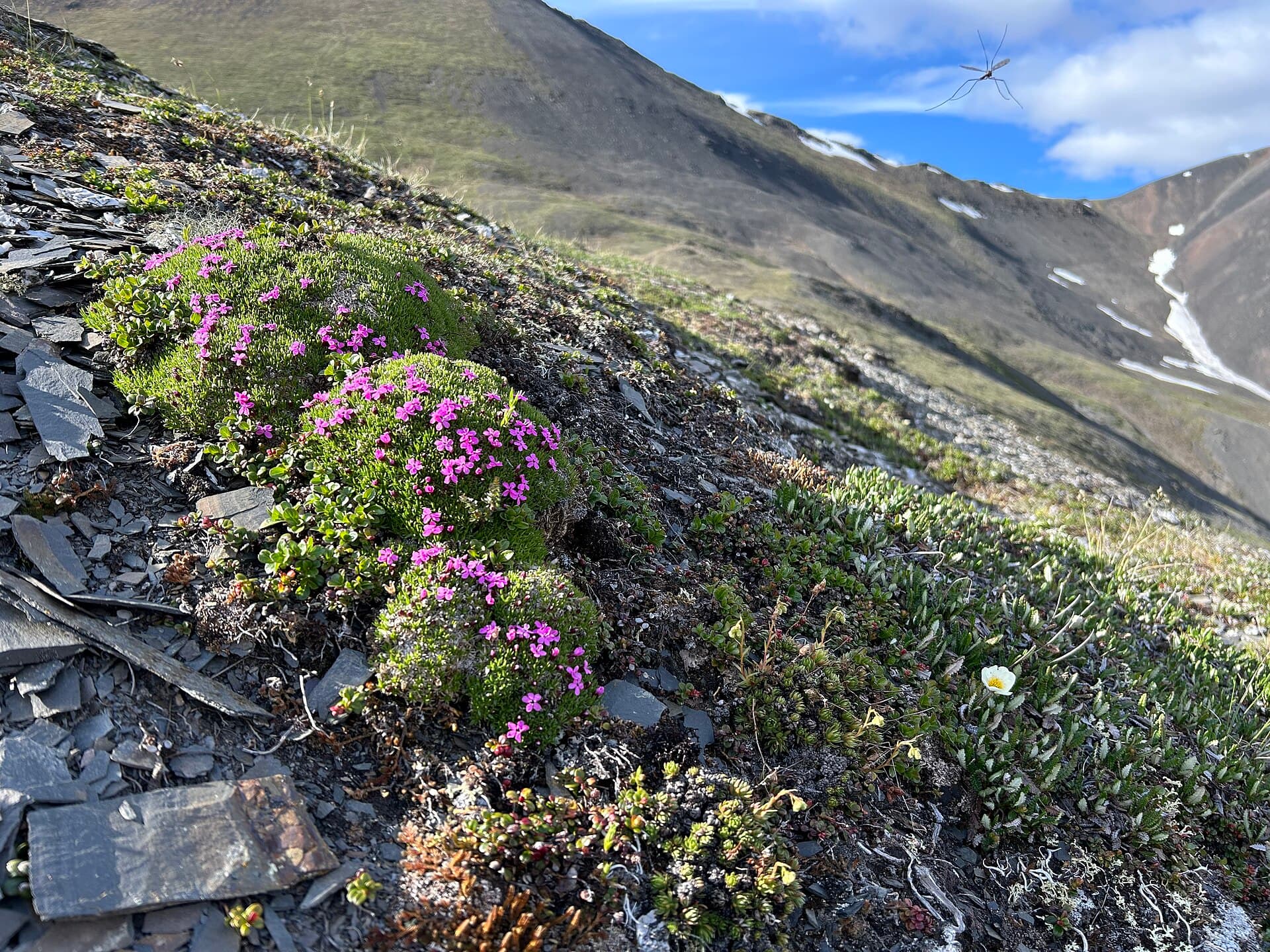
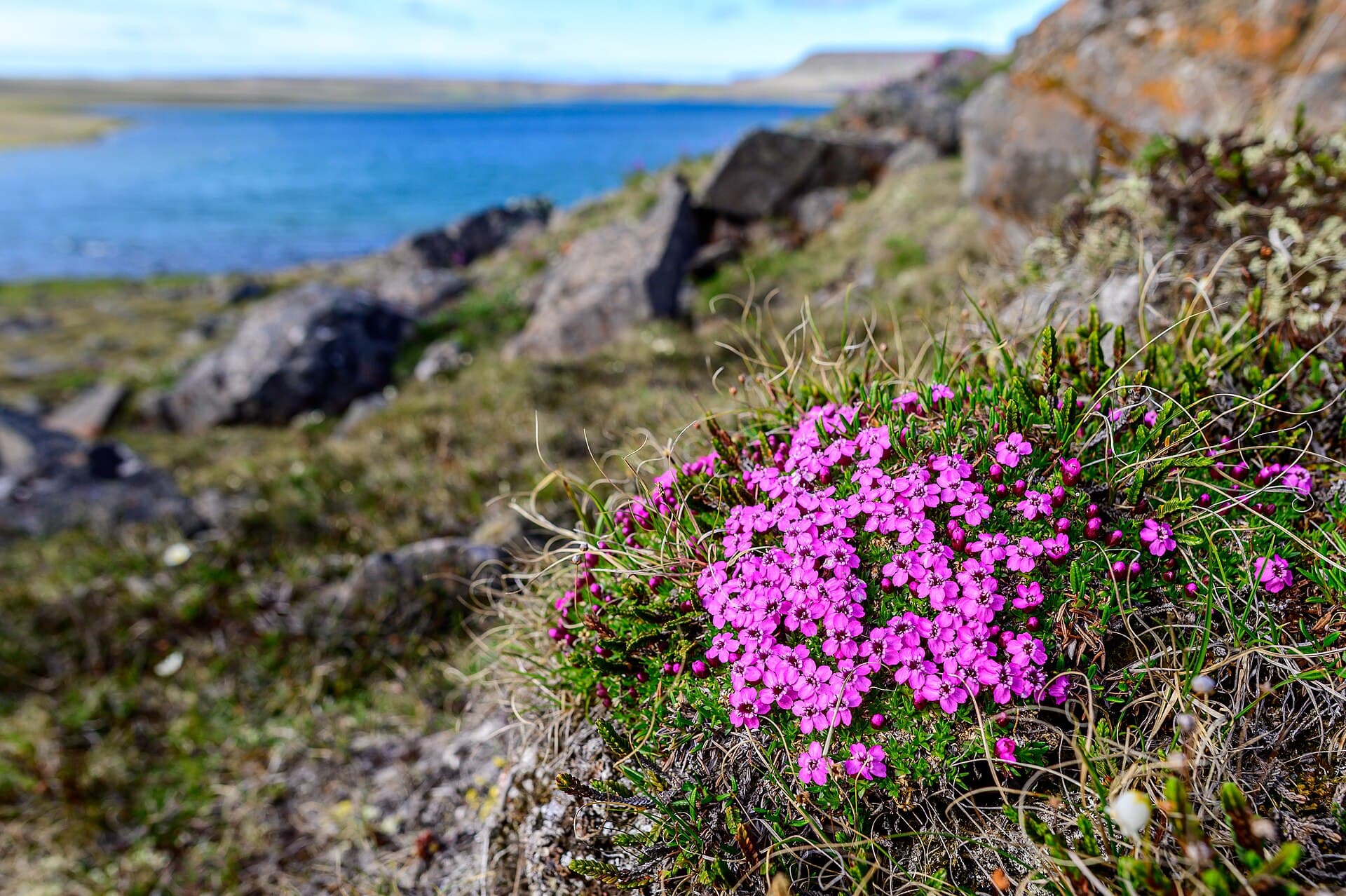
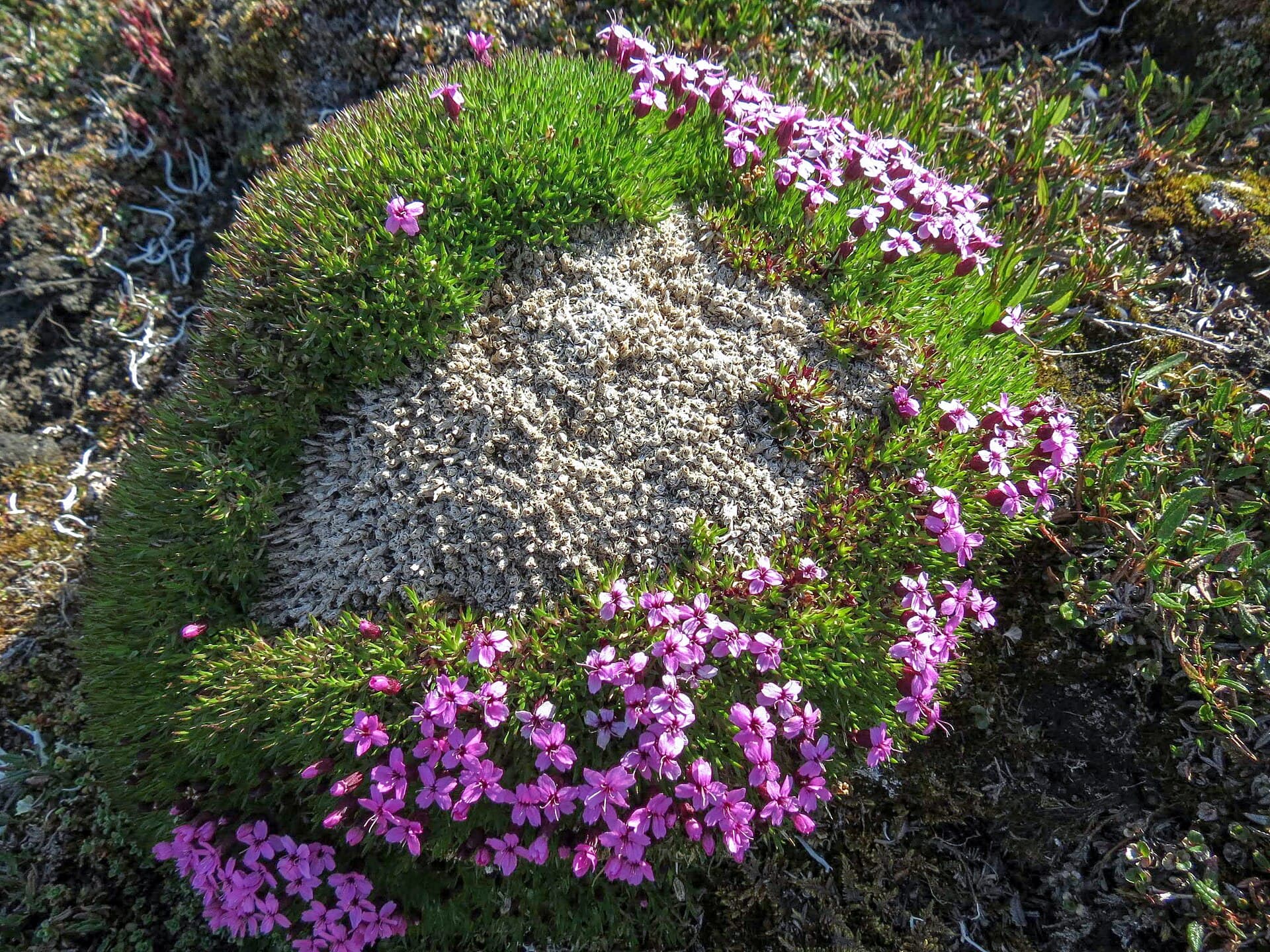
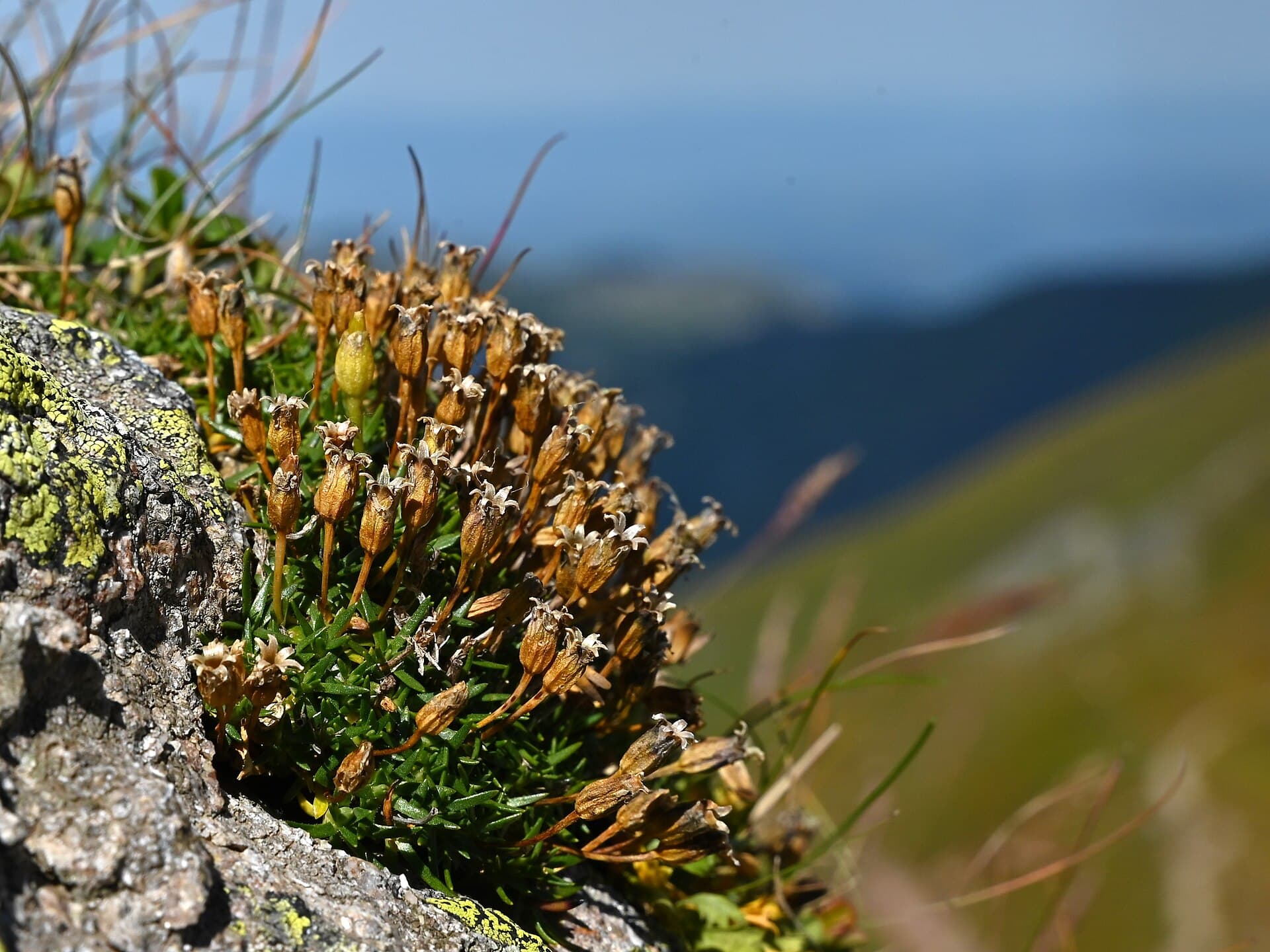
I promised more alpines, and the fourth is the one that has been waiting in the wings of this series all along - it appeared in the companion lists of the stone-breaker post without ever getting its own say. Silene acaulis, moss campion, is the plant most people walk past on a high trail without registering it as a flowering plant at all. It reads as moss: a dense, ground-hugging dome of tiny evergreen leaves, rarely more than a few inches tall, moulded over the grit like something upholstered. Acaulis means stemless, and that is the whole strategy stated in one word. Then, in early summer, the disguise fails spectacularly, and the entire cushion studs itself with small five-petalled pink flowers, sometimes so thickly that the green disappears. No moss can do that, and the surprise of it is half the plant's charm.
The cushion is not a shape so much as a machine. Packed that tightly, the plant builds its own weather: on a sunny day the interior of a moss campion dome can run many degrees warmer than the air an inch above it, a pocket of borrowed summer on a mountainside that barely has one. The wind that scours everything else slides over the dome and leaves it alone. That private climate is generous, too - moss campion is what ecologists call a nurse plant, and seedlings of other alpine species germinate inside its cushion, sheltering in the warmth until they are big enough to face the slope on their own terms. In the Arctic it has even earned the name compass plant, because the flowers tend to open first on the warm south side of the dome, so that a cushion in early bloom carries its own crude bearing.
All of this is bought with time, and the timescales are the part I find hardest to hold in my head. A moss campion may take a decade to flower for the first time. A cushion the size of a dinner plate can be decades old; the great domes of the high slopes are often centuries old, and researchers have used their slow, steady spread to put rough dates on the retreat of glaciers - measure the biggest cushion on a moraine, and you have a floor on how long the ice has been gone. The plant does all this on a taproot driven deep into the rubble, native across the roof of our continent: the Rockies, the Sierra Nevada, the wind-flayed summits of New England, and the whole sweep of the Arctic.
In the garden it asks for the same contract as the rest of this series: full sun, lean mineral soil, drainage sharp enough that winter wet never sits against the crown, and no feeding - richness makes the cushion loose, and a loose cushion rots. A trough or scree bed suits it; so does patience, which with this plant is not a virtue but the entire point.