
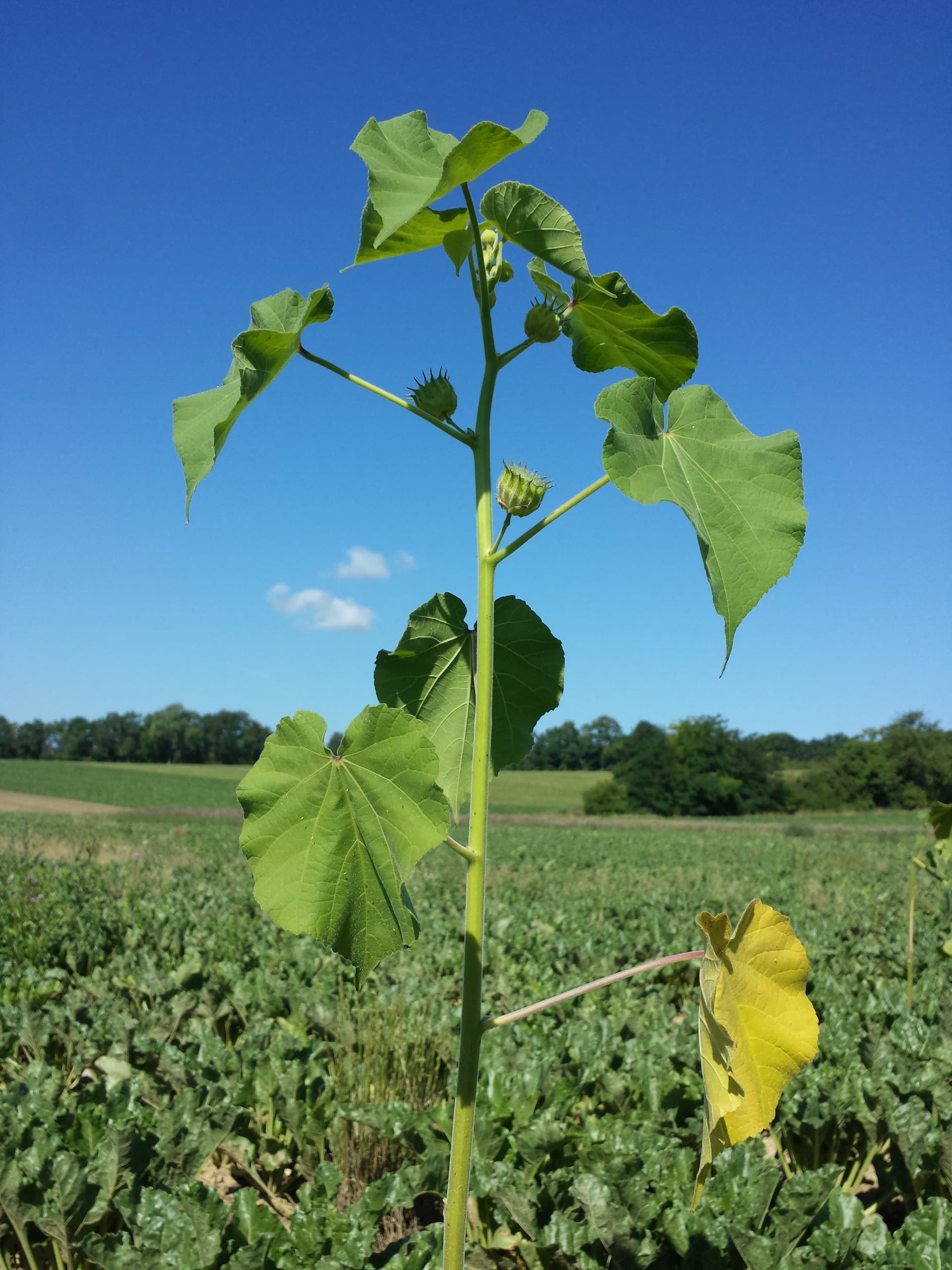
Velvetleaf is a fast-growing annual native to Central and East Asia, where it was cultivated for its stem bast fiber as a jute substitute. It was introduced to North America in the 18th century as a potential fiber crop, escaped cultivation, and became one of the most economically damaging annual weeds in temperate agriculture, particularly competitive in corn and soybean fields.
Plants reach 3–6 feet in a single season, with large heart-shaped leaves covered in fine, soft hairs that give the plant its common name. Small yellow flowers appear from midsummer onward, followed by distinctive segmented, cup-shaped seed pods. Seeds can remain viable in soil for 50 years or more, and a single plant can produce over 17,000 seeds. These traits make established populations extremely persistent, as the seedbank outlasts most management efforts by decades.
The stem bast fiber was historically processed into rope and coarse textile in China, serving as a regional jute substitute. In traditional Chinese medicine, the seeds, known as qing ma zi, and leaves are documented for their demulcent and diuretic properties, and have been used for urinary inflammation, eye infections, and skin conditions.
Powdery mildew
White or grey powdery coating on leaves - usually starting on older growth in humid conditions or when nights cool.
Improve air circulation by thinning plants. Apply neem oil or potassium bicarbonate spray at first sign. Avoid overhead watering.
Alternaria blight
Brown circular spots with yellow halos on leaves; spreads rapidly in wet weather.
Remove affected leaves immediately. Water at the base only. A copper-based fungicide can help if caught early.
Damping Off
Seedlings collapse at the soil line with thin, water-soaked stems; seeds may fail to emerge or rot before sprouting.
Sow in well-draining mix, avoid overwatering, and ensure good airflow. Remove affected seedlings and let the surface dry between waterings.
Root rot
Plants wilt, yellow, and stunt even in moist soil; lower stems and roots turn brown, soft, and mushy and the plant may collapse. Most common in heavy, wet, or poorly drained ground.
Improve drainage and stop overwatering, and never plant too deep. Lift and destroy badly affected plants along with the soil around the roots. Grow in raised or free-draining beds to prevent it returning.