
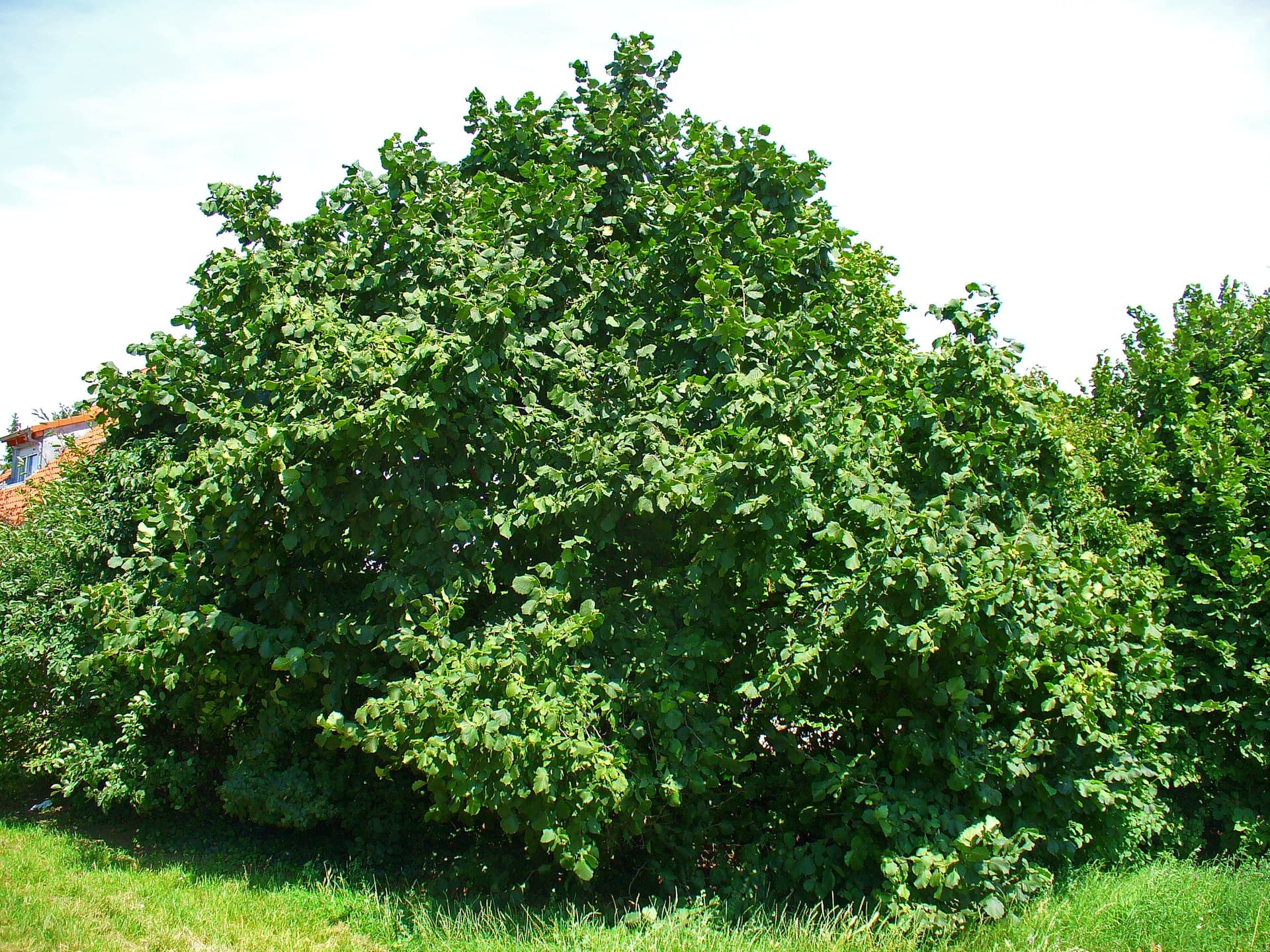
Turkish hazel is a large deciduous tree native to southeastern Europe and western Asia. It forms a broadly pyramidal crown and develops corky, deeply ridged bark with age - an ornamental feature that persists through winter. Unlike most Corylus species, it grows as a non-suckering single-trunked tree, making it practical for formal landscapes, street-tree plantings, and specimen use.
It adapts to a wide range of soil types, including slightly alkaline conditions, and becomes drought-tolerant once established. Male catkins open in late winter before leaf emergence. The small edible nuts are enclosed in deeply lacinated, fringed husks, a distinctive feature within the genus. Turkish hazel is widely used as rootstock for grafting Corylus avellana cultivars because its strong root system and single-trunk form benefit graft stability. It shows high resistance to Eastern Filbert Blight, the most damaging hazelnut disease in North America, making it a reliable long-term planting where C. avellana fails.
The nuts are edible and nutritionally comparable to common hazelnut, though smaller. They attract squirrels, jays, and other wildlife throughout autumn, giving the tree consistent wildlife value alongside its structural ornamental qualities.
Powdery mildew
White or grey powdery coating on leaves - usually starting on older growth in humid conditions or when nights cool.
Improve air circulation by thinning plants. Apply neem oil or potassium bicarbonate spray at first sign. Avoid overhead watering.
Fungal leaf spot
Brown or purplish spots on the leaves, often ringed with a yellow halo, that spread and merge in warm, humid, or wet weather; heavily spotted leaves yellow and drop early.
Pick off spotted leaves and clear fallen debris to remove overwintering spores. Improve air circulation by thinning, and water at the base so foliage dries quickly. If it persists, apply a copper- or sulfur-based fungicide at the first sign.
Armillaria Root Rot
Thinning, yellowing canopy with progressive dieback; white, fan-shaped mycelial mats visible beneath bark at or just below the soil line; honey-colored mushroom clusters appearing at the trunk base or on surface roots in autumn.
No chemical cure exists. Improve drainage and avoid any injury to roots or trunk. Remove severely infected trees along with as much root material as possible. Do not replant susceptible species in the same spot.