
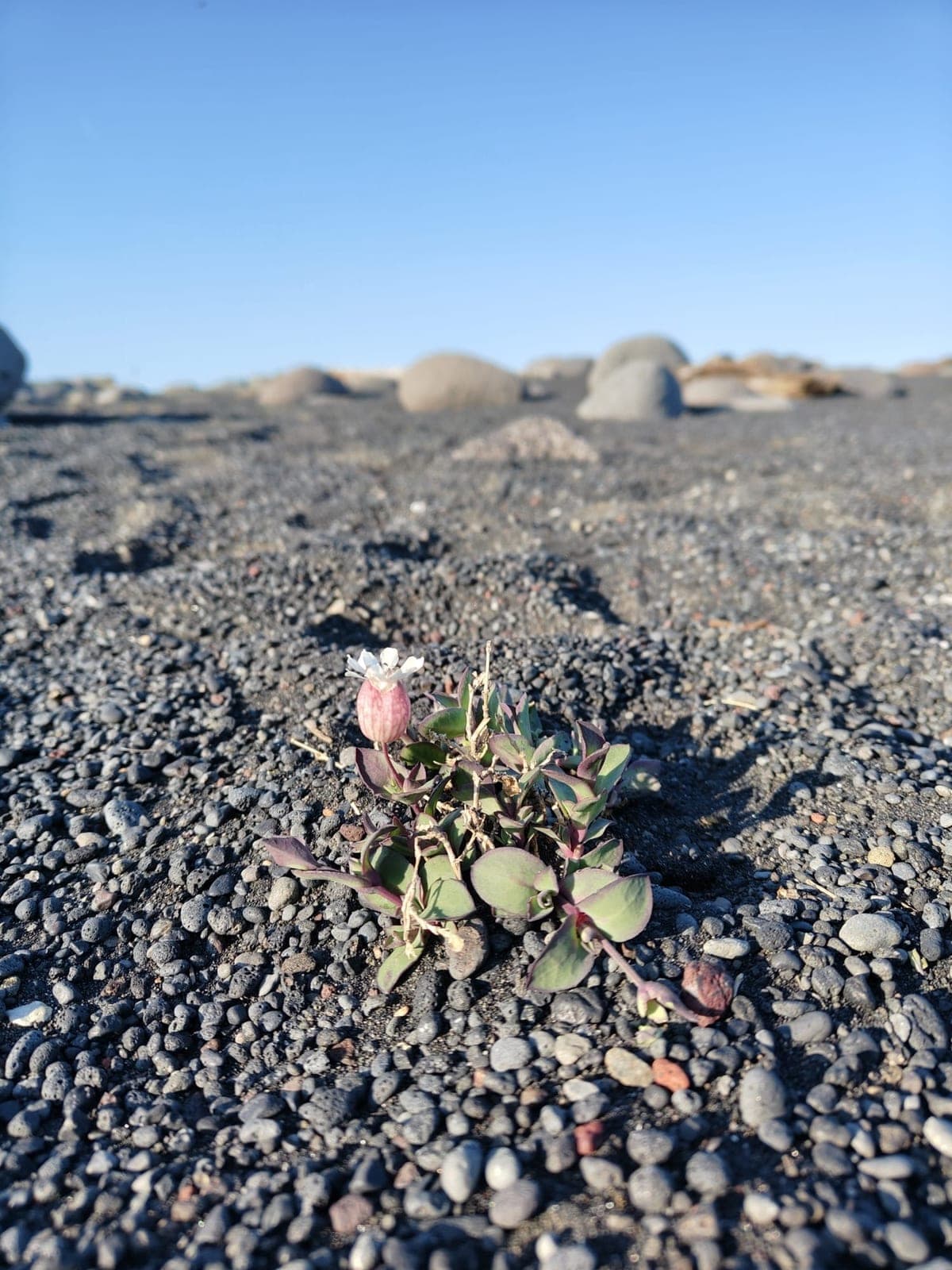
Sea campion is a low-growing coastal perennial native to sea cliffs, shingle beaches, and rocky outcrops across western and northern Europe. It forms dense, glaucous mats close to the ground and produces white flowers with a distinctively inflated, balloon-like calyx in late spring through midsummer. In the garden it excels in rock gardens, wall crevices, and exposed coastal sites where few other ornamentals perform reliably.
Sharp drainage is non-negotiable; plants rot quickly in waterlogged or compacted soil. A top-dressing of grit around the crown discourages moisture retention and mimics the plant's natural shingle habitat. It tolerates neutral to mildly alkaline pH and actively prefers lean, nutrient-poor substrates - excess fertility produces lax, floppy growth. Once established it is drought-tolerant and highly resistant to salt spray.
The deep-tubed, inflated calyx is pollinated primarily by long-tongued bumblebees and night-flying moths. On coastal slopes and thin stony soils the mat-forming root system helps bind substrate and reduces surface erosion, making it useful in exposed coastal restoration plantings.
Powdery mildew
White or grey powdery coating on leaves - usually starting on older growth in humid conditions or when nights cool.
Improve air circulation by thinning plants. Apply neem oil or potassium bicarbonate spray at first sign. Avoid overhead watering.
Crown Rot
Lower leaves yellow and wilt; the base of the rosette turns brown and soft, sometimes with white fungal threads at the soil line. Plants collapse in wet conditions.
Remove and destroy affected plants. Improve drainage and avoid overhead watering. Do not mulch directly against the crown. Space plants for airflow and avoid replanting in the same wet spot.
Root rot
Plants wilt, yellow, and stunt even in moist soil; lower stems and roots turn brown, soft, and mushy and the plant may collapse. Most common in heavy, wet, or poorly drained ground.
Improve drainage and stop overwatering, and never plant too deep. Lift and destroy badly affected plants along with the soil around the roots. Grow in raised or free-draining beds to prevent it returning.
Botrytis (grey mould)
Grey fuzzy mould on petals and stems, worst in cool wet conditions.
Remove affected parts immediately. Improve air circulation. Avoid overhead watering. Apply copper fungicide if severe.
Rust
Orange to brown raised pustules on the undersides of leaves, with yellow spotting on the upper surface. Heavy infections cause leaves to yellow and drop.
Remove and destroy infected leaves. Avoid overhead watering and improve air circulation. Apply a sulfur or copper-based fungicide if it spreads. Clear plant debris in fall.