
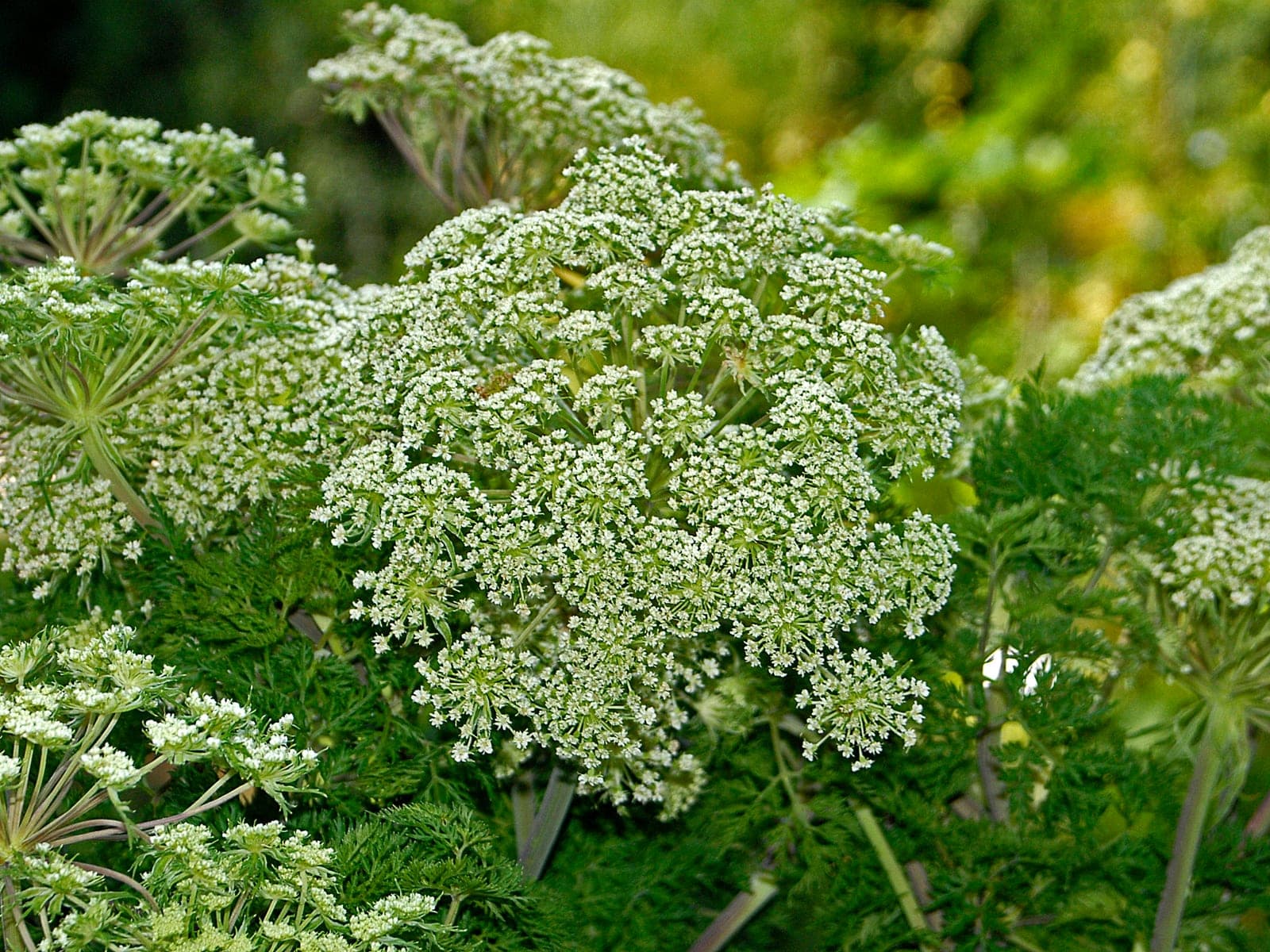
Himalayan selinum, native to the Himalayas, is grown for a double display: finely cut, dark green, fern-like foliage low down, and dark, near-black stems rising above it in midsummer to carry flat, lacy white umbels reminiscent of a refined cow parsley. It carries the RHS Award of Garden Merit and works well in a cottage or naturalistic border, especially paired with other umbellifers or dark-foliaged plants that echo its stem color.
It prefers steadier moisture and richer soil than most Mediterranean-leaning border perennials, and appreciates a spot that doesn't dry out fully in summer. Deadheading isn't necessary - the seed heads carry their own structural interest into fall - and it's rarely bothered by deer. It self-seeds modestly where conditions suit it.
Powdery mildew
White or grey powdery coating on leaves - usually starting on older growth in humid conditions or when nights cool.
Improve air circulation by thinning plants. Apply neem oil or potassium bicarbonate spray at first sign. Avoid overhead watering.