
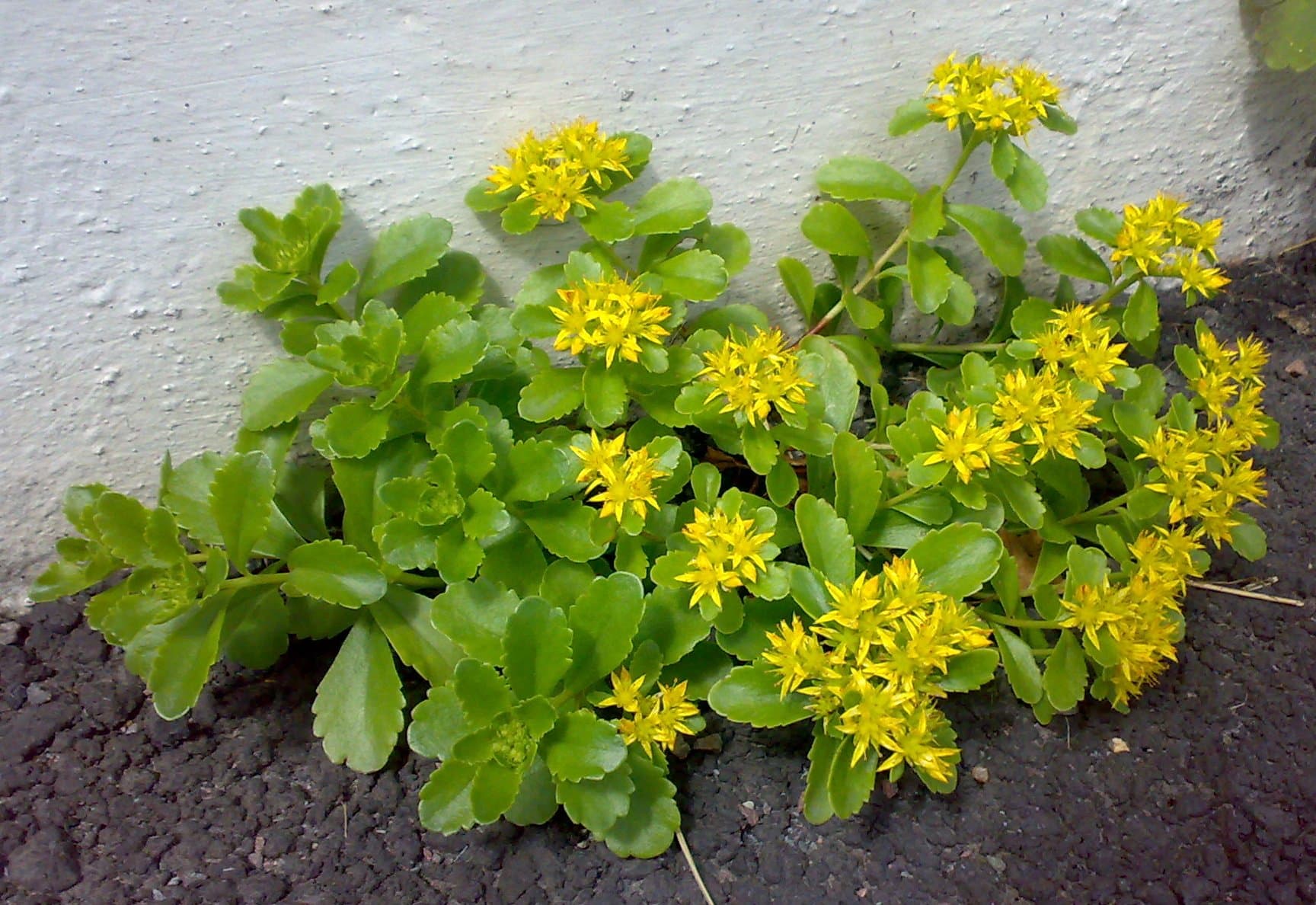
Native to northern China and the Siberian Pacific coast, Russian stonecrop is a low, clump-forming succulent grown for scalloped, bright green foliage that turns orange in fall and clusters of golden-yellow star-shaped flowers in midsummer, followed by reddish seed heads. It stays under 8 inches tall but spreads steadily by trailing stems into a dense, weed-suppressing mat.
Like most sedums it wants sharp drainage far more than rich soil - it thrives in the poor, dry, rocky spots where most border plants struggle, and standing water or heavy clay is the one thing it won't tolerate. Established plants shrug off drought, heat, and deer without complaint.
Root rot
Plants wilt, yellow, and stunt even in moist soil; lower stems and roots turn brown, soft, and mushy and the plant may collapse. Most common in heavy, wet, or poorly drained ground.
Improve drainage and stop overwatering, and never plant too deep. Lift and destroy badly affected plants along with the soil around the roots. Grow in raised or free-draining beds to prevent it returning.