
 'Tanna' - a compact selection, half the height of the species, with dense dark maroon flower spikes that hold upright without flopping.
 'Red Thunder' - an upright, sturdy-stemmed selection with especially deep red flower spikes over the summer-long bloom season.
 'Cangshan Cranberry' - a China-collected form with wine-red spikes and a later bloom window that extends the display into fall.
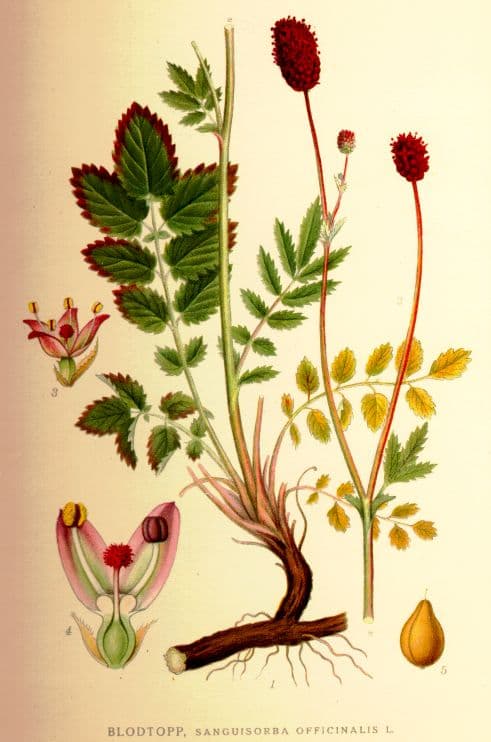
Great burnet is a Eurasian meadow perennial grown for its dense, dark maroon-to-black bottlebrush flower spikes, held well above mounded, ferny blue-green foliage on wiry stems that move in the slightest breeze. It's a workhorse of the naturalistic and prairie-style planting movement, threading through ornamental grasses and other late-season bloomers without ever needing staking. A small, scattered native population turns up in parts of the far western US and Canada, but the plants sold in the trade are garden-bred selections of the widespread Eurasian species, not that native strain.
It wants steady moisture and doesn't like to dry out between waterings, but otherwise asks for very little - no deadheading is needed to keep it blooming, and the seed heads stand attractively through frost if left uncut. Bees work the flowers heavily. Several named cultivars (shown in the gallery) offer more compact habits or deeper flower color than the straight species.
Powdery mildew
White or grey powdery coating on leaves - usually starting on older growth in humid conditions or when nights cool.
Improve air circulation by thinning plants. Apply neem oil or potassium bicarbonate spray at first sign. Avoid overhead watering.
Rust
Orange to brown raised pustules on the undersides of leaves, with yellow spotting on the upper surface. Heavy infections cause leaves to yellow and drop.
Remove and destroy infected leaves. Avoid overhead watering and improve air circulation. Apply a sulfur or copper-based fungicide if it spreads. Clear plant debris in fall.