
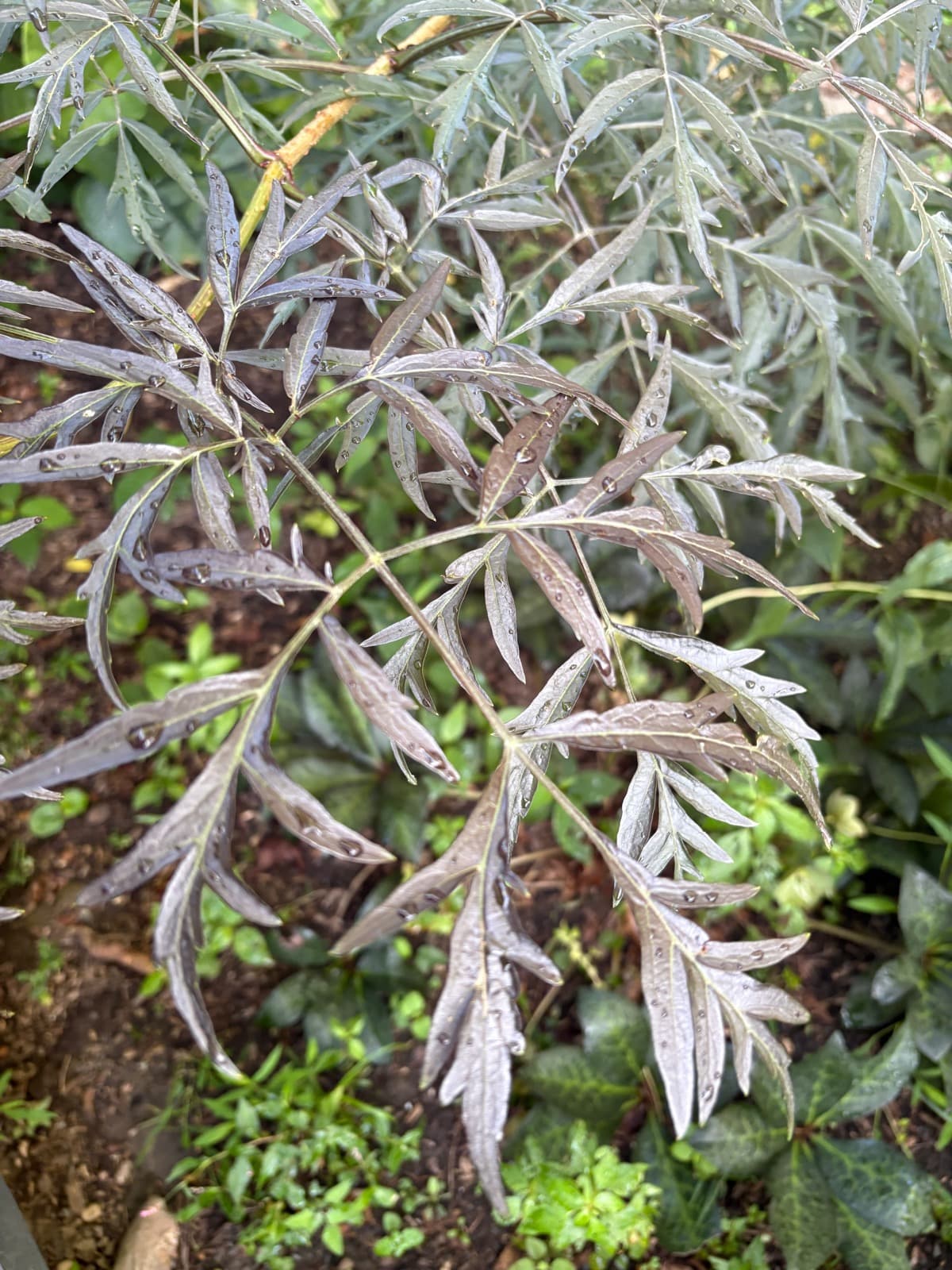
Black Lace Elderberry is a cultivar of European elderberry (Sambucus nigra) selected for deeply dissected, near-black foliage that holds its color all season. Flat-topped pink flower clusters open in late spring against the dark leaves, followed by heavy clusters of small dark purple berries in late summer. It functions as a bold focal point in mixed borders, at the back of a bed, or as an informal screen, and it supports a wide range of pollinators and berry-eating birds.
The shrub grows vigorously and responds well to pruning. Hard pruning to near the ground in late winter produces the largest, most ornamental leaves but eliminates flowers and berries that season. Selectively removing one-third of the oldest canes each year balances foliage impact with fruit production. Plant in moisture-retentive, fertile soil and mulch to conserve moisture; it tolerates brief wet periods but dislikes prolonged waterlogging. Suckering is common - remove unwanted stems at the base to prevent spread. Aphids cluster on new growth in spring but rarely warrant more than a firm jet of water.
Elderflowers and cooked elderberries have been used in European food and medicine for centuries. Flowers are used fresh for cordials, fritters, and teas; ripe berries, always cooked to neutralize sambunigrin, are processed into syrup, wine, jelly, and juice. Elderberry extract has demonstrated antiviral activity in clinical studies and is associated with reduced duration of cold and flu symptoms.
Elderberry Cane Blight
Brown to black cankers form on canes, typically at nodes, pruning cuts, or insect entry points. Affected canes wilt and die back from the tip. A cross-section of infected wood shows dark discoloration in the pith and cambium.
Prune infected canes well below the visible canker margin. Disinfect tools with 70% isopropyl alcohol between each cut. Destroy removed material; do not compost it. Reduce overhead irrigation and thin the canopy to improve air circulation. No curative fungicide is consistently effective - prompt removal of affected wood and clean pruning practice are the primary controls.
Powdery mildew
White or grey powdery coating on leaves - usually starting on older growth in humid conditions or when nights cool.
Improve air circulation by thinning plants. Apply neem oil or potassium bicarbonate spray at first sign. Avoid overhead watering.
Botrytis (grey mould)
Grey fuzzy mould on petals and stems, worst in cool wet conditions.
Remove affected parts immediately. Improve air circulation. Avoid overhead watering. Apply copper fungicide if severe.
Fungal leaf spot
Brown or purplish spots on the leaves, often ringed with a yellow halo, that spread and merge in warm, humid, or wet weather; heavily spotted leaves yellow and drop early.
Pick off spotted leaves and clear fallen debris to remove overwintering spores. Improve air circulation by thinning, and water at the base so foliage dries quickly. If it persists, apply a copper- or sulfur-based fungicide at the first sign.
Verticillium Wilt
Lower leaves yellow and wilt, often on one side of the plant, with brown streaking in the stem and crown tissue when cut open. Plants are stunted and decline over the season.
Remove and destroy affected plants. Avoid planting in soil that has grown infected tomatoes, peppers, or other susceptible crops. Rotate beds and improve drainage; there is no cure once a plant is infected.