
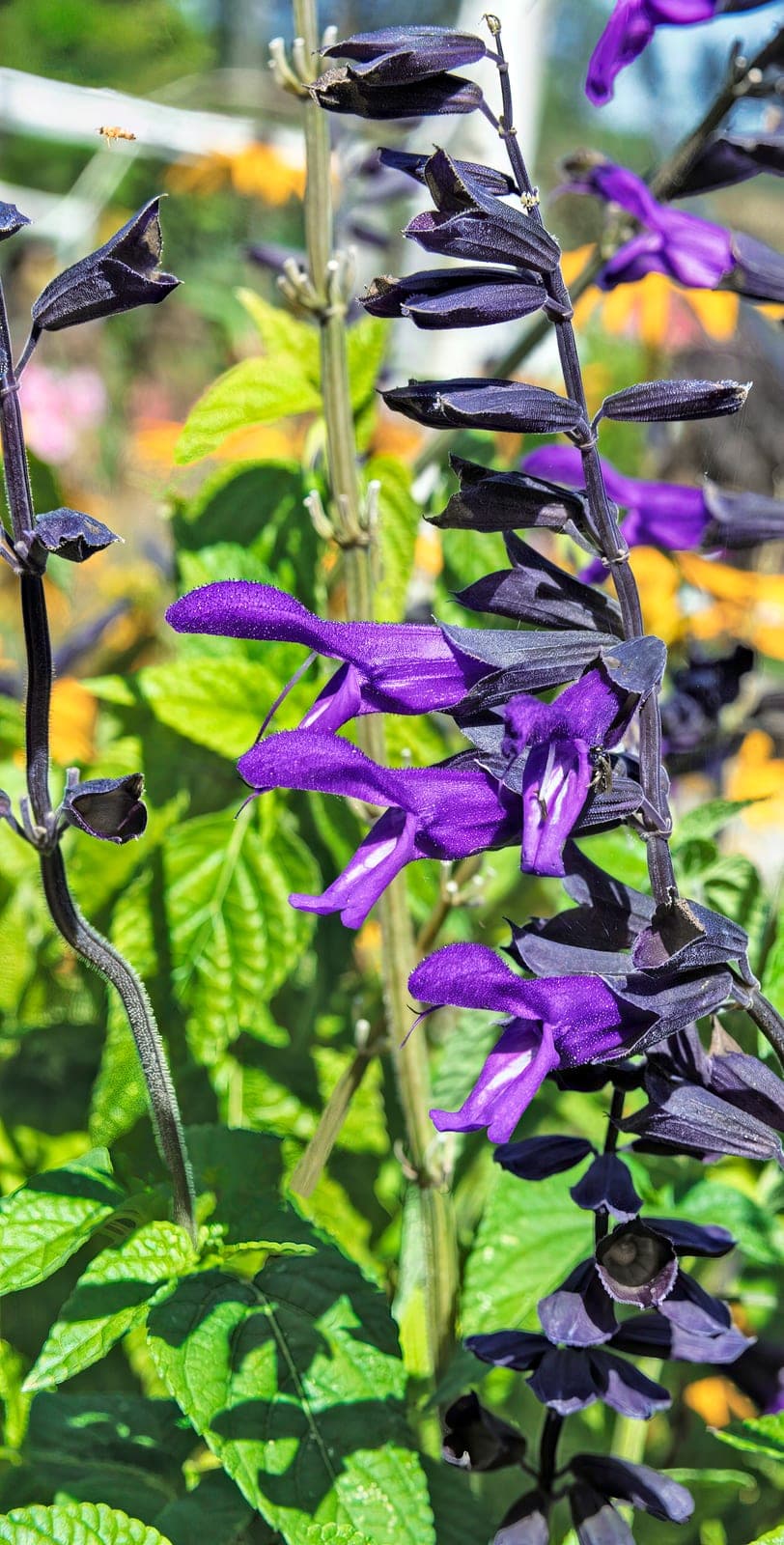
Native to Brazil, Paraguay, and northern Argentina, anise sage sends up tall, dark stems lined with deep blue-purple tubular flowers from midsummer until frost, drawing hummingbirds more reliably than almost any other border plant. The anise-scented foliage is an added bonus when brushed.
It's hardy in the ground only in zones 8–10; further north it either dies to the roots and returns from a hardy crown in a mild winter or is best treated as an annual, since it grows fast enough from a spring planting to bloom the same year. Regular moisture through summer keeps flowering strong, and it spreads gently by rhizomes in warm climates.
Powdery mildew
White or grey powdery coating on leaves - usually starting on older growth in humid conditions or when nights cool.
Improve air circulation by thinning plants. Apply neem oil or potassium bicarbonate spray at first sign. Avoid overhead watering.