
Rosa carolina, commonly known as the Carolina Rose or Pasture Rose, is a low-growing native shrub rose found throughout eastern and central North America. It thrives in open woodlands, prairies, roadsides, and pastures, producing single, fragrant pink blossoms with five petals and a bright cluster of yellow stamens in late spring and early summer. Its slender, arching canes bear straight, slender thorns, and the foliage turns attractive shades of red and orange in autumn.
Valued for its hardiness and ecological benefits, this rose supports native pollinators with its accessible single blooms and feeds wildlife with its bright red rose hips, which persist into winter. Because it spreads by underground suckers, Carolina Rose is excellent for naturalized plantings, erosion control, and informal hedgerows, though it may require occasional management to keep it from colonizing beyond its intended space.
Growing roses? Read the Rose Care Calendar — pruning by class, feeding, pests, climbers, and growing for hips, timed to your frost dates.Powdery mildew
White or grey powdery coating on leaves — usually starting on older growth in humid conditions or when nights cool.
Improve air circulation by thinning plants. Apply neem oil or potassium bicarbonate spray at first sign. Avoid overhead watering.
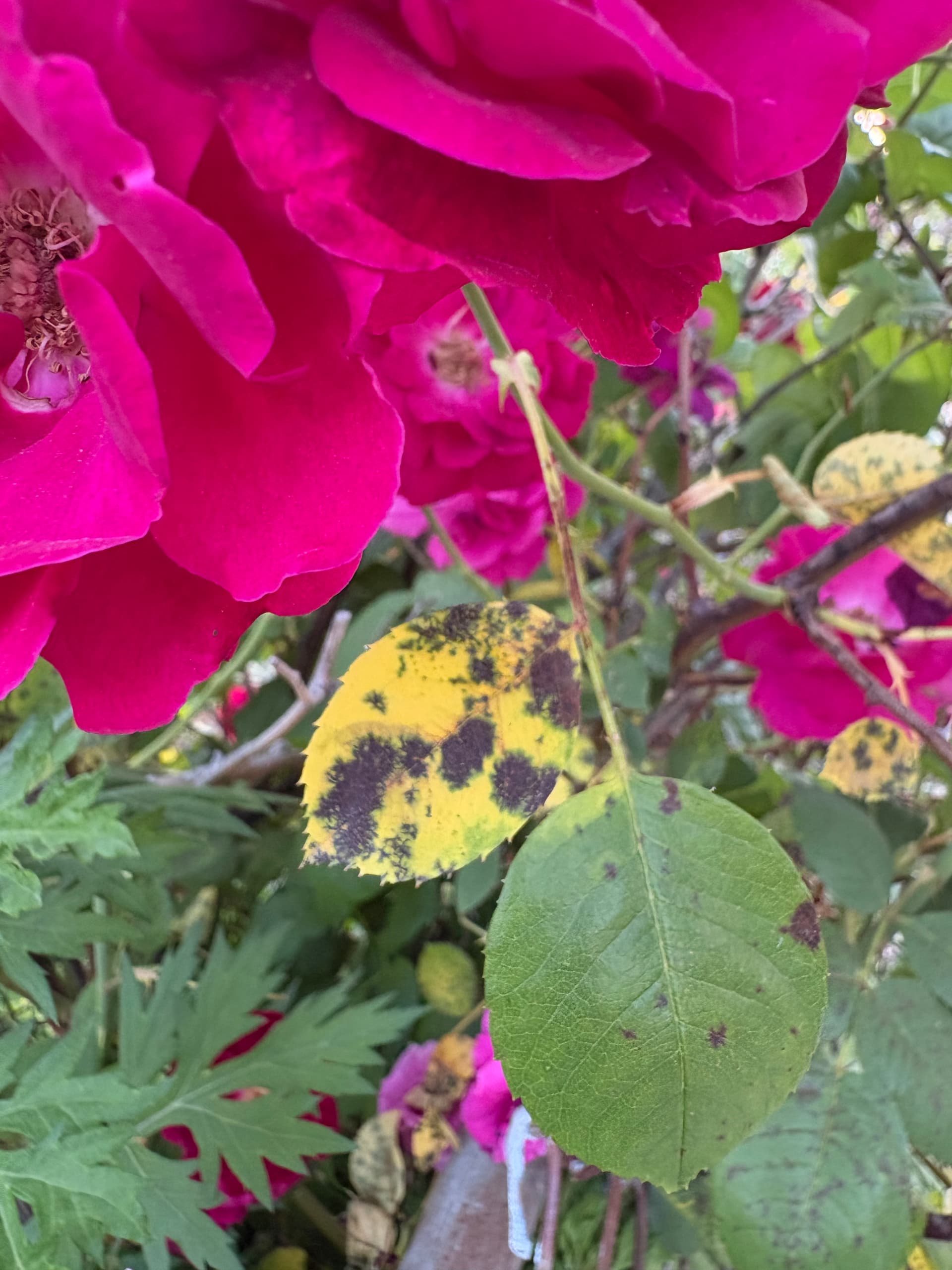
Yellow spot (rose rust)
Bright yellow spots on the upper surface of leaves, with orange-yellow powdery pustules on the underside. Leaves may drop prematurely. Worst in cool, wet springs.
Remove and bin all affected leaves — do not compost. Apply a systemic fungicide (myclobutanil or trifloxystrobin) at first sign and repeat every 10–14 days. Spray preventively from early spring before infection takes hold. Improve air circulation by pruning to an open centre.