
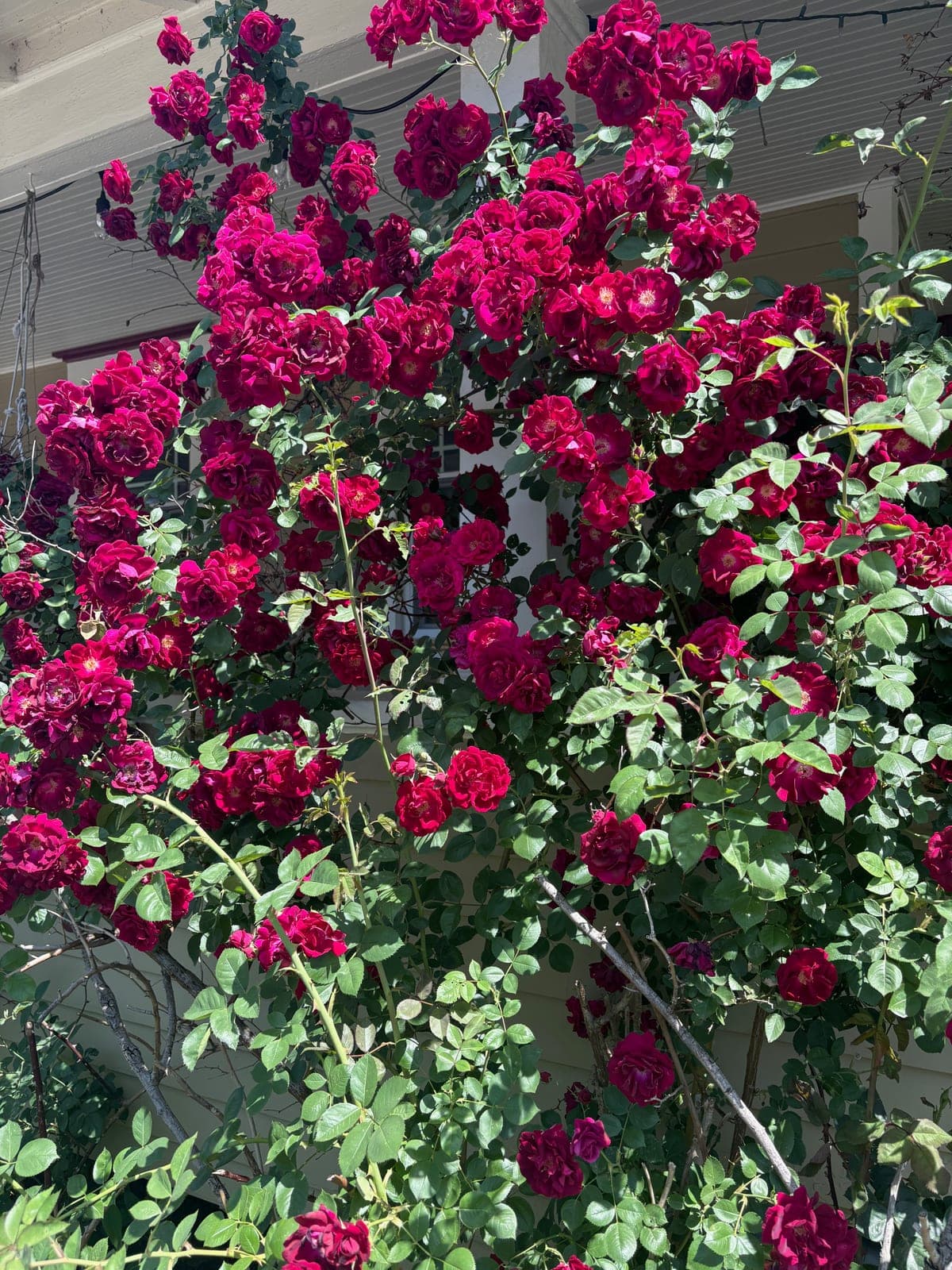
Rosa wichurana, the Memorial Rose, is a semi-evergreen trailing species from eastern Asia that has become a beloved parent of countless rambler and climbing rose hybrids. Left to its own devices it cascades along the ground, rooting as it goes and forming a dense, glossy-leaved groundcover. Given a structure to climb it will reach 15–20 feet, draping arbors and fences in late summer with loose clusters of single white flowers that carry a sweet apple fragrance.
It is one of the most disease-resistant of all roses — the same glossy, waxy foliage that catches the eye also sheds water and resists blackspot and mildew. In the Hudson Valley, where summer humidity is a constant challenge, this trait makes it unusually dependable. The small red hips that follow the flowers provide late-season color and winter food for birds, and the semi-evergreen foliage holds well into December most years.
Growing roses? Read the Rose Care Calendar — pruning by class, feeding, pests, climbers, and growing for hips, timed to your frost dates.Powdery mildew
White or grey powdery coating on leaves — usually starting on older growth in humid conditions or when nights cool.
Improve air circulation by thinning plants. Apply neem oil or potassium bicarbonate spray at first sign. Avoid overhead watering.
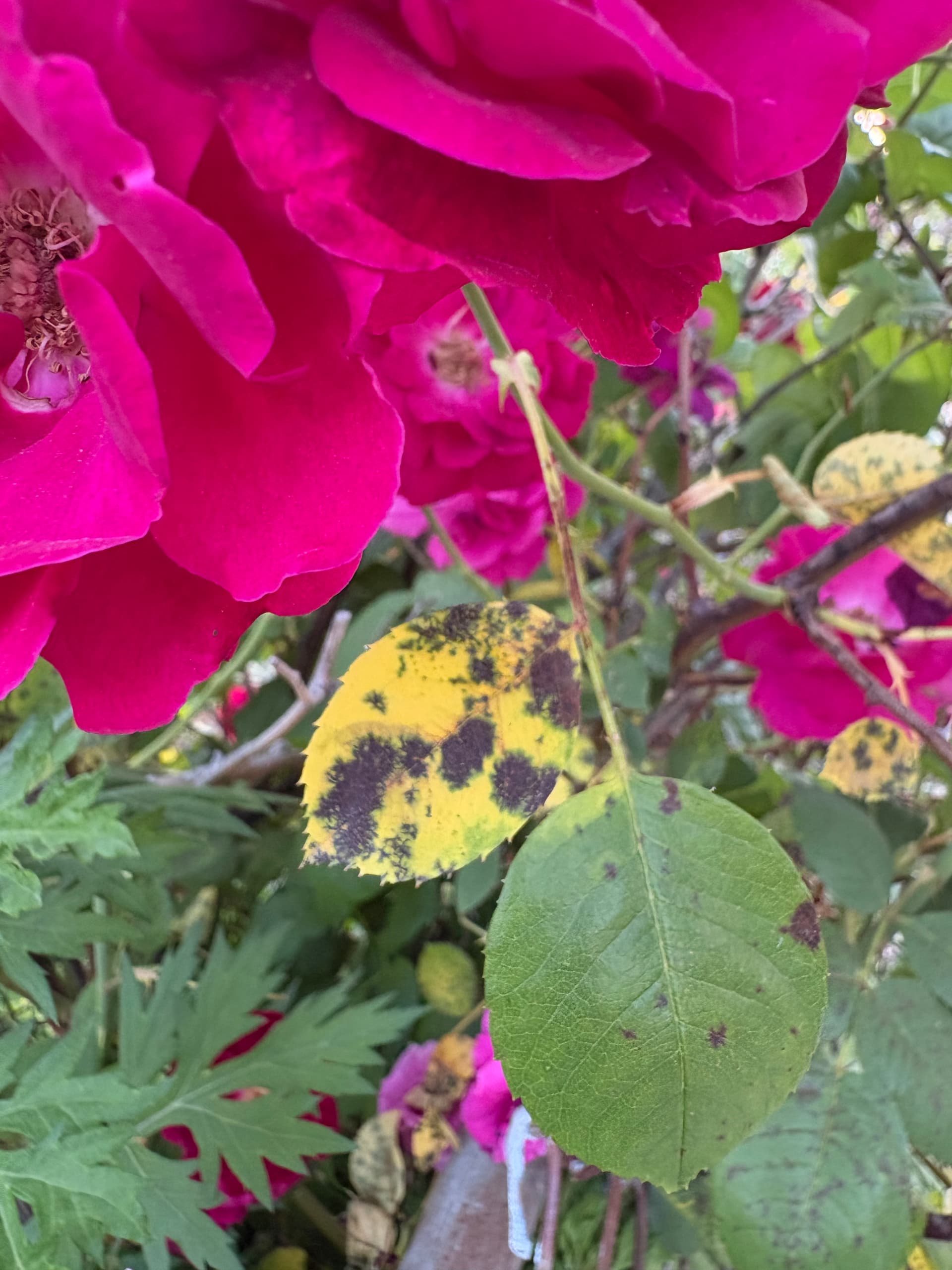
Yellow spot (rose rust)
Bright yellow spots on the upper surface of leaves, with orange-yellow powdery pustules on the underside. Leaves may drop prematurely. Worst in cool, wet springs.
Remove and bin all affected leaves — do not compost. Apply a systemic fungicide (myclobutanil or trifloxystrobin) at first sign and repeat every 10–14 days. Spray preventively from early spring before infection takes hold. Improve air circulation by pruning to an open centre.