
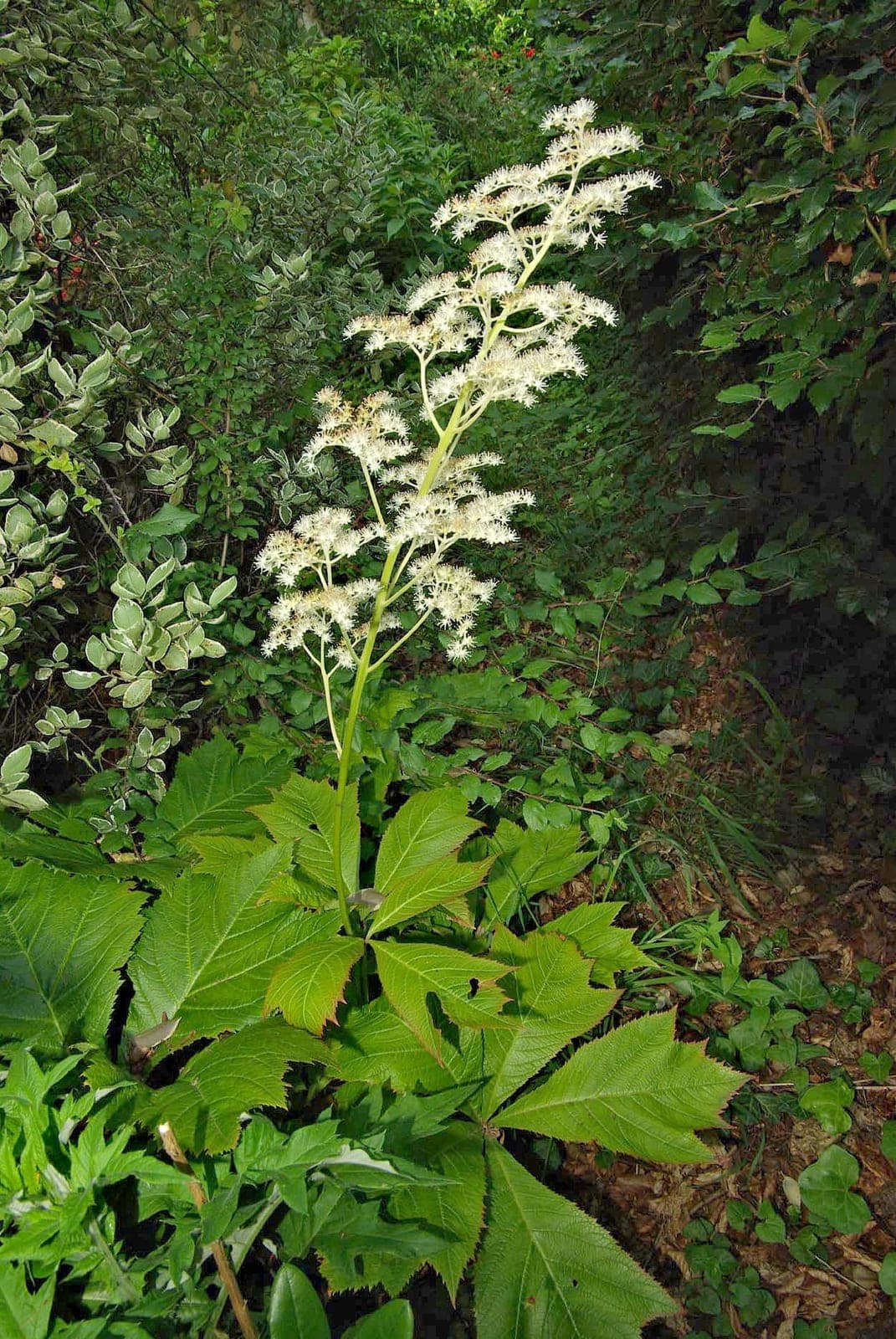
Rodgersia sambucifolia is a large herbaceous perennial native to moist montane forests and stream margins in southwestern China. Its bold pinnate leaves closely resemble elderberry foliage, giving the plant its common name. It is grown primarily for this dramatic foliage effect in shaded, moisture-retentive gardens.
In early to midsummer, stout stems carry branching panicles of small creamy-white to pale pink flowers well above the leaf mass. The plant spreads by thick rhizomes and builds into substantial clumps over several years. Leaf scorch occurs in full sun or wherever soil dries out. Heavy mulching maintains the consistent soil moisture the plant requires. It tolerates slightly acidic to neutral pH. In zones 5 and 6, a light mulch layer over the crown after hard frost improves winter survival. Suited to pond margins, streambanks, and woodland bog gardens where its architectural scale contrasts with ferns, hostas, and astilbes.
Powdery mildew
White or grey powdery coating on leaves - usually starting on older growth in humid conditions or when nights cool.
Improve air circulation by thinning plants. Apply neem oil or potassium bicarbonate spray at first sign. Avoid overhead watering.
Fungal leaf spot
Brown or purplish spots on the leaves, often ringed with a yellow halo, that spread and merge in warm, humid, or wet weather; heavily spotted leaves yellow and drop early.
Pick off spotted leaves and clear fallen debris to remove overwintering spores. Improve air circulation by thinning, and water at the base so foliage dries quickly. If it persists, apply a copper- or sulfur-based fungicide at the first sign.
Crown Rot
Lower leaves yellow and wilt; the base of the rosette turns brown and soft, sometimes with white fungal threads at the soil line. Plants collapse in wet conditions.
Remove and destroy affected plants. Improve drainage and avoid overhead watering. Do not mulch directly against the crown. Space plants for airflow and avoid replanting in the same wet spot.