
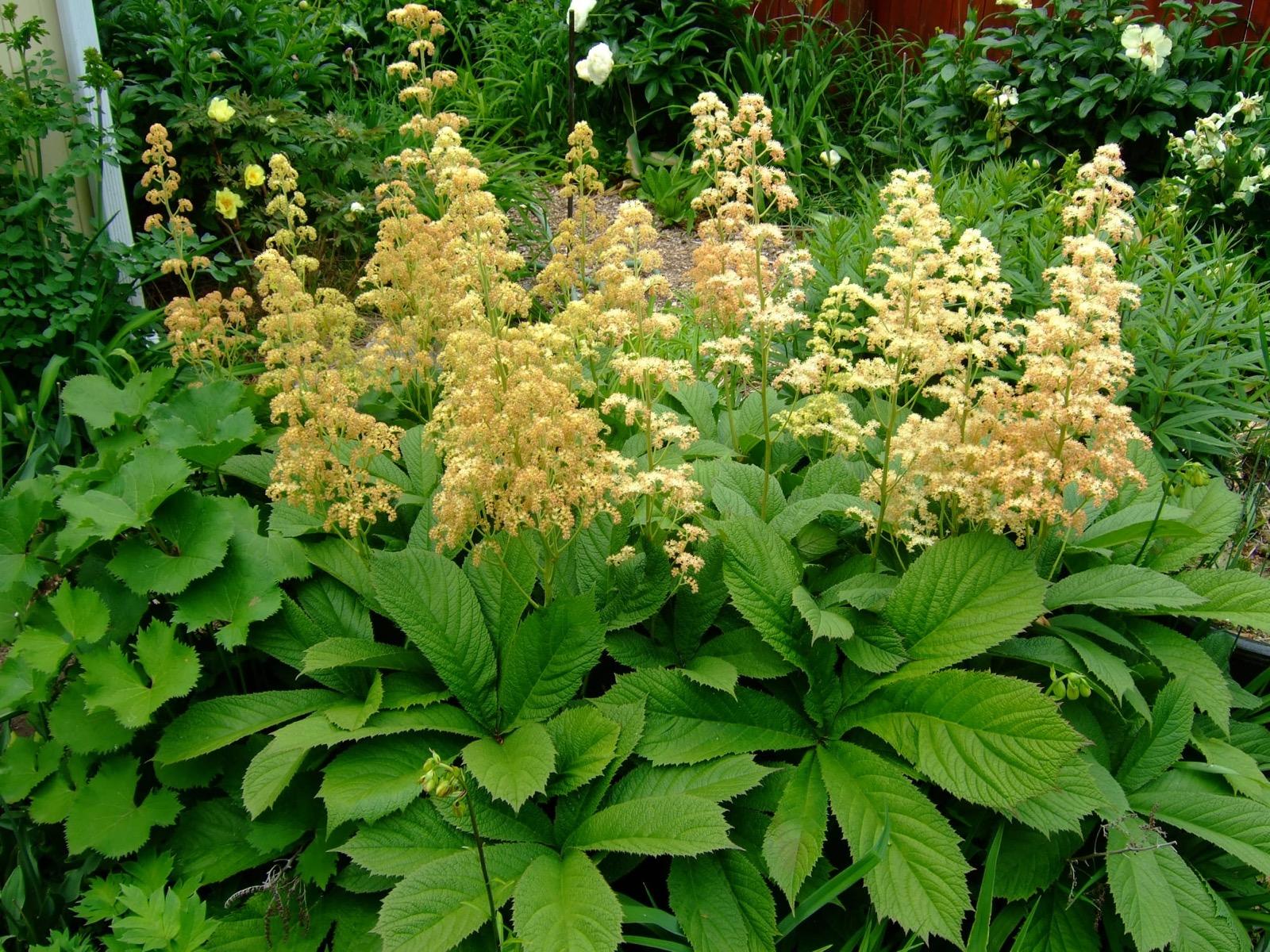
Rodgersia pinnata is a large herbaceous perennial native to mountain forests in Sichuan and Yunnan, China. Its pinnate to palmate leaves, with 5–9 deeply textured leaflets and reaching up to 90 cm long, give it an architectural presence few shade perennials can match. In summer, erect 60 cm panicles of small white flowers rise on reddish-green stems above the foliage.
Plant in consistently moist to wet, humus-rich soil with partial shade. In warmer parts of its range, afternoon shade is essential to prevent leaf scorch. It naturalizes well along stream banks, pond margins, and in woodland settings. Foliage commonly emerges bronze-flushed in spring and may take on reddish tints in fall. Clumps spread slowly by thick rhizomes; divide every four to five years to maintain vigor. Slightly acidic to neutral soil pH is preferred; mulching heavily helps retain the consistent moisture this plant requires.
These dates are for Zone 6b. Enter your ZIP to time every job to your own frost dates.
- cut · Oct 30 - Nov 13Cut the foliage to the ground after hard frost blackens it
- buy · Jan 2 - Jan 16Buy plants - about two months before planting out
- plant · Mar 13 - Mar 27Plant dormant divisions while the soil is still cool, crowns just below the surface, in a shaded spot that never dries out
- plant · Mar 13 - Mar 27Divide congested clumps every 3-4 years before new growth emerges
- watch · Any time in springCheck emerging leaves for slug damage and handpick or bait once feeding shows
Problems & troubleshooting
Common problems
Fungal leaf spot
Brown or purplish spots on the leaves, often ringed with a yellow halo, that spread and merge in warm, humid, or wet weather; heavily spotted leaves yellow and drop early.
Pick off spotted leaves and clear fallen debris to remove overwintering spores. Improve air circulation by thinning, and water at the base so foliage dries quickly. If it persists, apply a copper- or sulfur-based fungicide at the first sign.
Powdery mildew
White or grey powdery coating on leaves - usually starting on older growth in humid conditions or when nights cool.
Improve air circulation by thinning plants. Apply neem oil or potassium bicarbonate spray at first sign. Avoid overhead watering.
Root rot
Plants wilt, yellow, and stunt even in moist soil; lower stems and roots turn brown, soft, and mushy and the plant may collapse. Most common in heavy, wet, or poorly drained ground.
Improve drainage and stop overwatering, and never plant too deep. Lift and destroy badly affected plants along with the soil around the roots. Grow in raised or free-draining beds to prevent it returning.