
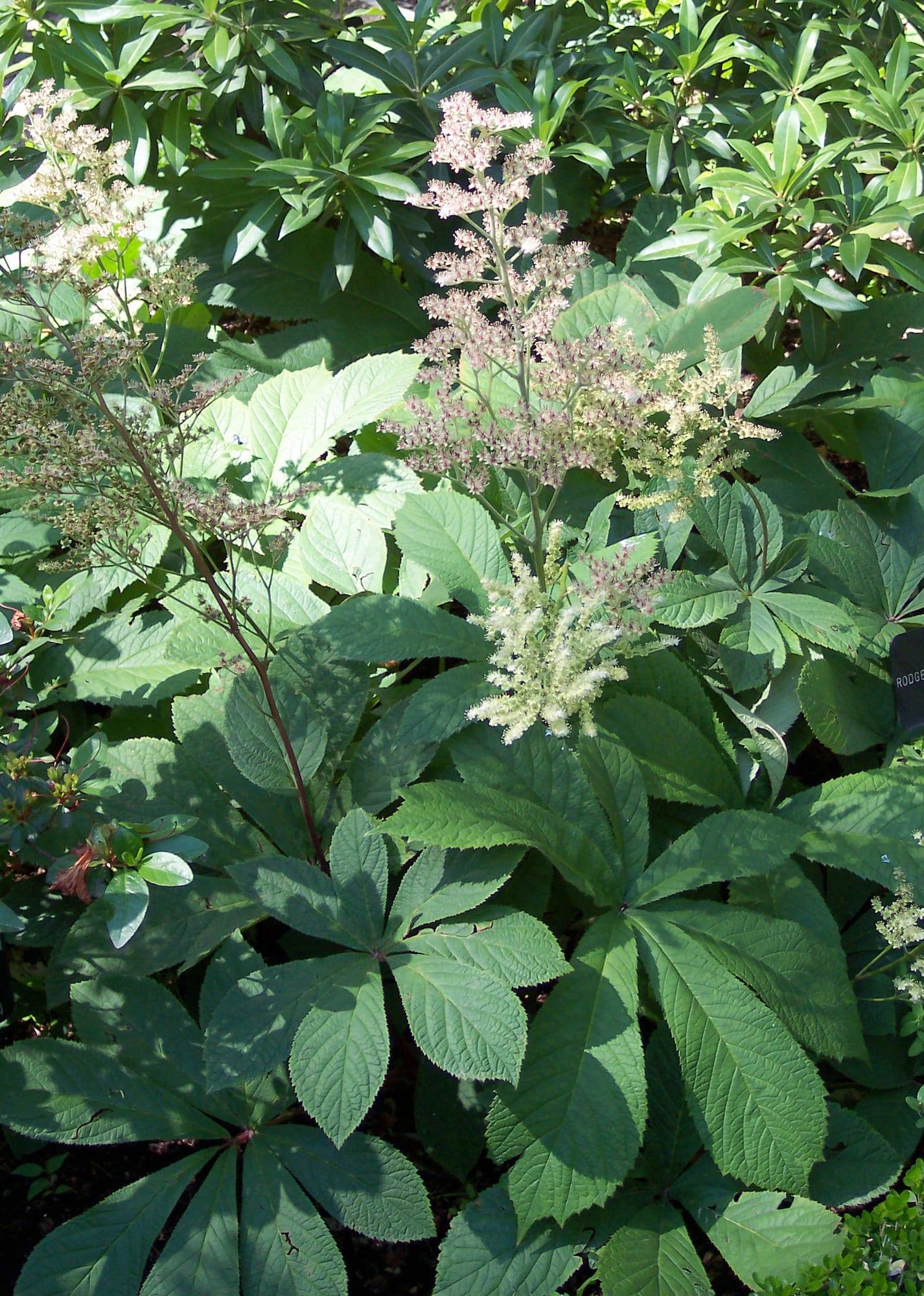
Rodgersia aesculifolia is a large herbaceous perennial native to northern China, with palmate leaves up to 25 cm (10 in) across that closely resemble horse chestnut foliage - a resemblance encoded in its species name, aesculifolia. Plants reach 2 m (6–7 ft) tall and 1 m (3 ft) wide, making them one of the few perennials that can deliver genuine structural scale in damp shade.
In summer, stiff upright panicles up to 60 cm (24 in) carry dense clusters of tiny white or pink star-shaped flowers well above the leaf canopy. The plant spreads slowly by thick rhizomes and performs best at pond margins, stream banks, and in woodland gardens where soil stays reliably damp. Leaves scorch in wind-exposed positions; a sheltered site preserves foliage quality through the season. Mulching over the crown retains moisture and buffers temperature swings at the zone 5a limit. Plants tolerate heavier clay soils better than many ornamentals, provided drainage is not so poor as to cause persistent waterlogging.
These dates are for Zone 6b. Enter your ZIP to time every job to your own frost dates.
- cut · Oct 30 - Nov 13Cut the foliage to the ground after hard frost blackens it
- buy · Jan 2 - Jan 16Buy plants - about two months before planting out
- plant · Mar 13 - Mar 27Plant dormant divisions while the soil is still cool, crowns just below the surface, in a shaded spot that never dries out
- plant · Mar 13 - Mar 27Divide congested clumps every 3-4 years before new growth emerges
- watch · Any time in springCheck emerging leaves for slug damage and handpick or bait once feeding shows
Problems & troubleshooting
Common problems
Powdery mildew
White or grey powdery coating on leaves - usually starting on older growth in humid conditions or when nights cool.
Improve air circulation by thinning plants. Apply neem oil or potassium bicarbonate spray at first sign. Avoid overhead watering.
Fungal leaf spot
Brown or purplish spots on the leaves, often ringed with a yellow halo, that spread and merge in warm, humid, or wet weather; heavily spotted leaves yellow and drop early.
Pick off spotted leaves and clear fallen debris to remove overwintering spores. Improve air circulation by thinning, and water at the base so foliage dries quickly. If it persists, apply a copper- or sulfur-based fungicide at the first sign.
Root rot
Plants wilt, yellow, and stunt even in moist soil; lower stems and roots turn brown, soft, and mushy and the plant may collapse. Most common in heavy, wet, or poorly drained ground.
Improve drainage and stop overwatering, and never plant too deep. Lift and destroy badly affected plants along with the soil around the roots. Grow in raised or free-draining beds to prevent it returning.