
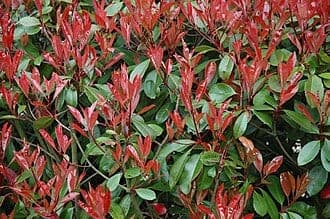
Red tip photinia is a hybrid evergreen shrub (Photinia glabra × Photinia serratifolia) in the rose family, grown primarily for the vivid red new growth that flushes in spring and again after pruning, then matures to dark glossy green. It is one of the most widely planted screening and hedging shrubs in the South and lower Midwest.
Best performance comes in full sun with well-drained soil and good air circulation. The shrub's dominance in monoculture plantings from the 1980s onward drove widespread Entomosporium leaf spot epidemics across the Southeast; spacing plants at least five feet apart and avoiding overhead irrigation substantially reduces disease pressure. Prune selectively rather than shearing hard repeatedly, as dense flushes of juvenile growth are the most susceptible tissue. The shrub tolerates clay soils once established and prefers a slightly acidic to neutral pH. Lower limbs can be selectively removed over time to train the plant into a small multi-stem tree form.
Clusters of small white flowers appear in spring and attract pollinators. Red berries follow - the basis for the alternate common name Christmas berry - and persist into winter, providing food for birds.
Entomosporium Leaf Spot
Small circular red-purple spots on both leaf surfaces beginning in late spring, enlarging to lesions with gray or tan centers and red-purple margins. Heavy infection leads to early leaf drop by late summer.
Rake and dispose of fallen leaves each season. Prune selectively to improve air circulation. Avoid overhead irrigation. Fungicide applications - myclobutanil, chlorothalonil, or copper-based products - beginning at leaf emergence and repeated every 10–14 days during wet weather can limit disease spread.
Fire Blight
Water-soaked, wilting blossoms and young stems that rapidly turn brown to black. Infected shoot tips curl into a characteristic shepherd's crook. Bark beneath the infection may show reddish-brown discoloration.
Prune infected wood 8–12 inches below visible symptoms during dry weather. Sterilize tools with 70% isopropyl alcohol or a 10% bleach solution between cuts. Avoid high-nitrogen fertilizers that produce soft, disease-susceptible growth. Copper-based bactericides applied at early flowering can reduce spread in high-pressure years.
Powdery mildew
White or grey powdery coating on leaves - usually starting on older growth in humid conditions or when nights cool.
Improve air circulation by thinning plants. Apply neem oil or potassium bicarbonate spray at first sign. Avoid overhead watering.
Root rot
Plants wilt, yellow, and stunt even in moist soil; lower stems and roots turn brown, soft, and mushy and the plant may collapse. Most common in heavy, wet, or poorly drained ground.
Improve drainage and stop overwatering, and never plant too deep. Lift and destroy badly affected plants along with the soil around the roots. Grow in raised or free-draining beds to prevent it returning.