
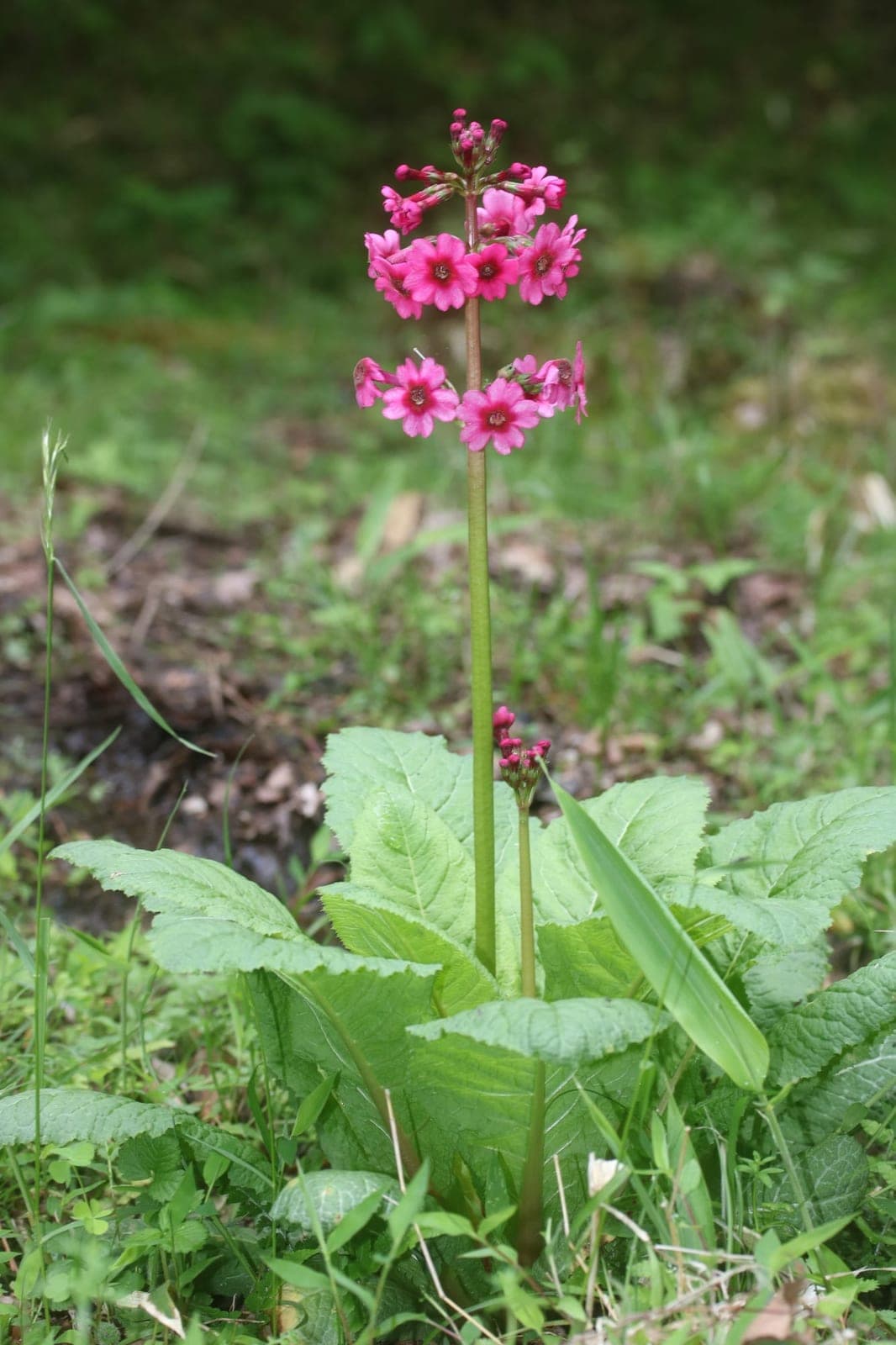
Primula japonica is a candelabra primrose native to moist streambanks and valley floors in Japan. Unlike compact primroses, it carries multiple stacked whorls of flowers on erect stems in shades of crimson, pink, and white, blooming from late spring into early summer. It is among the largest and most vigorous primroses grown in temperate gardens.
It thrives in part to full shade with consistently moist to wet, organically rich soil. Slightly acidic conditions (pH 5.5–6.5) and a deep mulch of leaf mold help retain moisture and protect crowns through summer. Streamside edges, bog gardens, and shaded woodland borders are the best placements. Plants self-seed freely where conditions suit them and can form naturalized colonies over several seasons.
In the landscape, Japanese primrose works well as a mid-layer plant beneath deciduous canopy, pairing naturally with ferns, hostas, and other moisture-tolerant shade plants. In zones 7–8 it may go semi-dormant or decline during extended hot, dry summers.
Botrytis (grey mould)
Grey fuzzy mould on petals and stems, worst in cool wet conditions.
Remove affected parts immediately. Improve air circulation. Avoid overhead watering. Apply copper fungicide if severe.
Crown Rot
Lower leaves yellow and wilt; the base of the rosette turns brown and soft, sometimes with white fungal threads at the soil line. Plants collapse in wet conditions.
Remove and destroy affected plants. Improve drainage and avoid overhead watering. Do not mulch directly against the crown. Space plants for airflow and avoid replanting in the same wet spot.
Downy mildew
Yellowing on top of leaves with grey-purple fuzz underneath. Spreads rapidly in humid conditions.
Remove affected leaves. Improve air circulation. Avoid overhead watering. Copper spray as preventive.
Fungal leaf spot
Brown or purplish spots on the leaves, often ringed with a yellow halo, that spread and merge in warm, humid, or wet weather; heavily spotted leaves yellow and drop early.
Pick off spotted leaves and clear fallen debris to remove overwintering spores. Improve air circulation by thinning, and water at the base so foliage dries quickly. If it persists, apply a copper- or sulfur-based fungicide at the first sign.
Damping Off
Seedlings collapse at the soil line with thin, water-soaked stems; seeds may fail to emerge or rot before sprouting.
Sow in well-draining mix, avoid overwatering, and ensure good airflow. Remove affected seedlings and let the surface dry between waterings.