
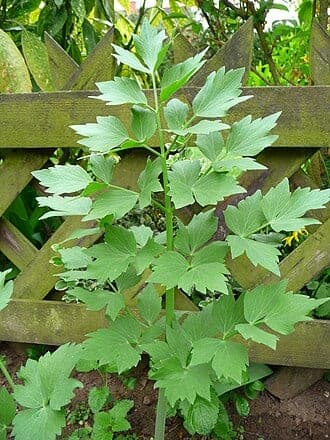
Lovage (Levisticum officinale) is a tall perennial herb native to southwestern Asia. Every part of the plant - leaves, stems, seeds, and roots - carries an intense celery flavor with overtones of parsley and mild anise. One established plant produces more usable herb material per season than most annual herbs combined, and it returns reliably from the same crown each spring.
Lovage dies back to the ground in winter and re-emerges early in spring. It grows best in deep, fertile, consistently moist soil with a near-neutral pH and tolerates partial shade, which slows bolting in hot summers. Without cutting, flowering stems can top 6 feet; regular leaf harvest keeps growth more compact. Self-seeding can be prolific - remove spent umbels unless seed harvest is the goal. Divide clumps every three to four years, or when the crown's center begins to die out. In zones 4–5, mulch the crown after the first hard frost.
Leaves and stems substitute directly for celery in soups, stocks, braises, and salads; hollow stems have been used as straws for savory drinks. Dried seeds function as a spice with an intense celery-seed character useful in pickling blends and bread. Medicinally, the root and seed have long-documented use in European herbal traditions as a diuretic and carminative; dried lovage root appeared in several nineteenth-century European pharmacopoeias for urinary and digestive complaints.
Powdery mildew
White or grey powdery coating on leaves - usually starting on older growth in humid conditions or when nights cool.
Improve air circulation by thinning plants. Apply neem oil or potassium bicarbonate spray at first sign. Avoid overhead watering.
Fungal leaf spot
Brown or purplish spots on the leaves, often ringed with a yellow halo, that spread and merge in warm, humid, or wet weather; heavily spotted leaves yellow and drop early.
Pick off spotted leaves and clear fallen debris to remove overwintering spores. Improve air circulation by thinning, and water at the base so foliage dries quickly. If it persists, apply a copper- or sulfur-based fungicide at the first sign.
Root rot
Plants wilt, yellow, and stunt even in moist soil; lower stems and roots turn brown, soft, and mushy and the plant may collapse. Most common in heavy, wet, or poorly drained ground.
Improve drainage and stop overwatering, and never plant too deep. Lift and destroy badly affected plants along with the soil around the roots. Grow in raised or free-draining beds to prevent it returning.