
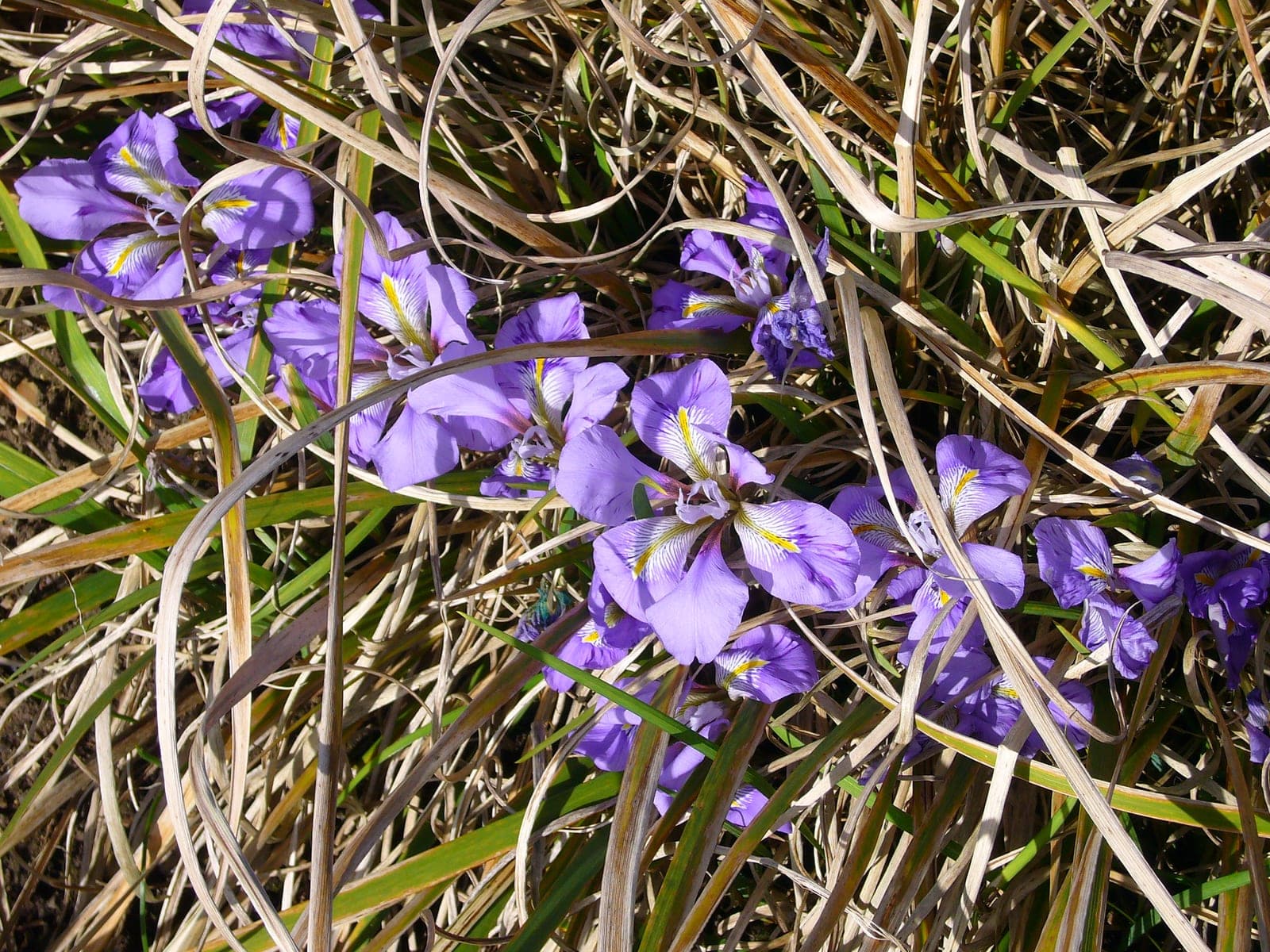
Iris unguicularis is a winter-flowering iris native to rocky scrub and cliff faces across the Mediterranean basin, producing fragrant pale lilac to purple flowers from December through early spring - when almost nothing else is in bloom. Flowers sit on perianth tubes up to 20 cm long that keep them partially concealed within the foliage; once cut and brought indoors, warmth opens them quickly and the fragrance fills a room.
This species thrives on deliberate neglect in poor, dry, alkaline, sharply drained soil, and performs best planted against a south- or west-facing wall where reflected heat mimics its native habitat. Rich soil or excess moisture pushes energy into leaves at the expense of flowers. Clumps should be left undisturbed as long as they remain productive - division every five to six years in late summer is usually sufficient. When tidying in spring, pull spent and tattered leaves out by hand rather than cutting them, to avoid damaging the hidden bud sheaths at the base.
Crown Rot
Lower leaves yellow and wilt; the base of the rosette turns brown and soft, sometimes with white fungal threads at the soil line. Plants collapse in wet conditions.
Remove and destroy affected plants. Improve drainage and avoid overhead watering. Do not mulch directly against the crown. Space plants for airflow and avoid replanting in the same wet spot.
Botrytis (grey mould)
Grey fuzzy mould on petals and stems, worst in cool wet conditions.
Remove affected parts immediately. Improve air circulation. Avoid overhead watering. Apply copper fungicide if severe.
Fungal leaf spot
Brown or purplish spots on the leaves, often ringed with a yellow halo, that spread and merge in warm, humid, or wet weather; heavily spotted leaves yellow and drop early.
Pick off spotted leaves and clear fallen debris to remove overwintering spores. Improve air circulation by thinning, and water at the base so foliage dries quickly. If it persists, apply a copper- or sulfur-based fungicide at the first sign.
Root rot
Plants wilt, yellow, and stunt even in moist soil; lower stems and roots turn brown, soft, and mushy and the plant may collapse. Most common in heavy, wet, or poorly drained ground.
Improve drainage and stop overwatering, and never plant too deep. Lift and destroy badly affected plants along with the soil around the roots. Grow in raised or free-draining beds to prevent it returning.