
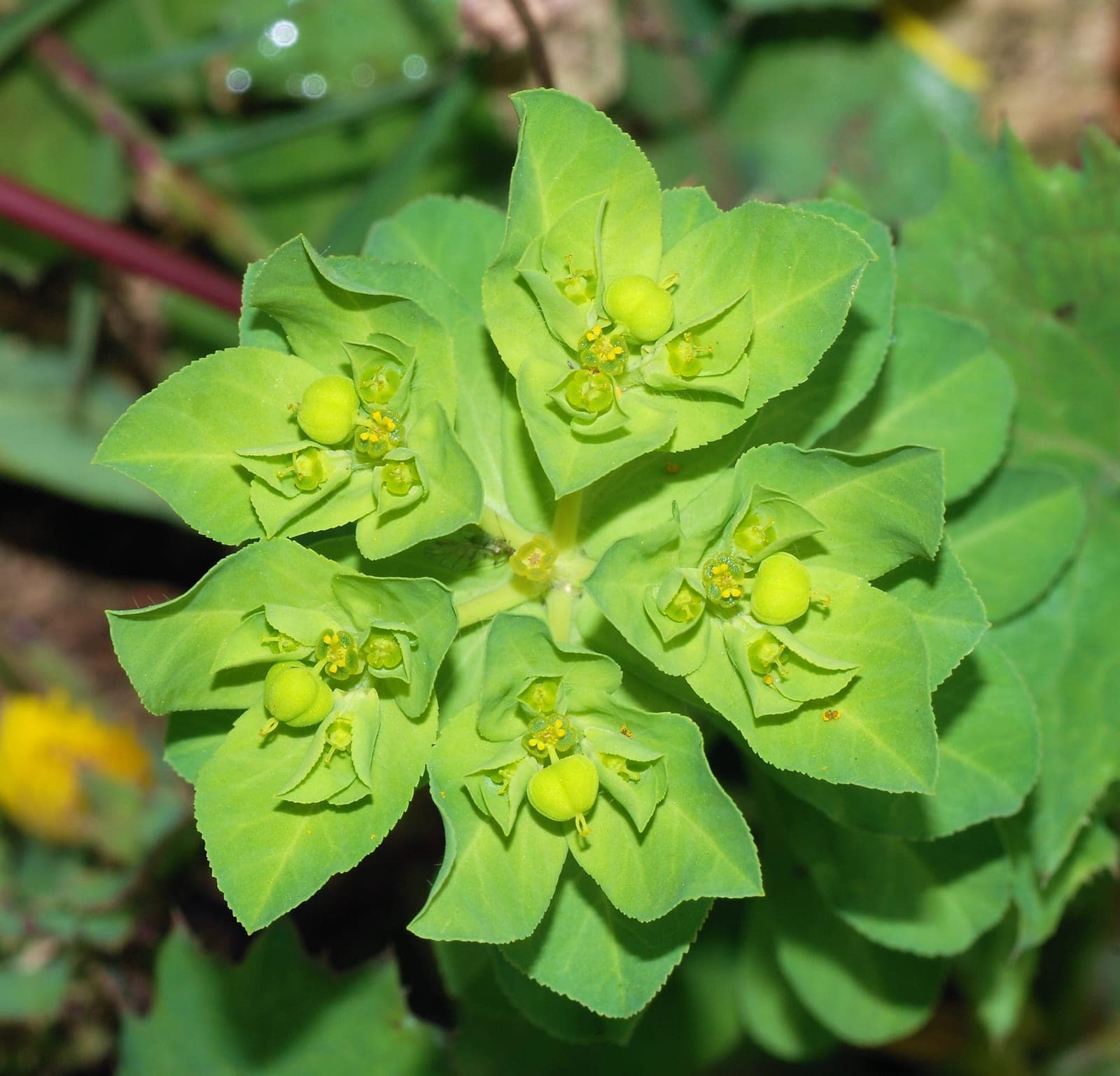
Euphorbia seguieriana (Seguier's spurge) is a compact, mounding perennial native to dry rocky slopes, steppes, and open grasslands from central Europe to central Asia. It produces dense clusters of lime-yellow cyathia on arching stems above narrow, glaucous blue-green foliage from late spring through midsummer, then holds its structural form through fall. Deer and rabbits rarely browse it, likely due to the caustic latex.
This species requires full sun and sharp drainage above all else. Poor, sandy, or gravelly soil produces tighter, longer-lived plants; amended or fertile soil causes floppy growth and premature decline. Established clumps tolerate extended drought and need no supplemental water once rooted. The plant self-seeds moderately in open, well-drained ground. All plant parts exude milky latex that irritates skin and eyes on contact; wear gloves whenever cutting stems.
Root rot
Plants wilt, yellow, and stunt even in moist soil; lower stems and roots turn brown, soft, and mushy and the plant may collapse. Most common in heavy, wet, or poorly drained ground.
Improve drainage and stop overwatering, and never plant too deep. Lift and destroy badly affected plants along with the soil around the roots. Grow in raised or free-draining beds to prevent it returning.
Crown Rot
Lower leaves yellow and wilt; the base of the rosette turns brown and soft, sometimes with white fungal threads at the soil line. Plants collapse in wet conditions.
Remove and destroy affected plants. Improve drainage and avoid overhead watering. Do not mulch directly against the crown. Space plants for airflow and avoid replanting in the same wet spot.