
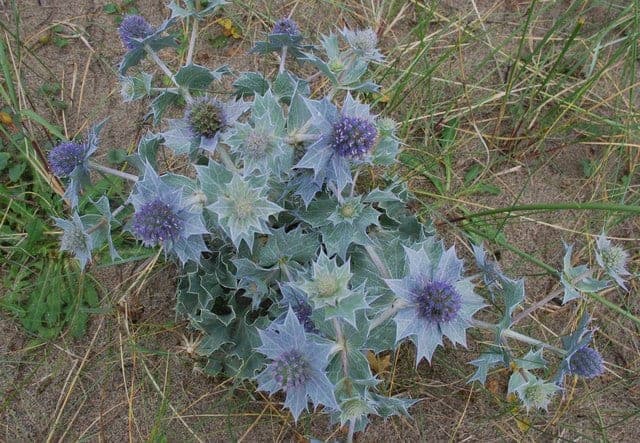
Eryngium maritimum is a coastal perennial native to sandy beaches, dunes, and shingle across Europe and the Mediterranean. Its silver-blue foliage and metallic blue-green bracts give it strong structural presence in the garden. Despite the spiny, holly-like leaves, it belongs to the carrot family rather than the genus Ilex.
A deep, fleshy taproot anchors the plant in shifting coastal sand and provides reliable drought tolerance once established. Excellent drainage is non-negotiable; wet or heavy soils cause crown and root rot rapidly. Low-fertility sandy or gravelly soil produces the best, most compact growth - rich conditions result in lax, floppy stems. Plants dislike root disturbance, so site carefully and direct-sow into the final position where possible, or transplant only from small pots before the taproot becomes established. Neutral to slightly alkaline pH suits it best.
The candied roots, historically called 'eryngoes,' were a documented confection and reputed aphrodisiac in Tudor and Elizabethan England, referenced by Shakespeare and period herbalists. The root also carries a long tradition in European herbal medicine as a diuretic and remedy for urinary complaints.
Root rot
Plants wilt, yellow, and stunt even in moist soil; lower stems and roots turn brown, soft, and mushy and the plant may collapse. Most common in heavy, wet, or poorly drained ground.
Improve drainage and stop overwatering, and never plant too deep. Lift and destroy badly affected plants along with the soil around the roots. Grow in raised or free-draining beds to prevent it returning.
Crown Rot
Lower leaves yellow and wilt; the base of the rosette turns brown and soft, sometimes with white fungal threads at the soil line. Plants collapse in wet conditions.
Remove and destroy affected plants. Improve drainage and avoid overhead watering. Do not mulch directly against the crown. Space plants for airflow and avoid replanting in the same wet spot.