
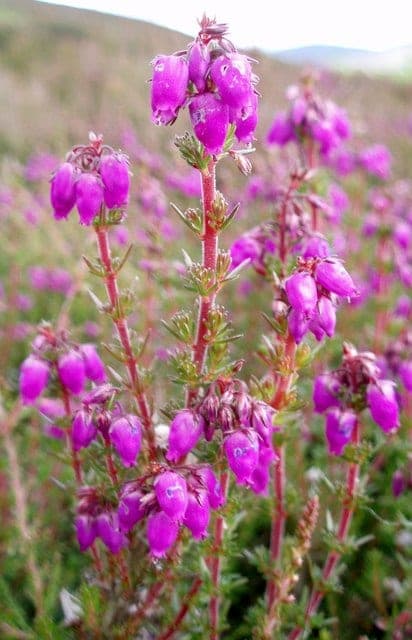
Bell heather is a low, mounded evergreen shrub native to the moorlands and heathlands of western Europe. It carries deep pink to purple bell-shaped flowers from midsummer well into fall, giving it one of the longer display windows among ericaceous shrubs. Bees visit the flowers heavily, and the nectar underpins the production of well-regarded heather honey.
It demands sharply drained, nutrient-poor, acidic soil and fails quickly in any site with standing winter moisture. In full sun with lean, gritty soil and good airflow it is long-lived and largely self-sufficient. A light annual trim after flowering, cutting back only into the current year's growth and never into old wood, prevents legginess. Pine bark or composted pine needle mulch helps sustain soil acidity and moderates root temperature. Cold tolerance extends to zone 5a, but winter-wet conditions cause more damage than cold alone.
Traditional medicine across Atlantic Europe used heather preparations as a diuretic and urinary antiseptic for kidney and bladder complaints. The plant contains arbutin, a compound with documented antimicrobial activity, lending some scientific basis to these historical uses.
Phytophthora Root Rot
Wilting despite moist soil, yellowing leaves, stunted growth, and dark, decayed roots and crown tissue. Vines may collapse during hot weather.
Plant in well-draining soil and avoid waterlogging. Remove and destroy affected vines. Improve drainage with raised beds or amended soil and avoid overwatering.
Botrytis (grey mould)
Grey fuzzy mould on petals and stems, worst in cool wet conditions.
Remove affected parts immediately. Improve air circulation. Avoid overhead watering. Apply copper fungicide if severe.
Root rot
Plants wilt, yellow, and stunt even in moist soil; lower stems and roots turn brown, soft, and mushy and the plant may collapse. Most common in heavy, wet, or poorly drained ground.
Improve drainage and stop overwatering, and never plant too deep. Lift and destroy badly affected plants along with the soil around the roots. Grow in raised or free-draining beds to prevent it returning.