
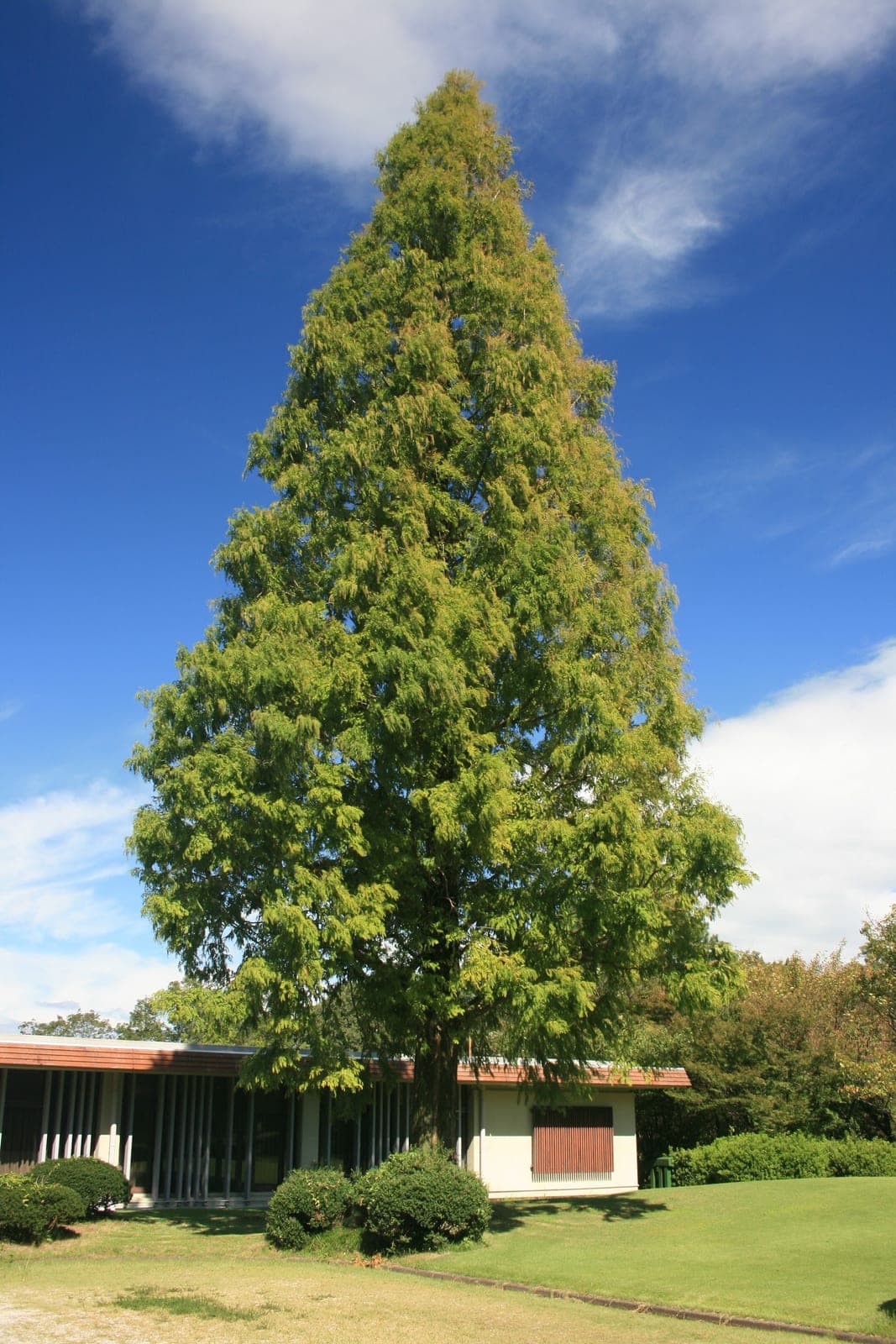
Dawn redwood (Metasequoia glyptostroboides) is a deciduous conifer and the only living member of its genus. Known from Mesozoic fossils long before living trees were found in Hubei province, China in 1944, it caused considerable botanical excitement when confirmed alive. It grows fast - commonly 2–4 ft per year when young - and eventually forms a large, pyramidal tree with a fluted, buttressed trunk and reddish-brown, furrowed bark.
The soft, opposite needles emerge bright green in spring, hold through summer, then turn bronze-orange to reddish-brown before dropping in fall, giving it clear seasonal interest across three seasons. It prefers moist, slightly acid to neutral soil (pH 5.5–6.5) with consistent moisture and tolerates periodic flooding but not prolonged drought. Mulch the root zone to retain moisture and moderate soil temperature. Alkaline soils cause chlorosis. Site it where its eventual size - 70 ft or more in cultivation - is not a constraint.
The species is listed as endangered by the IUCN, surviving naturally only in a small area of south-central China along moist valley bottoms and stream margins. Widespread cultivation since the late 1940s has established it in arboreta and parks across temperate North America, Europe, and Asia, substantially securing the species beyond its native range.
Phytophthora Root Rot
Wilting despite moist soil, yellowing leaves, stunted growth, and dark, decayed roots and crown tissue. Vines may collapse during hot weather.
Plant in well-draining soil and avoid waterlogging. Remove and destroy affected vines. Improve drainage with raised beds or amended soil and avoid overwatering.
Botryosphaeria Canker
Dark, sunken cankers on stems and major branches, most often occurring after drought stress or mechanical wounding. Bark peeled back from affected areas reveals brown, discolored wood beneath. Branch tips wilt and die back progressively inward.
Prune infected branches at least 6 inches below the visible canker margin using sterilized tools, and dispose of all cuttings away from the garden. Reduce plant stress by maintaining consistent irrigation during dry periods and avoiding bark wounds during maintenance. No curative fungicide is available; keeping plants vigorous is the primary preventive strategy.
Armillaria Root Rot
Thinning, yellowing canopy with progressive dieback; white, fan-shaped mycelial mats visible beneath bark at or just below the soil line; honey-colored mushroom clusters appearing at the trunk base or on surface roots in autumn.
No chemical cure exists. Improve drainage and avoid any injury to roots or trunk. Remove severely infected trees along with as much root material as possible. Do not replant susceptible species in the same spot.