
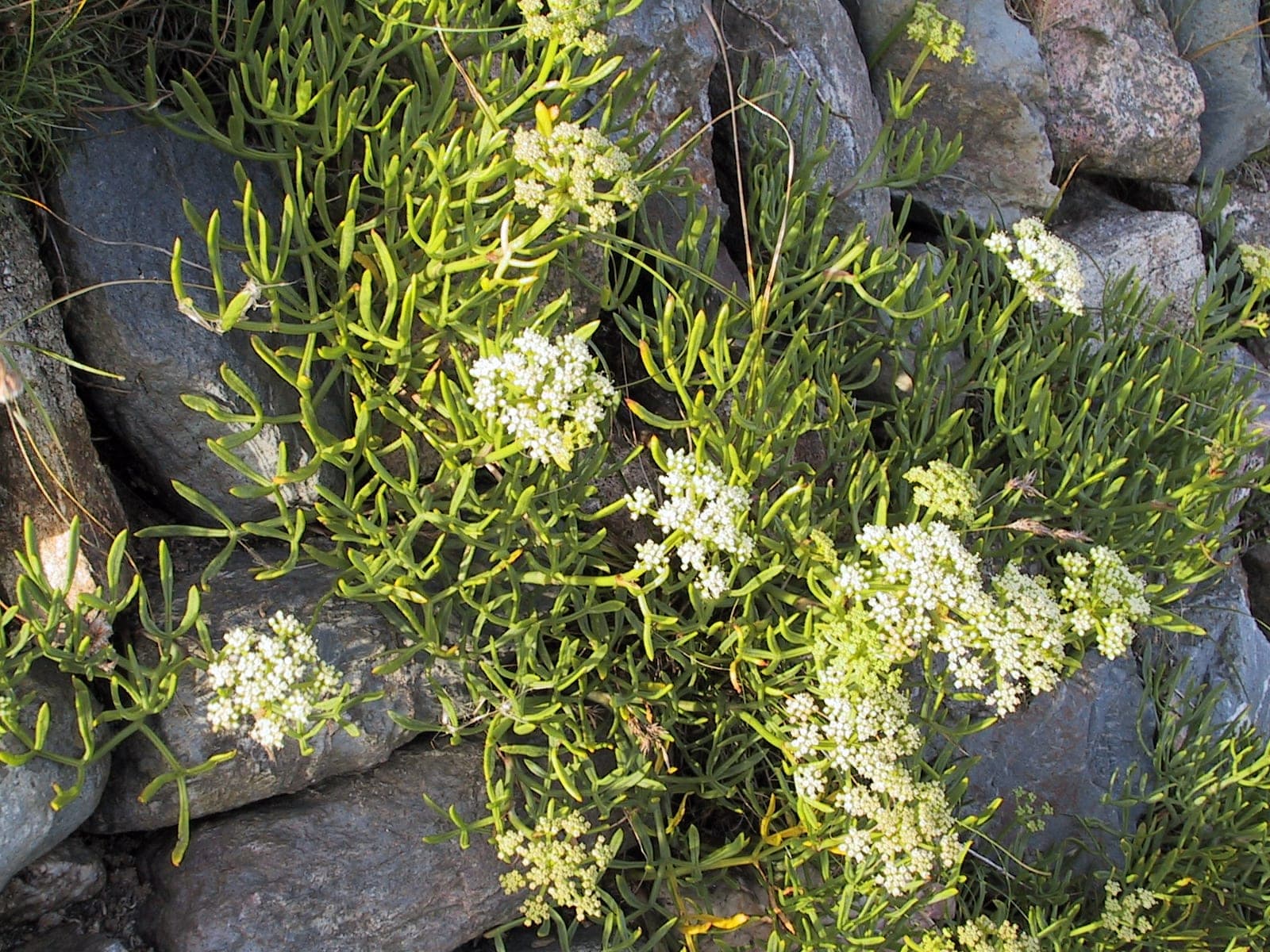
Rock samphire is a perennial coastal herb native to sea cliffs, shingle beaches, and rocky shores from Britain and Ireland through the Mediterranean basin. Its finely divided, fleshy, grey-green leaves carry a pungent aroma that combines notes of fennel, parsley, and sea salt. It was a highly regarded culinary and pickling herb in England from the Middle Ages through the 18th century and remains in active use in Italian, Greek, and Portuguese cuisines.
The plant demands sharply drained, gritty or sandy soil in full sun and tolerates salt spray, poor soils, and sustained drought better than most herbs. Heavy, wet, or poorly aerated ground is the primary cause of failure in cultivation, and excess winter moisture is the most reliable way to lose an established plant. In the landscape it suits rock gardens, gravel gardens, and coastal plantings, where it self-seeds modestly without becoming invasive. A soil pH of 7.0–8.5 suits it well; supplemental fertilizer encourages rank, weak growth and is not advisable.
Leaves and young stems have been used historically as a digestive tonic and mild diuretic, and the plant served as an antiscorbutic for maritime communities before citrus was widely available. Ethnobotanical surveys from Italy, Greece, and Portugal confirm continued folk use for digestive complaints and as a general nutritive food herb.
Root rot
Plants wilt, yellow, and stunt even in moist soil; lower stems and roots turn brown, soft, and mushy and the plant may collapse. Most common in heavy, wet, or poorly drained ground.
Improve drainage and stop overwatering, and never plant too deep. Lift and destroy badly affected plants along with the soil around the roots. Grow in raised or free-draining beds to prevent it returning.
Damping Off
Seedlings collapse at the soil line with thin, water-soaked stems; seeds may fail to emerge or rot before sprouting.
Sow in well-draining mix, avoid overwatering, and ensure good airflow. Remove affected seedlings and let the surface dry between waterings.