
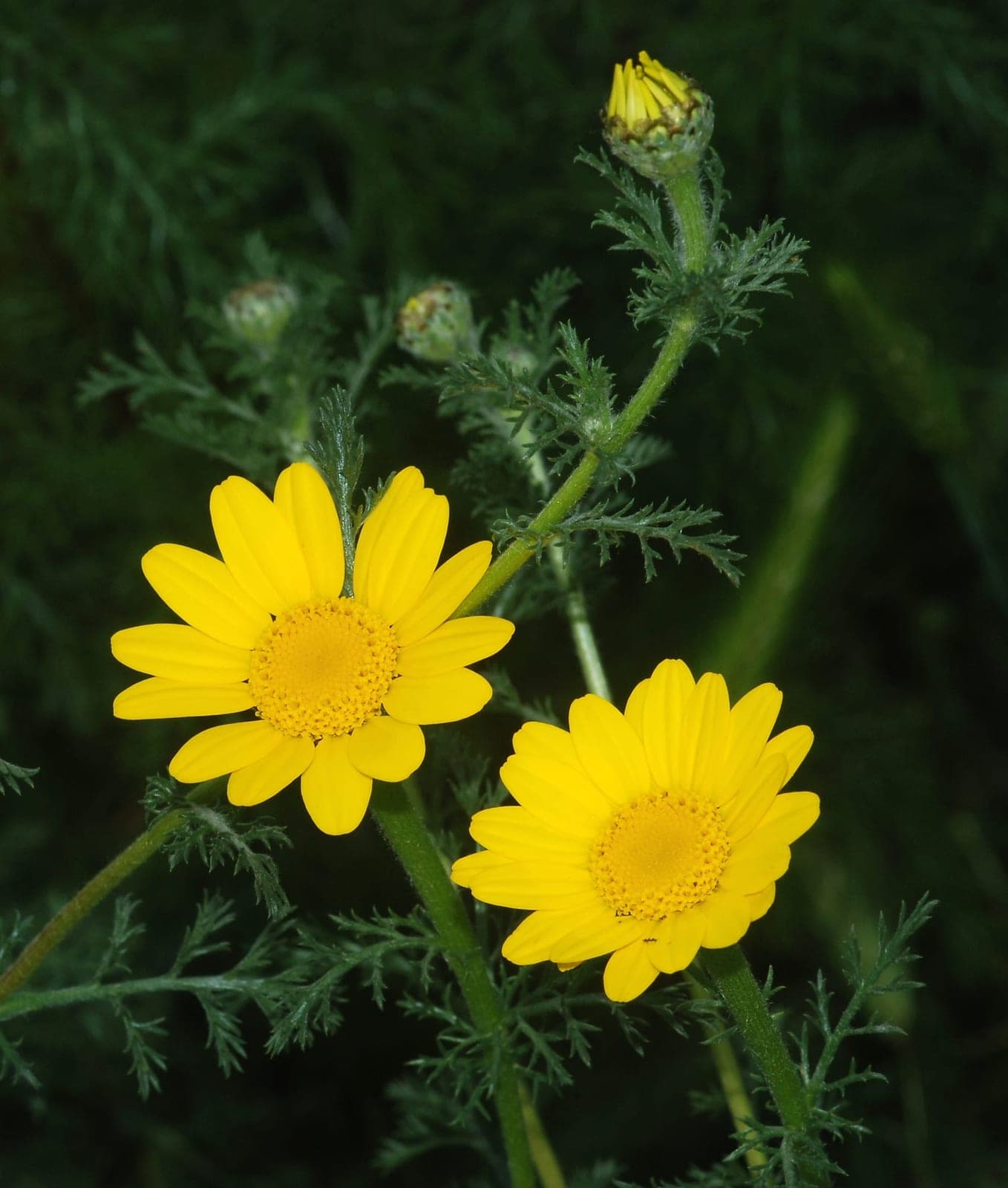
Cota tinctoria is a short-lived perennial native to Europe and western Asia, widely grown and sold under its synonym Anthemis tinctoria. It produces a steady run of bright yellow daisy-like flowers from early summer through fall, filling hot, dry spots where most perennials struggle.
In most gardens it behaves as a biennial or a perennial that declines after two or three seasons, but it self-seeds freely enough to sustain itself without intervention. It performs best in lean, sharply drained soil with a neutral to slightly alkaline pH; rich, moist ground causes floppy stems and reduced flowering. Cutting plants back by half after the main summer flush encourages a second round of growth. Self-sown seedlings tolerate light frost and can be left in place through winter.
The name dyer's chamomile reflects centuries of documented use: flowers processed with an alum mordant yield a clear, lasting yellow-gold dye on wool, driving commercial cultivation across Europe. Traditional folk preparations of leaf and flower were also applied to minor wounds for their reputed anti-inflammatory action.
Powdery mildew
White or grey powdery coating on leaves - usually starting on older growth in humid conditions or when nights cool.
Improve air circulation by thinning plants. Apply neem oil or potassium bicarbonate spray at first sign. Avoid overhead watering.
Fungal leaf spot
Brown or purplish spots on the leaves, often ringed with a yellow halo, that spread and merge in warm, humid, or wet weather; heavily spotted leaves yellow and drop early.
Pick off spotted leaves and clear fallen debris to remove overwintering spores. Improve air circulation by thinning, and water at the base so foliage dries quickly. If it persists, apply a copper- or sulfur-based fungicide at the first sign.
Root rot
Plants wilt, yellow, and stunt even in moist soil; lower stems and roots turn brown, soft, and mushy and the plant may collapse. Most common in heavy, wet, or poorly drained ground.
Improve drainage and stop overwatering, and never plant too deep. Lift and destroy badly affected plants along with the soil around the roots. Grow in raised or free-draining beds to prevent it returning.