
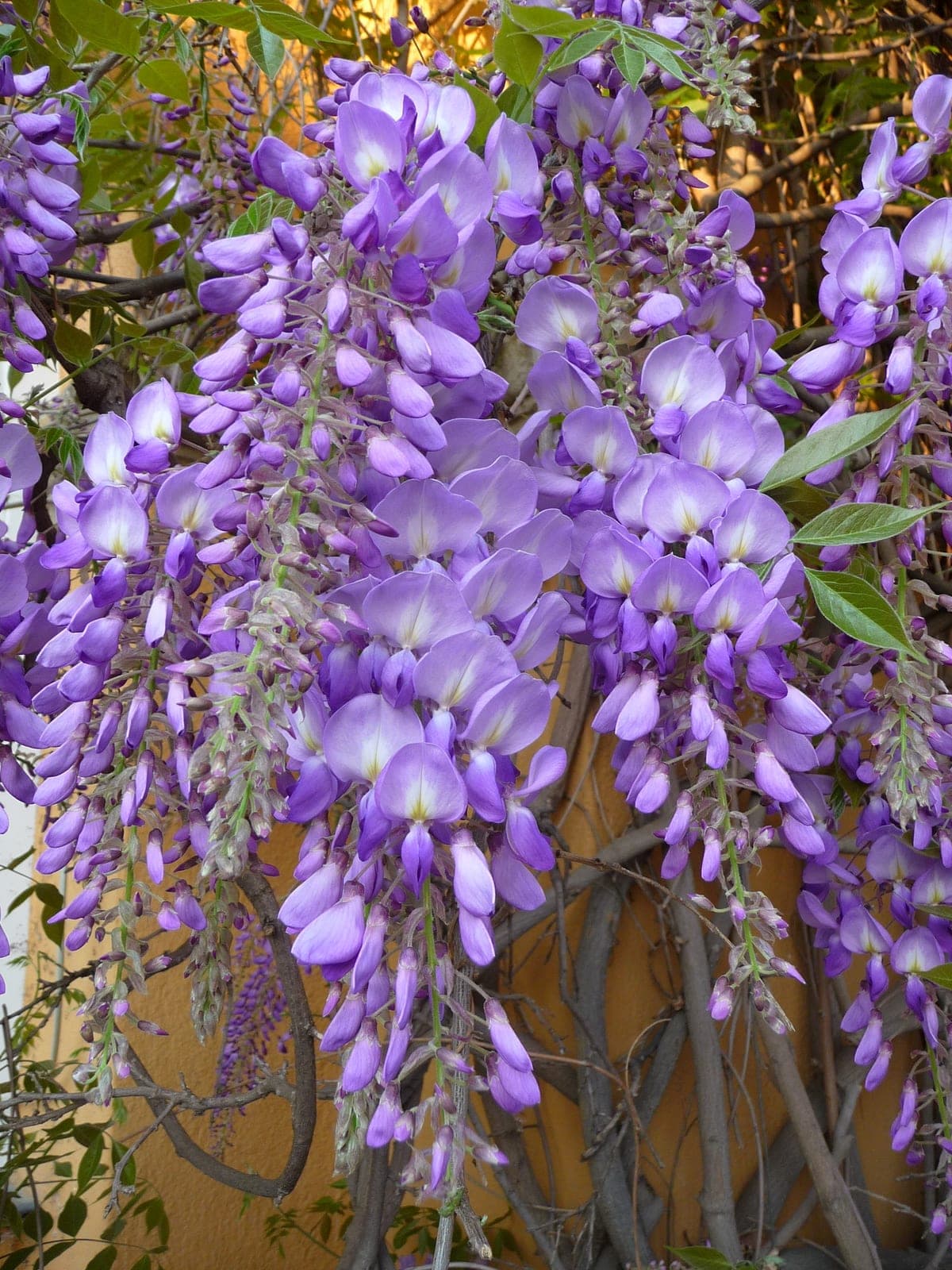
Chinese wisteria is a vigorous twining vine native to China, introduced to the United States in the early 1800s for its spectacular, fragrant spring display. Flowering happens before or just as the leaves emerge, with every flower on each 6–12 inch raceme opening in a near-simultaneous flush of lavender-purple - a showier, more uniform bloom than the sequential opening of Japanese wisteria.
That same vigor is why it is classified as invasive across much of the eastern and southeastern United States. Left unmanaged, its twining stems girdle and eventually kill host trees, and mature vines readily set seed and spread into woodland edges, forming dense monocultures that shade out native understory plants. Vines can live for decades and grow heavy enough to collapse an undersized arbor or pergola. If you already have an established specimen, rigorous twice-yearly pruning - hard in the dormant season and again after the flush of summer growth - is the only way to keep it from escaping cultivation; where practical, Wisteria frutescens (American wisteria) delivers a comparable spring display without the same ecological risk.
All parts of the plant, especially the seeds and pods, contain wisterin and lectins that are toxic to humans and animals if ingested. Site any existing vine away from where pets or children could reach fallen pods, and remove seed pods before they mature to reduce unwanted spread.
Powdery mildew
White or grey powdery coating on leaves - usually starting on older growth in humid conditions or when nights cool.
Improve air circulation by thinning plants. Apply neem oil or potassium bicarbonate spray at first sign. Avoid overhead watering.