
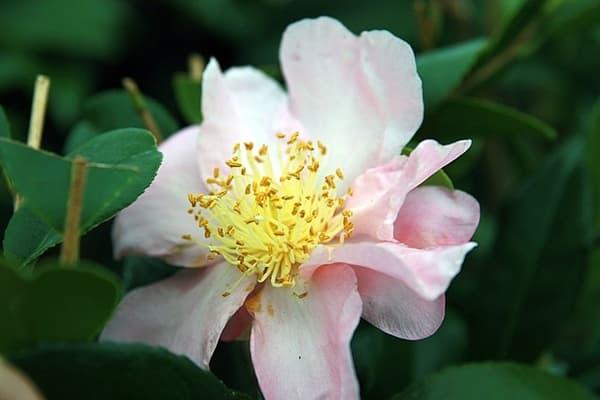
'Winter's Star' is a cold-hardy hybrid camellia developed from Dr. William Ackerman's breeding program at the U.S. National Arboretum, crossing the cold-tolerant Camellia oleifera with fall-blooming Camellia hiemalis to combine hardy wood with an early, reliable flowering season. Single lavender-pink flowers with a prominent center of gold stamens open in fall, well ahead of the harshest winter cold, on an upright, vigorous shrub that tolerates more sun than a traditional Camellia japonica.
Its hardiness is the whole point - wood and buds shrug off cold that would damage an unimproved camellia, which is what makes it a viable landscape plant as far north as the Mid-Atlantic and even sheltered spots in the Pacific Northwest, well outside the traditional camellia belt of the Deep South and California coast. It still wants the same acidic, evenly moist, well-drained soil every camellia prefers, and benefits from a wind-sheltered site through its first few winters while the root system establishes.
Camellias have no native range in North America - every parent species behind this hybrid is East Asian - but cold-hardy breeding lines like the Ackerman hybrids have meaningfully expanded where American gardeners can grow them.
Petal blight
Flowers develop small watery spots that rapidly enlarge into soft brown blotches, collapsing the bloom into a slimy mass that clings to the plant instead of dropping cleanly.
Remove and destroy infected blooms and fallen petals, and clear old mulch beneath the plant where the fungus overwinters. Avoid overhead watering; in wet springs a preventive fungicide at bud break helps where it recurs.
Leaf gall
Leaves, buds, or young shoots thicken into pale green, reddish, or whitish fleshy galls that later turn white with a powdery spore bloom before browning.
Pick off and destroy galls before they turn white and shed spores. Improve air circulation and avoid overhead watering in spring. The damage is largely cosmetic and rarely needs fungicide.
Phytophthora Root Rot
Wilting despite moist soil, yellowing leaves, stunted growth, and dark, decayed roots and crown tissue. Vines may collapse during hot weather.
Plant in well-draining soil and avoid waterlogging. Remove and destroy affected vines. Improve drainage with raised beds or amended soil and avoid overwatering.